


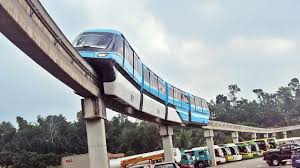
Mumbai’s monorail system, which has been largely inactive since September 2025 due to repeated technical failures, is poised for a potential operational revival as the city finalises a new operator. The Hyderabad-based firm Power Mech Projects Ltd has emerged as the lowest bidder to manage and maintain India’s only monorail corridor for the next five years, signalling a critical step toward restoring commuter confidence in a network that has struggled with reliability since its inception.
The tendering exercise, initiated by Maha Mumbai Metro Operations Corporation Limited (MMMOCL) in mid-2025, aimed to address chronic disruptions stemming from power outages, signalling faults, and overcrowding. The monorail’s 19.54-kilometre route, connecting Chembur, Wadala, and Jacob Circle, has been non-operational since September 20, 2025. Urban transport planners note that resuming services is crucial not only for last-mile connectivity in eastern Mumbai but also for easing congestion on parallel suburban and metro corridors. Four companies submitted technical and financial bids, including Konkan Railway Corporation Limited, Adani Infrastructure Management Services Ltd, Indwell Constructions, and Power Mech Projects. After technical evaluations, only Power Mech Projects and Adani Infrastructure qualified for the financial round. Power Mech’s quoted bid of Rs 296.4 crore undercut Adani’s Rs 308.4 crore, with the company’s established railway operations experience reportedly influencing its selection. Officials indicate that the Letter of Acceptance is expected once final formalities are completed, marking a potential turning point for the city’s underperforming monorail.
The monorail’s operational record has been marred by high-profile incidents. In August 2025, trains stalled with hundreds of passengers stranded, highlighting systemic vulnerabilities in design and management. Subsequent trial runs with new rolling stock saw a derailment incident, further underscoring the need for rigorous safety and technical oversight. Transport analysts highlight that any future operation must prioritise predictive maintenance, automated monitoring, and commuter safety protocols to ensure long-term viability. Urban mobility experts observe that while the monorail represents a relatively small segment of Mumbai’s multimodal transport network, its reliability affects the city’s overall transit efficiency and public trust in alternative transit solutions. A successful relaunch could also influence future investments in similar elevated transit technologies in dense metropolitan areas, particularly where metro expansion is constrained by land availability.
MMMOCL has not yet set a definitive date for service resumption, reiterating that rectifying technical, operational, and safety gaps remains the primary objective. For the city, the transition to a professional private operator could provide lessons in contract-based urban transport management, maintenance accountability, and integration of legacy infrastructure with contemporary mobility demands.
Also Read: Navi Mumbai Intensifies Dust Control On Major Transport Corridors
Mumbai Eyes Private Firm For Monorail Operations
