Mumbai Extends Mulund Waste Deadline To 2026 As One-Third Cleanup Still Pending
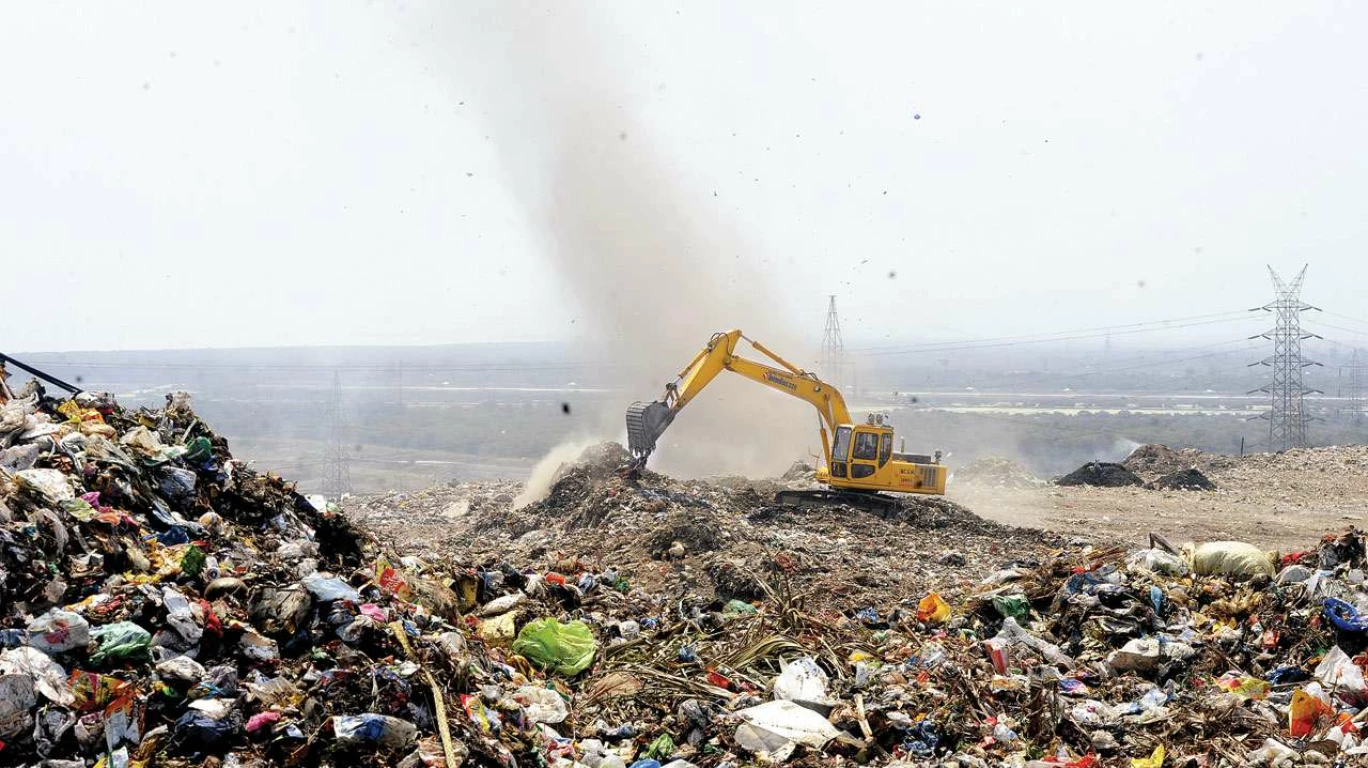
Mumbai’s plan to fully remediate the Mulund dumping ground has been pushed back once again, with the Brihanmumbai Municipal Corporation (BMC) extending the deadline for processing the remaining legacy waste to February 2026. This marks the third extension since the remediation programme was launched, signalling persistent delays in one of the city’s largest circular waste-management initiatives.
The site, which operated as a landfill from 1968 until its closure in 2018, holds significant environmental and urban value. Its rehabilitation is expected to return nearly 24 hectares of land to public use while preventing further contamination of soil and groundwater. However, despite the scale and urgency of the project, progress has moved slower than originally committed. City officials attribute the delay to pandemic disruptions, monsoon stoppages, and bottlenecks involving regulatory clearances. Although the contract to bio-mine approximately 78 lakh tonnes of legacy waste was awarded in 2018, meaningful work began only in 2021. “The revised timeline will be the final opportunity for the contractor,” a senior civic official said, adding that penalties totalling ₹8 crore have already been imposed for missed targets.
As of December, around 32 per cent of the waste remains unprocessed, even as Mumbai continues to generate nearly 7,000 tonnes of new waste daily. Industry experts say the Mulund remediation serves as a critical benchmark for large Indian cities attempting to shift from landfill dependency to sustainable waste treatment models. Nearly 90 per cent of the city’s fresh waste is now diverted to the Kanjurmarg facility, but the legacy load continues to affect air quality, land value, and ecological recovery. Urban planners argue that the delay underscores systemic challenges around capacity building, decentralised waste segregation, and long-term governance.
“Bio-mining is technologically viable, but without structural reforms in waste segregation and storage, such projects will continue to face schedule overruns,” one waste-management consultant noted. For residents living around the former landfill, expectations remain cautiously optimistic. Many see the site’s redevelopment as a potential proof point for Mumbai’s broader sustainability goals, including circular resource use, zero landfill targets, and climate-resilient land reclamation.
As Mumbai pushes toward a more equitable and sustainable urban framework, the Mulund landfill project will remain a test case for both execution capacity and policy continuity. Whether the February 2026 deadline is met will determine if the city can credibly transition from cleanup mode to long-term regenerative planning.