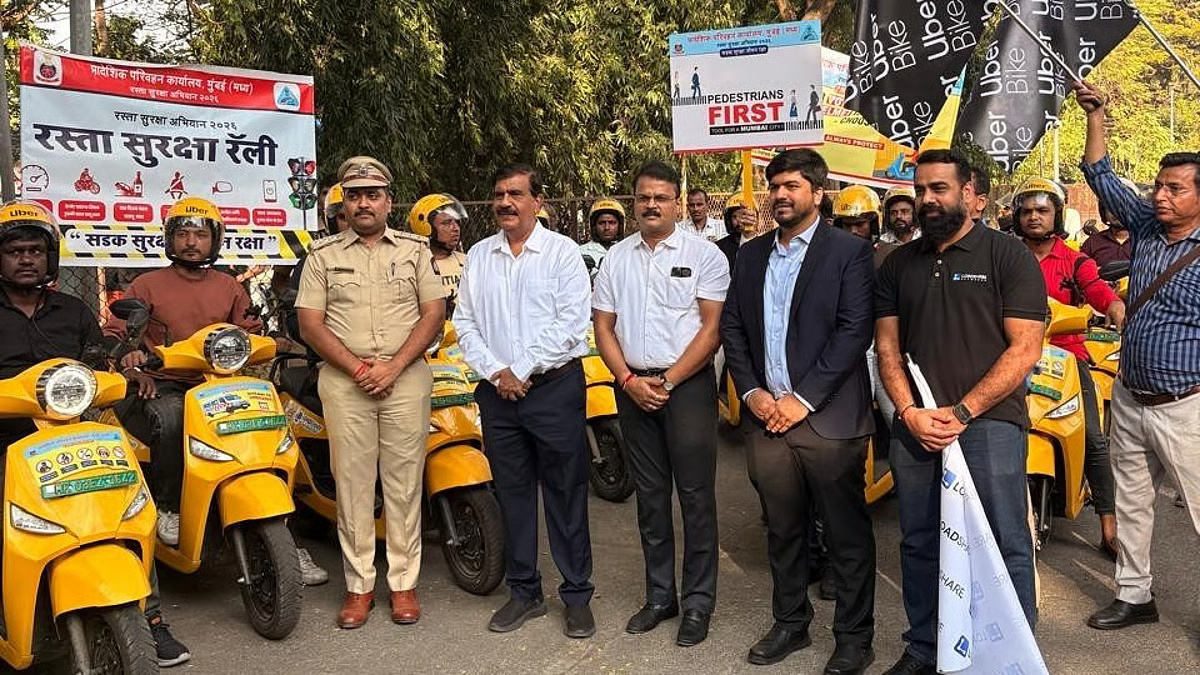
Mumbai’s urban mobility landscape is set for a cleaner, more sustainable shift as Uber expands its electric bike taxi services in collaboration with logistics and mobility operator Loadshare. The initiative aligns with the Maharashtra Government’s electric vehicle (EV) bike taxi policy and marks a significant step towards integrating low-emission transport solutions into the city’s congested streets.
The pilot phase, launched on Monday, January 13, 2026, introduced a fleet of 50 electric two-wheelers on the Uber platform. Officials indicated that the fleet size will be scaled up based on commuter demand and operational performance, reflecting the growing emphasis on sustainable urban mobility. The launch was attended by senior transport officials, highlighting the state’s commitment to cleaner, climate-friendly transportation. Urban planners and transport experts note that EV bike taxis offer practical advantages in dense cities like Mumbai, providing efficient first- and last-mile connectivity while reducing reliance on fossil-fuel vehicles. The service is expected to enhance accessibility to metro stations, commercial hubs, and residential clusters, particularly during peak traffic periods.
Under the operational framework, Loadshare manages day-to-day fleet logistics, maintenance, and on-ground execution for the electric two-wheelers integrated into Uber’s ride-hailing platform. The collaboration represents a convergence of ride-hailing technology with local fleet management expertise, aiming to ensure reliability and convenience for daily commuters. The move also signals a broader industry push to meet the state’s EV adoption targets. Maharashtra’s EV bike taxi policy, notified in July 2025, encourages operators to deploy electric fleets across major cities to curb carbon emissions, improve air quality, and promote sustainable public transport alternatives. Analysts suggest that initiatives like this can significantly reduce urban transport emissions while maintaining affordability for riders.
From a socio-economic perspective, electric bike taxis can provide inclusive mobility options, particularly for commuters who rely on cost-effective, flexible transport solutions. “Expanding EV mobility networks not only addresses congestion but also enhances equitable access to transportation in Mumbai,” said a senior transport analyst. As cities worldwide focus on zero-carbon mobility, the Mumbai pilot could serve as a model for scaling electric two-wheeler adoption in other Indian metropolitan areas. Long-term success will depend on regulatory support, charging infrastructure expansion, and integration with broader urban transport planning.
The launch reflects a pragmatic approach to sustainable commuting, balancing operational feasibility with environmental responsibility. For residents, the expansion promises faster, cleaner, and more reliable transport options in a city struggling with congestion and pollution challenges.
Mumbai Expands Uber Electric Bike Taxi Services