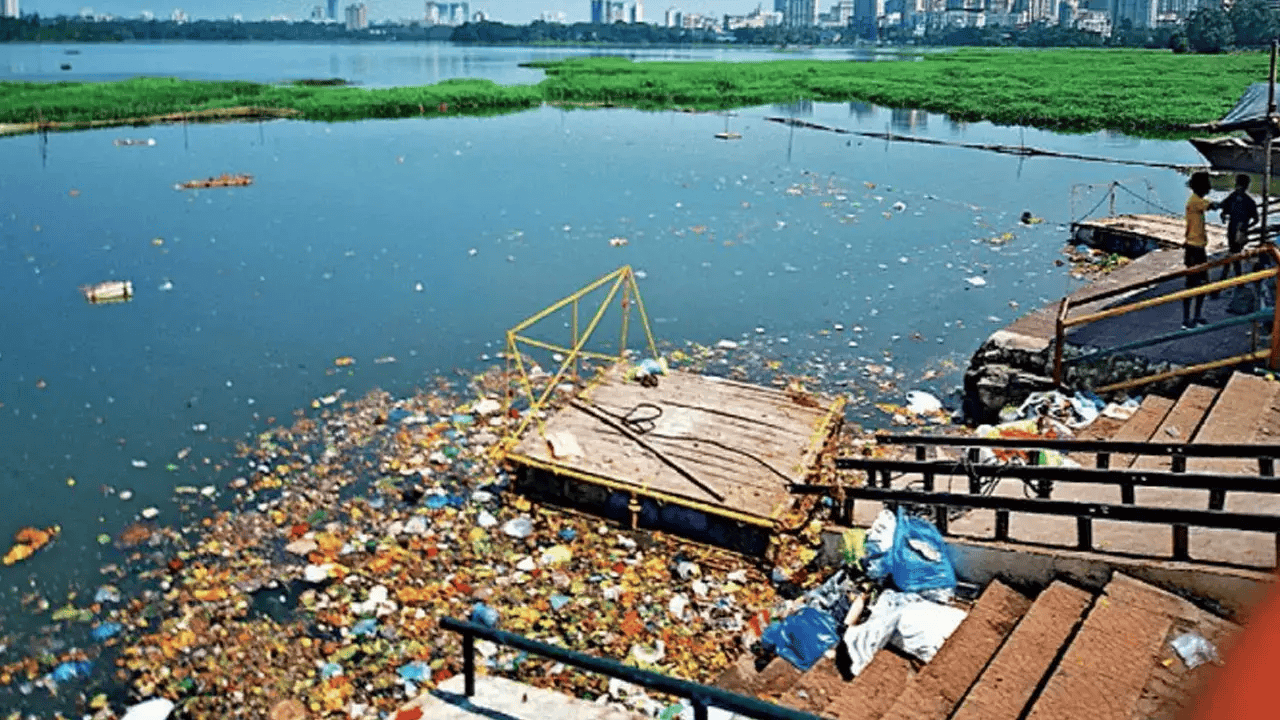
Mumbai Environmentalists Warn Against Ganesh Immersions in Highly Polluted Powai Lake
Powai Lake, a vital urban wetland in the heart of Mumbai, faces a deepening ecological crisis as environmentalists issue an urgent plea to devotees ahead of the forthcoming Ganeshotsav. With a staggering 18 million litres of untreated sewage continuing to flow into the lake daily, conservation groups are imploring devotees to forgo idol immersions in its heavily polluted waters. This dire situation underscores the critical need for immediate civic intervention and a collective shift towards eco-friendly practices to safeguard this crucial urban ecosystem, which is paramount for Mumbai’s environmental integrity and the well-being of its diverse populace.
The scale of contamination is alarming. Environmental organisations, in collaboration with local resident groups, have highlighted that despite the Brihanmumbai Municipal Corporation (BMC) initiating the process of floating tenders for sewage diversion and treatment plants, the lake remains a “reservoir of filth.” This unchecked inflow of raw sewage has led to a rampant proliferation of water hyacinth, severely compromising the lake’s biodiversity and posing an imminent threat to its native flora and fauna, including its crocodile population. The visible degradation of a waterbody once considered a potential source of drinking water is a stark indicator of failed environmental stewardship.
The emotional dilemma for devotees is palpable, as many express sorrow at the prospect of immersing revered idols in such unsanitary conditions. Environmentalists and concerned citizens are actively advocating for the widespread adoption of artificial immersion pools, particularly for the large community-based festival idols, as a more sustainable and respectful alternative. This public awareness drive seeks to impress upon both idol makers and worshippers the imperative of embracing eco-friendly idols and practices that align religious devotion with environmental responsibility, fostering a collective commitment to a cleaner urban environment.
The current state of Powai Lake is a poignant reminder of past unfulfilled promises. The BMC has itself acknowledged the substantial sewage inflow, yet past assurances of permanent diversion measures have largely remained on paper. While civic authorities have recently deployed harvester machines to clear the rapidly growing hyacinth, activists contend that these efforts are grossly inadequate against the overwhelming volume of pollution. This highlights a critical lapse in urban environmental governance, where timely and effective action has been consistently deferred, leading to the current ecological predicament.
In a significant development, the Union Ministry of Environment, Forest and Climate Change (MOEFCC) has intervened, directing the Maharashtra Environment Director to take “necessary action” following a complaint filed through the Prime Minister’s public grievances website. This central government intervention underscores the urgency and national recognition of the crisis. Restoring Powai Lake demands a comprehensive and sustained strategy—one that not only cleanses its waters but also establishes robust, long-term sewage treatment infrastructure and promotes responsible citizen participation. This is crucial for transforming Mumbai into a genuinely sustainable, equitable, and zero net carbon city, where natural assets are preserved for present and future generations.