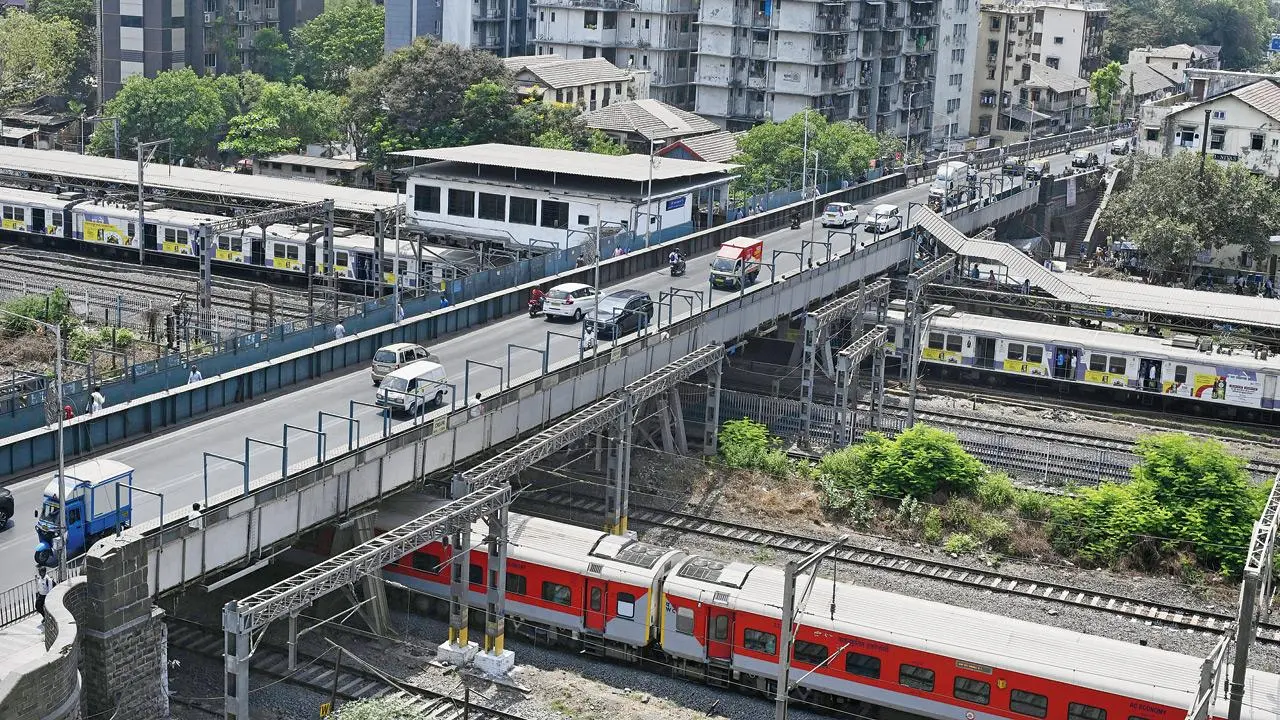
Mumbai Elphinstone bridge shuts tonight for eco flyover and connector
Mumbai’s transport network is set for a defining shift as the iconic Elphinstone bridge closes permanently tonight to make way for a modern flyover and the crucial Worli–Sewri connector. The move signals not just a demolition but a broader transformation in how the city reimagines mobility, sustainability, and inclusivity in infrastructure development.
The bridge, a critical link between Parel and Prabhadevi, will give way to a 4.5-kilometre connector designed to integrate seamlessly with the Coastal Road and the Mumbai Trans Harbour Link. Planners highlight that once operational, the route could slash travel time between South Mumbai and Navi Mumbai, easing congestion while offering significant gains in fuel efficiency and carbon reduction an important marker in the city’s transition toward greener mobility.
The project’s progress had earlier been hampered by disputes over rehabilitation. Families living in Laxmi Niwas and Haji Noorani Chawl resisted relocation to distant suburbs, citing loss of livelihood and social disruption. In response, city authorities have approved in situ housing within the locality itself. Households occupying less than 300 sq ft will receive 405 sq ft tenements, while larger homes will benefit from their existing area plus 35 per cent additional space. This approach is being lauded as a more equitable solution, aligning with the principle that urban development must not come at the cost of community displacement.
Officials further disclosed that the redesign of the connector alignment has spared 17 of the 19 originally affected buildings. This not only preserved local ecosystems and heritage zones but also cut estimated resettlement costs by nearly Rs 5,200 crore resources that can now be directed into other civic priorities. Analysts describe this as a rare instance where sensitive planning achieved both economic and social benefits.Traffic in the region, however, faces immediate challenges. Authorities have rolled out a phased diversion plan with Tilak Bridge handling Dadar’s east–west movement, while Curry Road and Chinchpokli bridges will regulate flows between Parel, Prabhadevi, and Lower Parel. To address health emergencies, ambulances and wheelchairs have been stationed near railway stations at Parel and Prabhadevi, reflecting an unusual level of foresight in traffic planning.
Urban transport experts argue that the Elphinstone flyover is more than just a road project. By integrating with two of Mumbai’s most ambitious corridors the Coastal Road and the Trans Harbour Link it sets a precedent for multimodal, climate-conscious infrastructure. While the immediate inconvenience of traffic detours is unavoidable, the long-term promise is a more connected, sustainable, and equitable city.As the Elphinstone bridge makes way for the future, the decision marks a turning point in Mumbai’s urban journey. The challenge now lies in ensuring that the promises of inclusivity and ecological responsibility continue to guide the city’s mega projects, setting benchmarks for other Indian metropolises grappling with similar growth pressures.