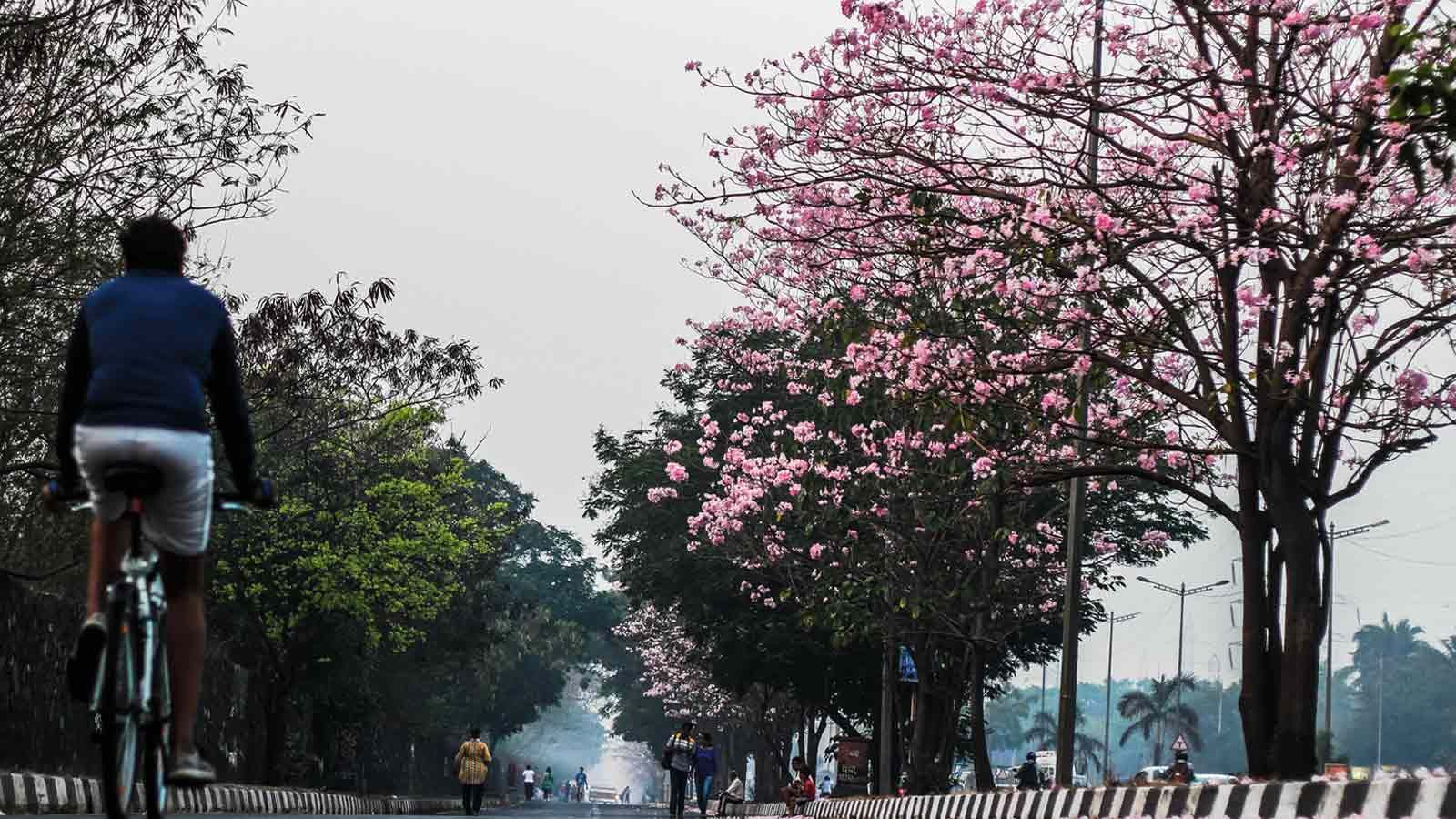
Mumbai Eastern Express Highway Blossoms With Pink Canopy
A stretch of the Eastern Express Highway (EEH) in Mumbai has transformed into a seasonal urban landmark as pink trumpet trees burst into bloom, creating a vibrant canopy that has captured the attention of residents, runners and environmental stewards alike. The flowering spectacle not only enhances the city’s urban greenery but also illustrates the social and ecological value of roadside vegetation in densely built environments.
Each winter, flowering trees — botanically identified as Tabebuia heterophylla — shed clusters of rosy petals along the service road between Airoli junction and Ghatkopar, elevating the visual character of one of Mumbai’s busiest commuter corridors. Unlike the domestically iconic cherry blossoms of Japan, these pink blooms have adapted well to the city’s tropical climate and heavy traffic emissions, offering a rare botanical spectacle for residents during December through early February.The pink canopy has become more than an aesthetic treat. For groups of daily runners, the floral display has helped redefine a functional transport edge into an informal “green corridor” that supports active lifestyles and community cohesion. Many runners along the EEH have taken to caring for the greenery themselves — tending saplings, watering young plants and encouraging neighbours to protect the trees that shade their regular routes.
This grassroots engagement aligns with wider urban sustainability goals that frame street trees and public green infrastructure as critical to both human wellbeing and climate resilience in megacities. Street-level vegetation, especially in concrete-heavy corridors like the EEH, improves urban microclimates by mitigating heat stress, filtering particulates, and providing habitat for small urban wildlife. Residents have also noted improved mental health benefits, with the blooms offering a momentary visual escape from the density and pace of urban life.However, this floral flourish has not been without controversy. A major elevated corridor project proposed by the Mumbai Metropolitan Region Development Authority (MMRDA) has placed sections of these trees under threat, prompting public petitions and local activism. In response to community feedback, project authorities realigned a portion of the design to preserve a number of mature trees, recognising their cultural and ecological value while attempting to balance the need for infrastructure expansion.
City planners highlight the broader planning challenge: integrating grey infrastructure with nature-based solutions in a way that respects both mobility needs and environmental stewardship. “Urban tree canopy isn’t just decoration — it’s part of climate-aware infrastructure,” says a generic urban forester. Ensuring that arterial roads maintain healthy vegetation while expanding capacity for vehicles and transit is increasingly viewed as essential to long-term metropolitan resilience and quality of life.Economic and public health experts also note that enhanced greenery can support active transport choices such as walking and cycling alongside motorised modes, contributing to reduced emissions and healthier citizens. In areas with robust tree cover, pedestrians and cyclists often report greater comfort and willingness to utilise non-motorised transport links, reinforcing the case for more integrated greenery planning across the city.
As the seasonal blooms begin to fade, the social movement around these pink trumpet trees underscores a deeper conversation about equitable urban development — one that values community involvement, ecological health, and the experiential quality of everyday city spaces. To sustain these gains, authorities and neighbourhood groups must continue collaborating on policies that protect and expand Mumbai’s tree canopy, especially along high-traffic corridors where shade and beauty are scarce but desperately needed.