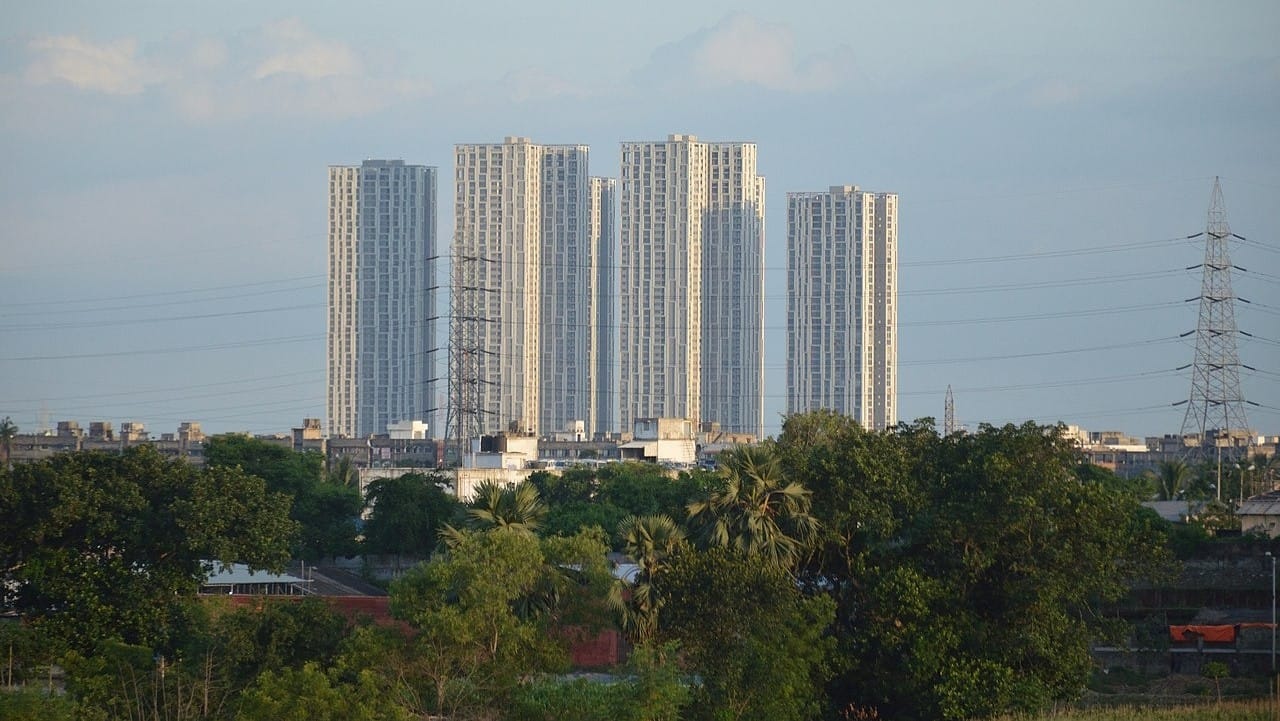
Mumbai Dominates Global Skyscraper Construction Race
India’s financial capital, Mumbai, has emerged as the world’s most active hub for high-rise construction, overtaking major global centres in the number of skyscrapers currently being built. The shift signals not just a construction boom, but a deeper transformation in how dense, land-constrained cities are reshaping their growth trajectories.
Recent data from global tall building databases indicates that more than 200 skyscrapers defined as structures exceeding 150 metres are under development across Mumbai. This places the city well ahead of international counterparts such as Tokyo, Dubai, Shenzhen and New York City, all of which have historically dominated vertical urban expansion. Urban planners attribute Mumbai’s skyscraper construction surge to a combination of land scarcity, regulatory recalibrations, and sustained housing demand. With limited horizontal expansion options due to its geography, vertical growth has become the city’s primary development model. Policy changes allowing higher floor space indices (FSI) and redevelopment incentives, particularly in ageing neighbourhoods, have further accelerated high-rise activity.
The scale of this transformation extends beyond municipal limits. Peripheral urban centres such as Thane and Navi Mumbai are also witnessing a parallel surge in skyscraper construction, reflecting the decentralisation of growth across the Mumbai Metropolitan Region. Together, these nodes are reshaping the region into a multi-core urban cluster with increasingly vertical skylines. However, the rapid pace of skyscraper construction raises critical questions around infrastructure readiness. Transport networks, water supply systems, waste management, and air quality are under mounting pressure as density intensifies. Urban experts note that while vertical development can optimise land use, it must be matched by investments in resilient infrastructure and climate-responsive planning.
There are also economic implications. High-rise developments tend to drive up land values and housing costs, potentially widening affordability gaps unless accompanied by inclusive housing strategies. At the same time, they create significant employment across construction, engineering, and allied sectors, contributing to urban economic momentum. From a sustainability perspective, the skyscraper construction trend presents both opportunities and challenges. High-density living can reduce urban sprawl and commute distances, but energy consumption, heat island effects, and carbon footprints of tall buildings remain areas of concern. Industry specialists emphasise the need for green building standards, energy-efficient design, and integrated public transport to ensure that vertical growth aligns with long-term climate goals.
As Mumbai continues to lead the global skyscraper construction landscape, the focus is likely to shift from scale to quality how these buildings perform, whom they serve, and whether they contribute to a more liveable, equitable, and resilient urban future.