


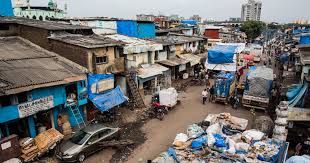
The first physical relocations under the Mumbai Dharavi redevelopment programme are now underway, marking a critical transition point for one of Asia’s largest informal settlements and raising questions about trust, transparency and execution in large-scale urban renewal.
Eviction notices have recently been issued in parts of Matunga and Sion, covering pockets of land earmarked for initial construction under the Rs 2.5-lakh-crore Dharavi Redevelopment Project. The move affects select clusters where temporary clearances are required to begin infrastructure work, according to project officials overseeing the scheme. A senior project executive said limited relocations were unavoidable given Dharavi’s extreme density. “Without creating initial working space, construction simply cannot begin,” the official explained, adding that residents would be shifted through lawful processes and housed either in transit accommodation or rental housing until permanent rehabilitation units are ready. However, on the ground in Matunga’s Meghwadi area, several residents remain sceptical. Community representatives argue that communication has been inadequate and timelines unclear. “People are anxious because they do not know what they are moving towards,” said a local civic organiser, pointing to the absence of visible demonstration homes and uncertainty over final unit layouts. Concerns have also been raised about the size and configuration of rehabilitation apartments. While authorities have committed to 350 sq ft homes for eligible households, residents argue that functional usability matters as much as headline numbers. Housing experts note that design quality, ventilation and privacy will determine whether the redevelopment genuinely improves living conditions.
The rental allowance offered during the transition period has emerged as another point of friction. Several families say the monthly support does not reflect prevailing market rents nearby, forcing them to move farther from workplaces and schools. Urban economists warn that poorly calibrated transit arrangements can unintentionally increase economic stress, especially for informal workers. In contrast, the atmosphere in Sion’s Shatabdi Nagar appears more optimistic. Hundreds of households there have begun shifting into nearby government-built transit apartments. Residents cited improved sanitation, safety and social dignity as reasons for accepting relocation, despite pending fixes related to privacy and security features within the temporary homes. An urban planner tracking the project said the contrasting responses highlight the complexity of rehousing nearly one million people. “Redevelopment at this scale is not just a construction challenge but a social one,” the planner said. “Consistency, transparency and participatory planning are essential for long-term success.”
The developer aims to deliver more than 1,25,000 permanent homes over seven years, alongside commercial and mixed-use developments. If executed well, the Mumbai Dharavi redevelopment could become a global example of compact, inclusive and climate-efficient urban regeneration. The early phase, however, suggests that earning resident confidence may prove just as crucial as meeting construction deadlines.
Also Read: Mumbai Madhuri Dixit’s Juhu Apartment Sold For Rs 3.90 Crore Almost Double 2012 Price
