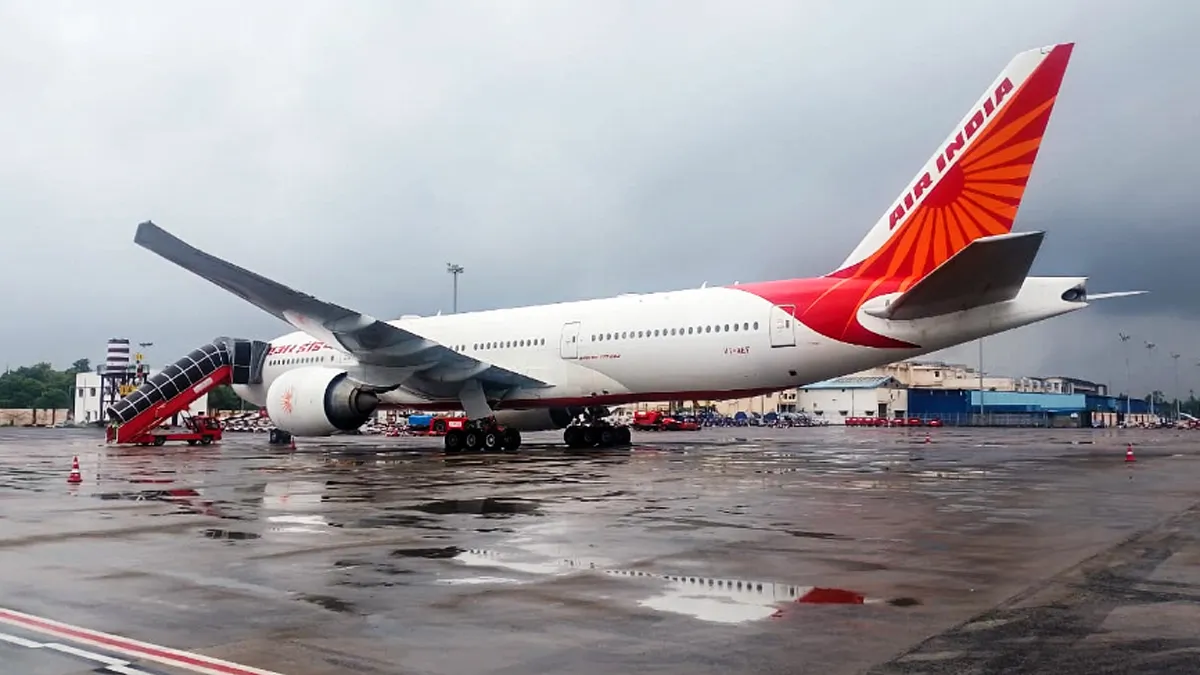
International air travel through India’s two largest gateways faced significant disruption on Sunday as escalating conflict in West Asia forced airlines to suspend or reroute operations, leading to widespread flight cancellations at Mumbai Airport and Delhi Airport. The developments underline how geopolitical shocks far beyond India’s borders can rapidly ripple through global aviation networks and urban mobility systems.
According to aviation officials familiar with airport operations, a total of 225 international flights were cancelled across the two hubs in a single day. Mumbai accounted for the larger share of disruptions, while Delhi experienced extensive cancellations affecting both inbound and outbound services. The primary trigger was the closure of key air corridors across parts of the Gulf region following military action involving Iran, the United States, and Israel, forcing airlines to reassess flight paths and aircraft deployment. At the national capital’s airport, operated by Delhi International Airport Ltd, dozens of long-haul services bound for Europe, North America, and West Asia were either cancelled or rescheduled. Airport authorities cautioned passengers that westbound international flights may continue to face uncertainty as airspace restrictions evolve. Aviation planners noted that longer alternative routes increase fuel consumption, crew duty times, and operational costs, making some flights temporarily unviable.
In Mumbai, the situation was compounded by ground-side constraints. Officials said congestion caused by returning aircraft and unscheduled diversions strained parking capacity at the airport. As a precautionary measure, the operator issued a temporary Notice to Airmen restricting further diversions during overnight hours. Industry experts said such steps are rare but necessary during sudden regional airspace closures, particularly at high-traffic airports with limited apron space. The broader impact extends beyond airline schedules. For cities like Mumbai and Delhi, which function as international business and logistics hubs, prolonged flight disruptions affect trade, tourism, and time-sensitive cargo. “Airports are critical urban infrastructure. When geopolitical instability shuts airspace thousands of kilometres away, the economic shock is felt locally within hours,” an aviation analyst said.
The Civil Aviation Ministry has indicated that hundreds of international services operated by Indian carriers could be affected nationwide if restrictions persist. Airlines are reportedly prioritising passenger safety and regulatory compliance while working to minimise disruption through rebooking and refunds. Urban mobility experts say the episode highlights the need for greater resilience planning in aviation-linked city infrastructure. As Indian cities expand their global connectivity, contingency capacity—both in airspace planning and airport operations—will become increasingly critical. For passengers, authorities advise closely monitoring airline advisories as the situation in West Asia remains fluid, with further adjustments likely in the coming days.
Mumbai Delhi Flights Cancelled Amid Iran Crisis