


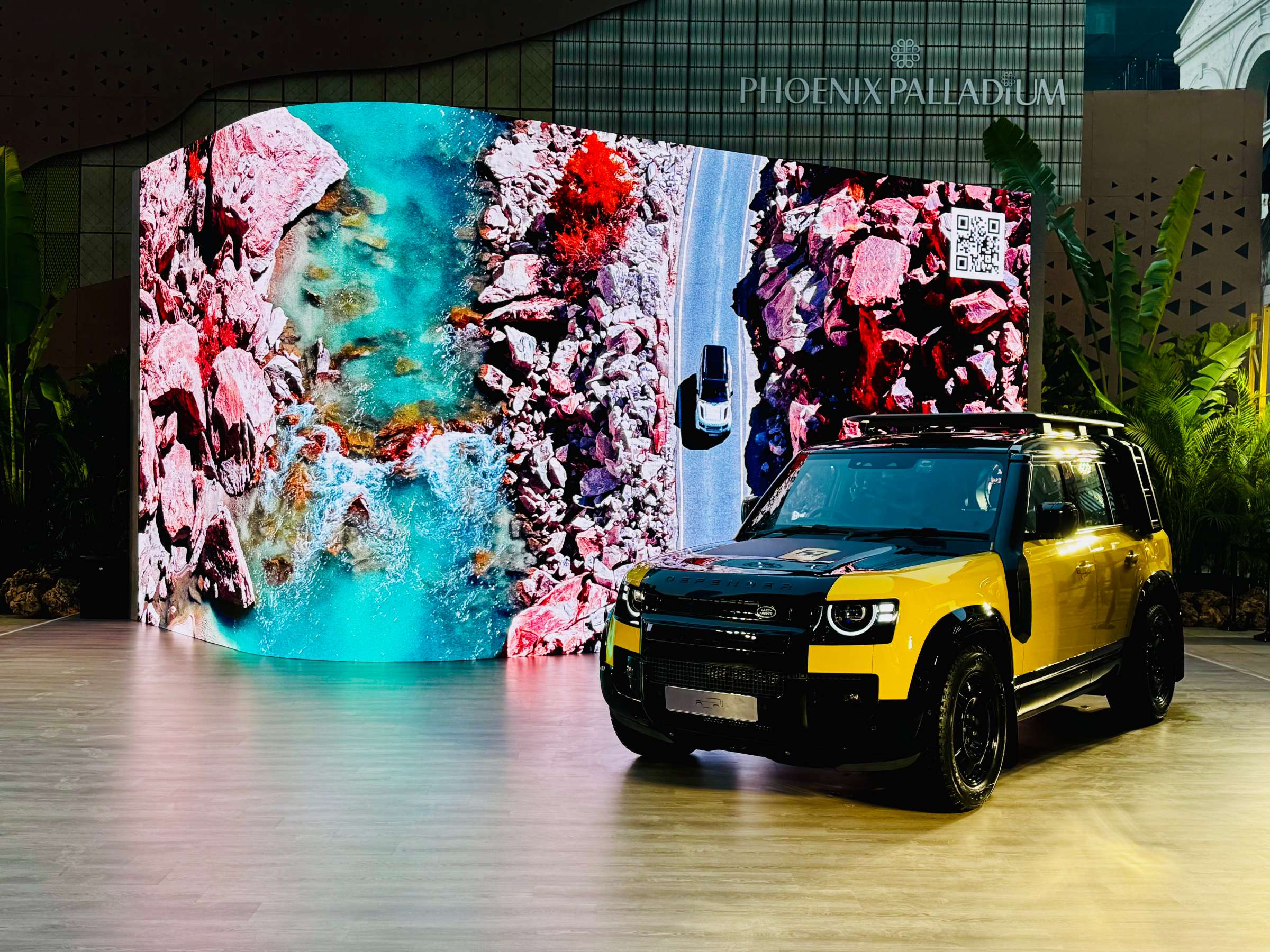
A large-format anamorphic display showcasing the Defender SUV made its India debut at Phoenix Palladium in Mumbai this week, signalling a new phase in experiential retail marketing within premium urban spaces. The installation, spanning roughly 35 feet by 16 feet, used three-dimensional visual illusion techniques to create the impression of a vehicle emerging from a digital screen — a first-of-its-kind execution for a luxury automotive brand in the country.
The activation, developed for Defender by Jaguar Land Rover India in collaboration with a media technology firm under Laqshya Media Group, is scheduled to travel to other major metros including Delhi, Gurgaon, Bengaluru, Kochi and Chennai over the coming weeks.Anamorphic displays rely on precise spatial modelling and perspective calibration to create depth illusions on flat LED screens. While widely used in global commercial hubs such as Seoul and Tokyo, their appearance in Indian malls reflects growing competition for consumer attention in high-footfall retail environments. Mall operators and brand strategists suggest such installations are designed not only to draw visitors but also to extend dwell time — a metric increasingly linked to tenant performance and rental value.
Industry analysts note that premium automotive brands are turning to immersive digital experiences as physical showroom expansion faces urban land constraints and rising real estate costs. By using shared public venues such as malls, brands can reach a broader demographic without committing to permanent built infrastructure. For developers, such events reinforce malls as multi-use civic spaces rather than pure shopping destinations.However, urban sustainability experts caution that large LED installations must account for energy consumption and lifecycle waste. While the Defender anamorphic display is temporary, the broader trend raises questions about how experiential marketing can align with low-carbon urban objectives. Industry insiders indicate that energy-efficient LED panels and time-bound programming are becoming standard considerations in such activations.
From an economic standpoint, the touring format also spreads opportunity across multiple cities. Event production, digital content design and technical calibration were executed domestically, reflecting the maturation of India’s creative technology sector. Experiential agencies argue that this shift keeps more intellectual property and employment within local ecosystems.The Defender anamorphic display illustrates how automotive marketing is converging with urban placemaking. As Indian metros compete to position themselves as innovation-led consumption hubs, such installations blur the line between advertising and public spectacle. The longer-term question for city planners and real estate stakeholders is how to balance spectacle-driven commerce with inclusive, energy-conscious urban design.
Also Read:Chandigarh’s Swachh Rose Festival spotlights zero waste
Mumbai Debuts Luxury Anamorphic Display
