


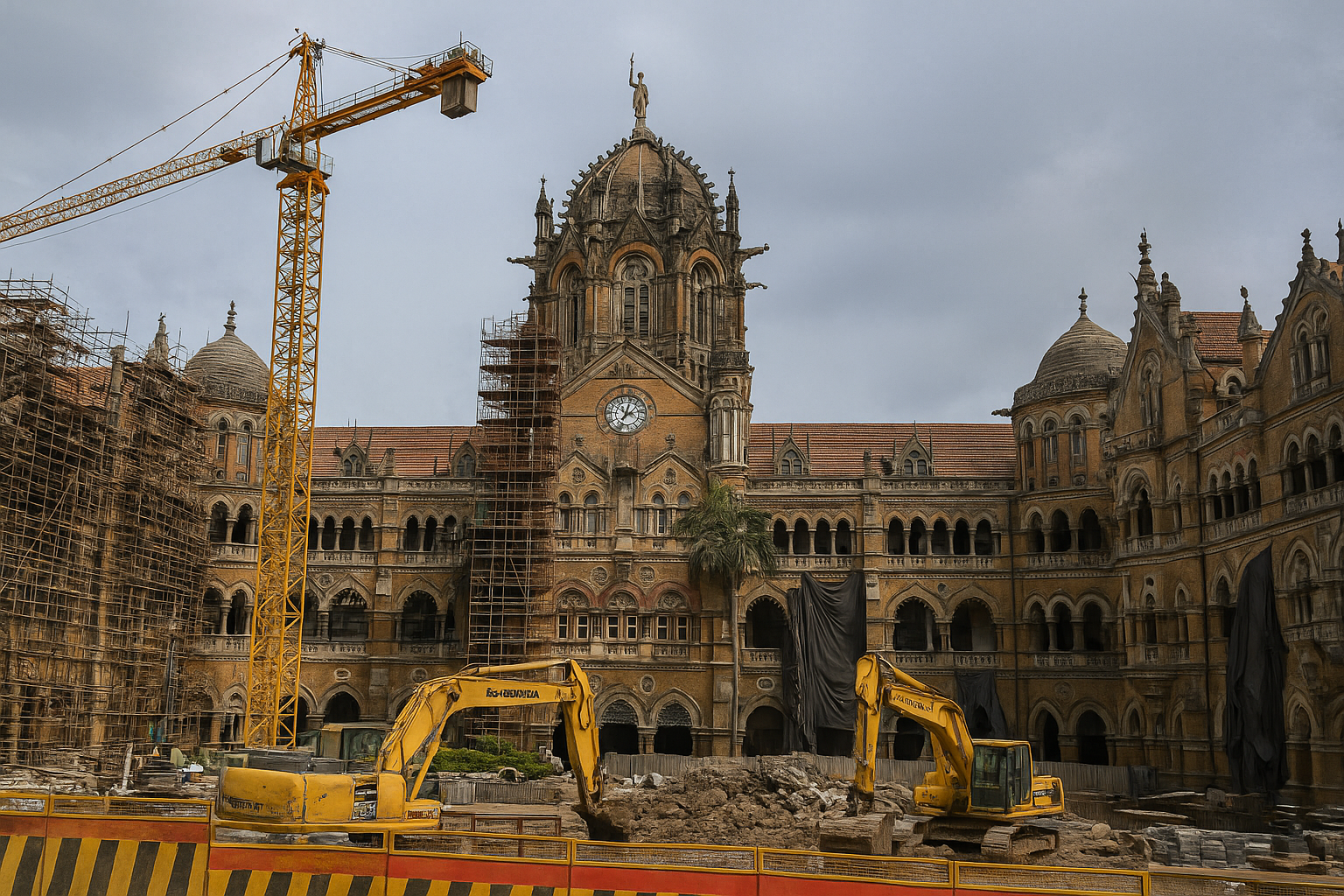
Mumbai’s iconic Chhatrapati Shivaji Maharaj Terminus (CSMT) is facing a significant setback in its ₹2,450 crore redevelopment, as early engineering challenges slow critical foundation work. Officials overseeing the project have expressed concern over sluggish progress, warning that key milestones may require revision if the current pace continues.
The redevelopment, aimed at transforming CSMT into a world-class, commuter-friendly and sustainably designed transport hub, is currently grappling with space constraints that prevent the use of high-powered piling rigs. Narrow platform widths and the presence of overhead electrical wires have left contractors reliant on smaller machines, extending the time needed to complete each pile from the planned four hours to nearly five days. Only 15% of piling work has been completed against a targeted 50%, with foundation work on platforms 10 and 11 underway and platforms 12 and 13 finished. Around 30 piles are to be laid, each spaced 15 metres apart to support the future station building and elevated deck. Given the restricted working hours to avoid disrupting suburban and long-distance trains, productivity has taken a further hit.
Also Watch: “Mumbai will rock, shine and always be India’s best city to live.” In an exclusive, MHADA CEO Sanjeev Jaiswal (IAS) talks about Mumbai’s enduring charm, livability, and the government’s focus on making it affordable for all
Officials familiar with the project suggest that such constraints should have been factored into the bidding and planning stages. The physical limitations of the site were well known, they noted, and alternative engineering strategies could have been prepared in advance. The redevelopment covers an area of over 4.6 lakh square metres, including both new construction and restoration of heritage sections. Once complete, CSMT is expected to offer seamless connectivity between suburban, harbour, and long-distance rail lines, alongside modern commercial spaces and public facilities. The design is intended to decongest one of India’s busiest stations while preserving its UNESCO-listed architectural heritage.
Planners have emphasised that the upgrade will not only modernise transport infrastructure but also contribute to Mumbai’s broader goal of sustainable and equitable urban growth. By integrating commuter convenience, heritage preservation, and green building practices, the revamped CSMT is positioned as a model for future transport hubs across India. However, these ambitions hinge on overcoming current engineering hurdles and restoring momentum to the construction schedule.
Also Read : BMC delays Mumbai road marking repairs risking commuter safety daily
Mumbai CSMT Revamp Faces Costly Delays
