


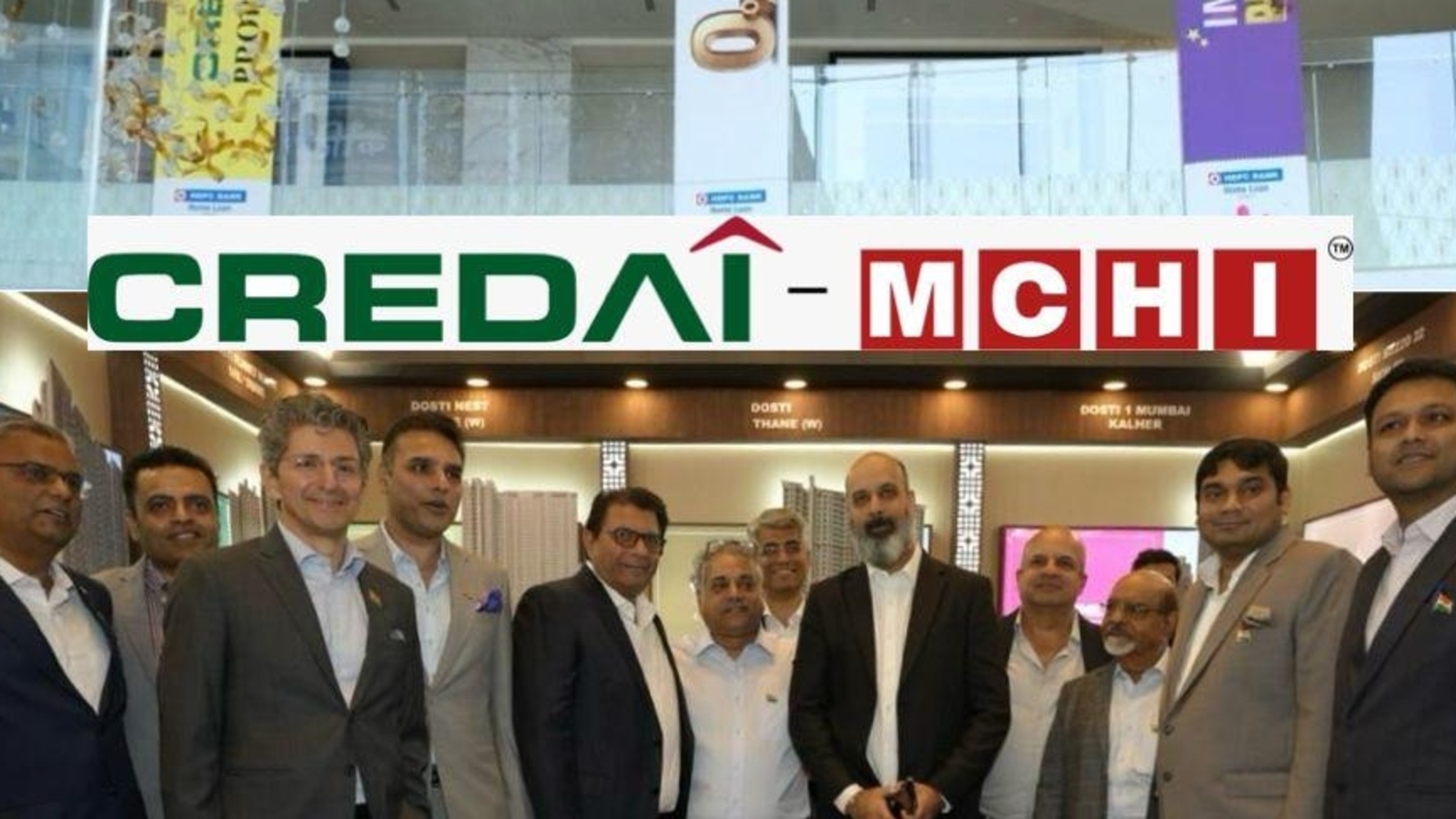
India’s property market could approach the Rs 10 lakh crore mark in the coming years, with senior living and commercial offices emerging as the next structural growth engines, industry leaders said at the 11th edition of MahaCON hosted by CREDAI Maharashtra in Mumbai.
At the conclave, representatives of CREDAI highlighted how infrastructure expansion, demographic shifts and rising institutional capital are reshaping the sector’s trajectory. Over the past decade, Indian real estate has seen significant expansion, and stakeholders now expect the market to scale further as formalisation deepens and funding channels widen. A key theme was the growing relevance of senior living communities. With increasing life expectancy and changing family structures, age-specific housing is projected to become a major asset class. Industry estimates suggest that India’s senior living market could evolve into a multi-billion-dollar segment by mid-century, supported by demand for integrated healthcare access, community spaces and managed services. Commercial real estate was identified as another pillar of growth. Office absorption across major cities continues to reflect corporate expansion, the return-to-office trend and demand for flexible, Grade A workspaces. Analysts believe sustained infrastructure upgrades and improved connectivity will underpin office demand in both metropolitan and emerging business hubs.
Speakers also pointed to large-scale transport projects and industrial corridors across Maharashtra as catalysts for decentralised urban growth. Improved highways and regional rail networks are compressing travel time between cities, enabling development beyond traditional cores like Mumbai and Pune. This shift is expected to ease pressure on saturated markets while unlocking Tier 2 and Tier 3 cities. Another structural change underway is the sector’s increasing engagement with capital markets. The rise in SME public listings and alternative funding platforms signals growing investor appetite and improved transparency. As regulatory compliance strengthens, developers are accessing more formal sources of finance, reducing dependence on informal capital. Technology adoption was also central to discussions. Industry leaders stressed the need for data-driven planning, artificial intelligence in sales forecasting and improved lifecycle management to enhance efficiency and customer trust. Digital integration across marketing, construction monitoring and after-sales service is increasingly viewed as a competitive differentiator. Economists at the forum noted that Maharashtra’s broader economic trajectory shaped by industrial expansion, logistics infrastructure and policy reforms will strongly influence housing and commercial demand patterns over the next decade.
Aligning macroeconomic priorities with urban planning, they argued, is essential to ensuring sustainable and regionally balanced growth. Taken together, deliberations at MahaCON underscored a transition from cyclical volatility to structural expansion. If infrastructure momentum and institutional participation continue, Indian real estate’s Rs10 lakh crore ambition may increasingly appear within reach.
Also Read: Mumbai Pali Hill Redevelopment Clears OC
Mumbai CREDAI MahaCON Real Estate Outlook
