


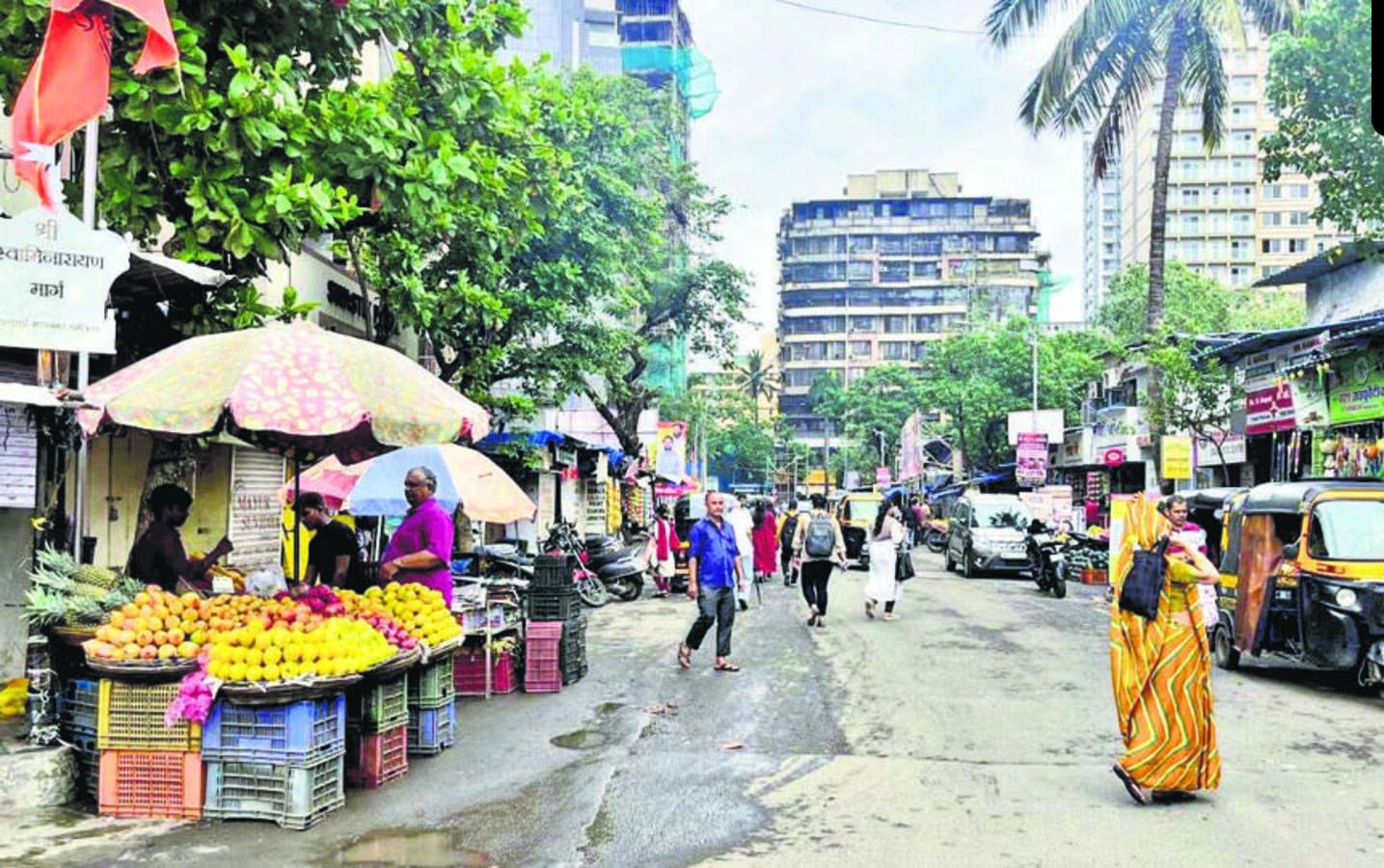
The Bombay High Court has issued a sharp rebuke over the unchecked spread of illegal hawking across Mumbai, directing the municipal administration to clear encroachments in Vikhroli and ensure safe pedestrian access. The directive came during a hearing on repeated complaints from residents who argued that footpaths and public spaces in the area have been overtaken by unregulated stalls, creating severe mobility challenges in one of the city’s busiest redevelopment pockets.
During the proceedings, the bench observed that informal structures had proliferated to a point where pavements in several neighbourhoods were no longer usable. The court noted that the pattern of unregulated hawking had begun to resemble a “spreading problem”, raising concerns about the city’s ability to manage essential civic infrastructure. Officials familiar with urban governance issues said the court’s remarks reflect long-standing tensions between public safety, economic livelihoods, and the municipality’s enforcement responsibilities. Residents from Tagore Nagar in Vikhroli East approached the court earlier this year, citing substantial congestion on crucial roads that serve thousands of daily commuters. They reported that unauthorised stalls had taken over sections of a major connector leading to the local railway station, limiting road width and obstructing access for pedestrians, schoolchildren, and patients visiting a nearby hospital. According to community representatives, these concerns have persisted for years despite multiple complaints to authorities.
The petitioners also pointed to lapses in enforcement, stating that several directives issued by senior civic officials had not translated into on-ground action. A civic official, speaking on condition of anonymity, acknowledged that overcrowded pavements pose a safety risk but noted that coordination between multiple municipal departments often slows down enforcement. Urban planners said that predictable enforcement frameworks and transparent licensing processes are essential for maintaining inclusive, well-managed public spaces. The petition raised additional concerns about public health, citing instances where stall operators used gas cylinders and open flames close to pedestrian pathways. Experts said such practices create avoidable fire hazards in dense neighbourhoods already struggling with restricted mobility. The court was informed that even after its recent instruction to clear around 20 unauthorised stalls, only a fraction had received official notices, prompting questions about the pace of municipal action.
Local residents argued that the growing obstructions prevent ambulances and emergency vehicles from moving freely through the area, a challenge repeatedly seen in high-density urban settlements. They stressed that pavements must be prioritised for pedestrians, particularly in a city where walking remains a primary mode of transport for millions. Urban development specialists emphasised that safeguarding pavements is central to building equitable and accessible cities. They noted that while street vending remains an important livelihood source, it must be organised in a manner that respects designated non-hawking zones, supports safe mobility, and aligns with sustainable urban planning goals.
The court’s directive, residents hope, will push the municipal corporation to reassert control over public spaces and strengthen pedestrian safety. A senior municipal representative indicated that coordination between enforcement wings will be reviewed to ensure that future actions are more consistent and transparent.
Also Read : Mumbai Airport To Shut Both Runways For Six Hours On 20 November 2025
