


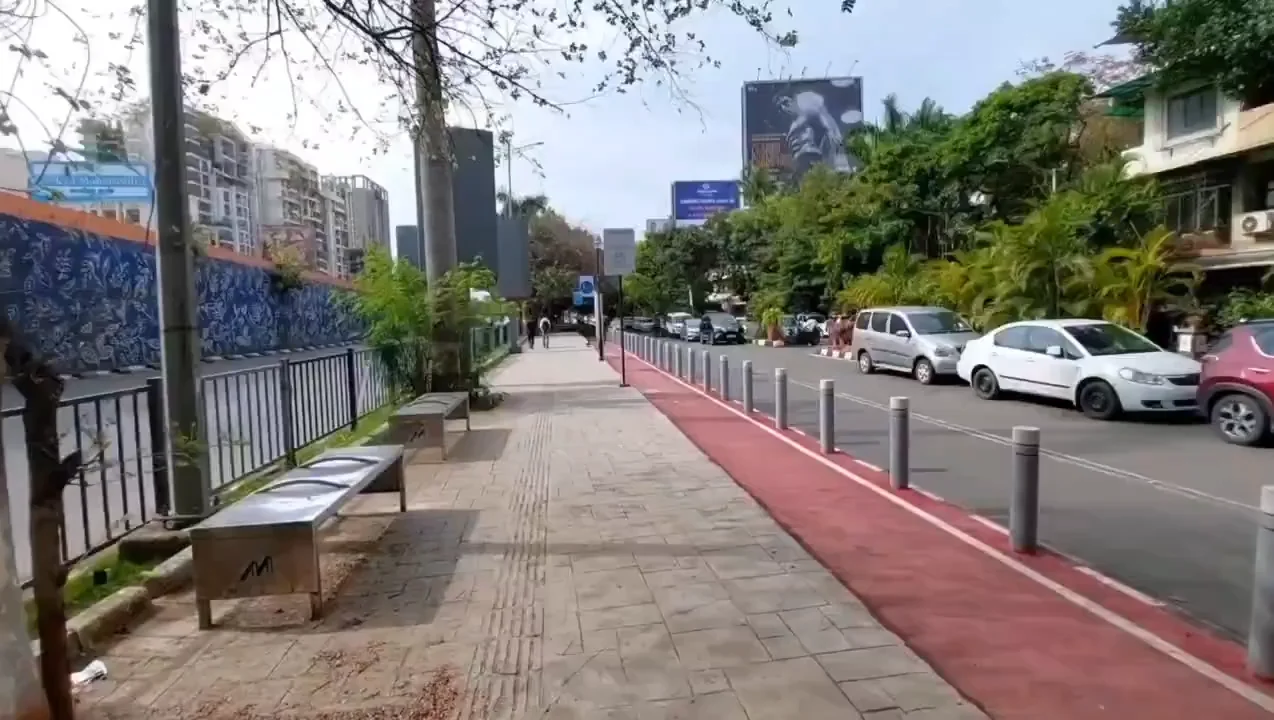
The Bombay High Court has ordered the Brihanmumbai Municipal Corporation (BMC) to set up a special unit that will focus solely on clearing encroachments from the city’s footpaths. The directive came in response to a petition lodged by two Powai housing societies, whose members complained that squatters had taken over nearby pavements, turning once-safe walkways into hazard zones. By granting the petition, the court has intensified the BMC’s responsibility to restore public passage and curb the long-standing problem of footpath occupation.
On July 7, Advocate Priti Shah, counsel for the societies, presented striking photographic proof to Justices G.S. Kulkarni and Arif Doctor, documenting the scale of the obstruction. Images displayed makeshift tin and plastic kiosks lining the Powai path, where people cooked, sold snacks, and hung wet clothes for passers-by to navigate around. The blatant occupation of this shared thoroughfare led the judges to demand an explanation of why the BMC had repeatedly ignored such apparent contraventions of law. The bench observed that Powai is not a lone example; the same pattern of encroachment now stretches across the entire city. They voiced alarm that pedestrians often have no choice but to walk on busy roads after footpaths are obstructed. With unusual bluntness, the judges asked the Brihanmumbai Municipal Corporation (BMC) whether it would accept liability for any accidents arising from that situation, pointing to a moment when responsibility can no longer be deferred.
“It is high time that there is accountability for the damages to be paid,” the court declared, repeating its strong expectation that civic authorities be charged for failing to keep public passage safe. The bench also rebuked the BMC’s habit of launching only selective drives against encroachments, and wondered why the full scale of the problem has not been tackled in a consistent, citywide manner. Widening its focus, the court invoked internationally established town-planning norms that insist on clear, durable walkways available for every resident. Judges argued that taxpayer money has already funded infrastructure intended to shield pedestrians, yet ongoing encroachment steadily subverts that public investment. By repeatedly looking the other way while footpaths are co-opted, the BMC has, in the court’s words, allowed entirely preventable dangers to settle into everyday life on Mumbai streets.
In response to continually worsening conditions on Mumbai’s footpaths, the High Court has directed the Brihanmumbai Municipal Corporation (BMC) to establish a dedicated task force that will identify and remove unauthorised encroachments across the city. This new cell will be overseen by an additional municipal commissioner and supported by two senior officers charged with conducting a comprehensive citywide survey. The judges underscored the need for prompt and decisive measures, explicitly instructing the cell to restore pedestrian walkways as quickly as possible. The judgment signals a broader recognition that only fundamental reform within Mumbai’s administrative structure can safeguard public infrastructure. The bench reminded the BMC that permitting hazards on footpaths risks lives, and the civic body must therefore exercise proactive rather than reactive governance. By insisting on immediate implementation, the court has shifted the debate from future aspirations to present obligations, challenging Mumbai to transform its thoroughfares into clean, secure passageways for all residents.
Also Read : Mumbai Faces Growing Air Pollution Crisis with Elevated PM2.5 Levels
Mumbai Court Directs BMC to Form Special Cell for Pavement Evictions
