


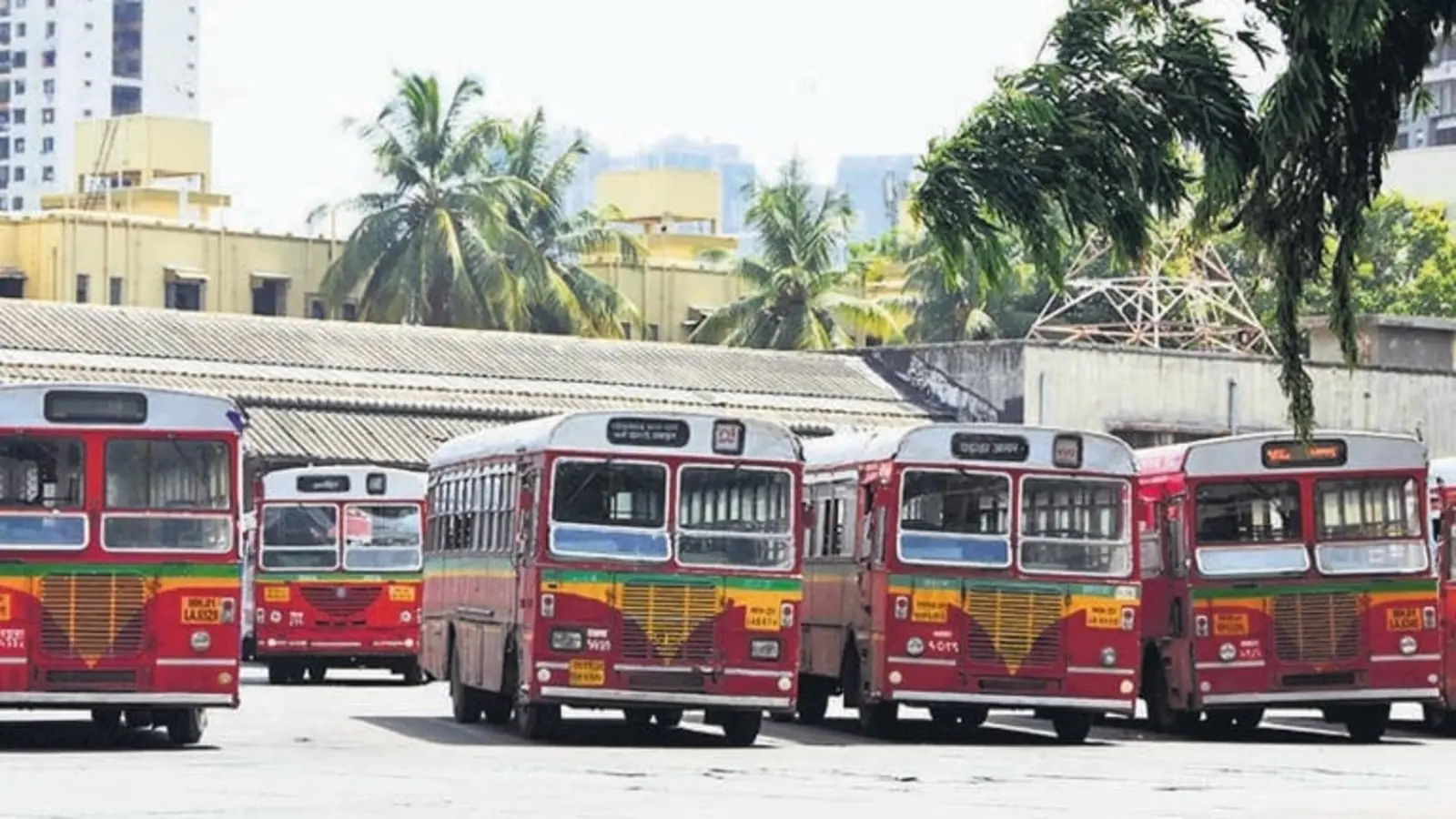
Mumbai commuters experienced brief disruption on Tuesday morning as contractual drivers operating BEST wet lease buses staged a flash strike at the Shivaji Nagar depot in Mankhurd. The protest, reportedly triggered by delayed salaries and pending Diwali bonuses, left several city residents stranded and highlighted ongoing challenges in maintaining consistent urban transport services.
Officials from the Brihanmumbai Electric Supply and Transport (BEST) Undertaking acted swiftly, deploying permanent staff to operate affected routes. According to a senior BEST official, “Despite the protest, there was no major disruption in overall operations as backup drivers were mobilised immediately to ensure commuter safety and continuity.” Transport experts and civic activists noted that such industrial actions, though brief, expose vulnerabilities in Mumbai’s public transport system, particularly in light of shrinking permanent staff and increased reliance on contract personnel. “Contractual strikes can potentially hold city transport to ransom,” stated an urban mobility expert, underscoring the critical need for long-term workforce planning and timely remuneration to avoid recurring unrest.
The protest also brought attention to broader operational challenges in the city’s public transport framework. Residents in affected areas reported delays in point-to-point services, overcrowding in buses, and commuter inconvenience. BEST authorities emphasised that measures are in place to ensure emergency services, including ambulances, remain unaffected even during temporary service disruptions. Urban planners suggest that incidents such as the Shivaji Nagar strike indicate the need for sustainable staffing models and stronger industrial relations within civic transport agencies. Contractual drivers, who form a significant portion of BEST’s workforce, have expressed recurring grievances regarding pay structures and benefits. These concerns have intensified as the city’s public transit demand grows steadily, especially during festival periods when commuter volumes peak.
Civic experts urge a balanced approach where labour rights are respected while operational continuity for city commuters is safeguarded. “Ensuring timely payments and proper communication with contractual staff can prevent abrupt disruptions and maintain trust in urban transport systems,” added an official from the municipal transport department. As Mumbai continues to expand its eco-friendly mass transit network, including metro lines and electric bus fleets, the city faces the dual challenge of sustaining service quality and addressing workforce grievances. The Shivaji Nagar incident serves as a reminder that human resource management is central to building resilient, equitable, and reliable public transport systems for a growing metropolis.
Also Read : Mumbai Residents Complain About Persistent Traffic Chaos After Metro Line Three Completion
