


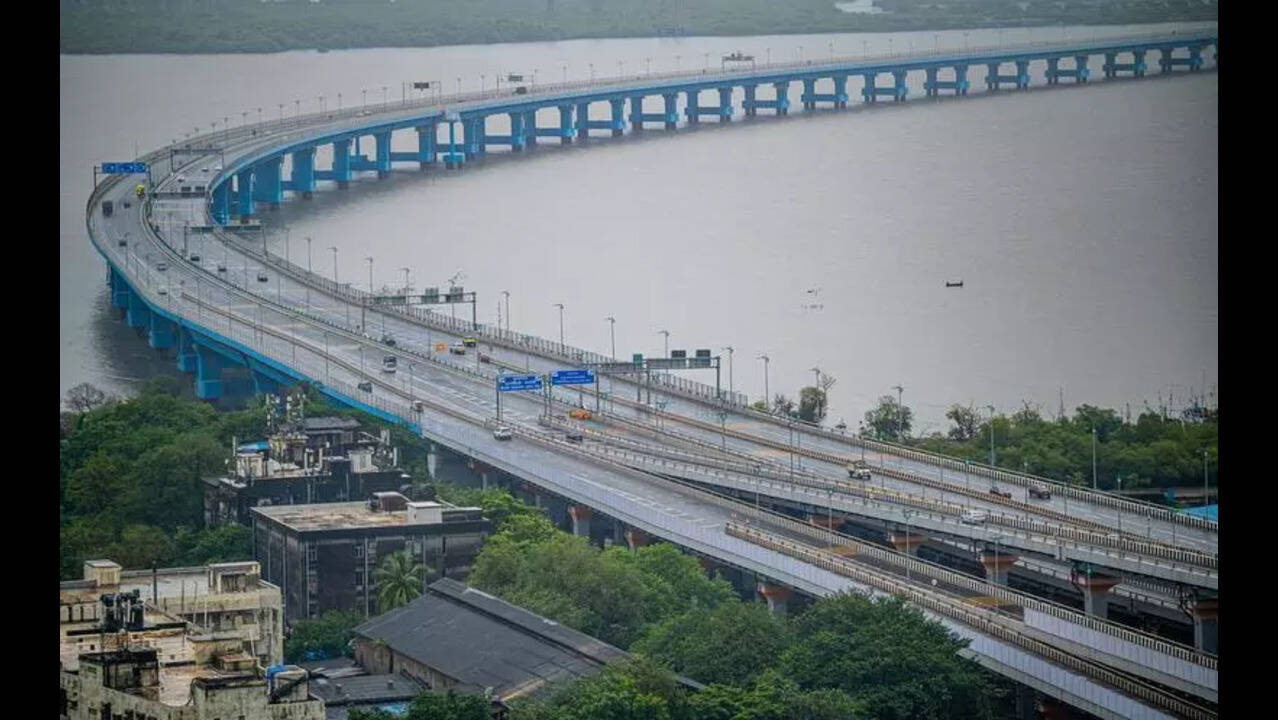
The Mumbai Metropolitan Region Development Authority (MMRDA) has imposed a Rs 1 crore penalty on the contractor responsible for a section of the Atal Setu, following a viral video that highlighted surface damage on the newly inaugurated bridge. While holding the contractor accountable, officials cited exceptionally heavy monsoon rainfall and continuous traffic flow as contributing factors to the distress observed on the road surface.
The Mumbai Trans Harbour Link, officially named Atal Bihari Vajpayee Sewri–Nhava Sheva Atal Setu, was inaugurated on January 12, 2024, and at 21.8 km, is India’s longest sea bridge and the world’s 12th longest. Built at a cost of Rs 17,840 crore, the bridge is a landmark infrastructure project aimed at decongesting Mumbai’s road network and improving connectivity to Navi Mumbai and the Jawaharlal Nehru Port Trust. MMRDA identified minor surface damage at three spots along the Navi Mumbai–bound carriageway, specifically near km 11, 15, and 16. The 7.8 km portion of the bridge under scrutiny, stretching from Shivaji Nagar in Navi Mumbai to mid-sea, was constructed by TATA Projects Daewoo JV. In response, immediate remedial measures included resurfacing longer stretches with bitumen and mastic asphalt, replacing temporary patchwork to ensure safe driving conditions during wet weather.
Officials emphasised that permanent resurfacing will be carried out post-monsoon, using high-grade dense bituminous macadam (DBM) and asphalt concrete (AC) layers strictly according to specifications. Additionally, the defect liability period for the project has been extended by one year, safeguarding long-term pavement performance and rider comfort. The incident sparked strong reactions on social media, highlighting public concern over accountability and quality standards. Users questioned the robustness of the bridge surface given India’s heavy rainfall during monsoon, emphasising the need for stricter supervision and adherence to construction norms. Experts suggest that while weather impacts infrastructure, contractor responsibility and material quality remain critical to long-term durability.
The MMRDA’s response reflects a proactive approach to infrastructure management, balancing public safety, accountability, and remedial action. By addressing the damage promptly and extending liability periods, authorities aim to maintain the Atal Setu’s structural integrity, while reassuring commuters and stakeholders of rigorous oversight. As Mumbai continues to expand its high-value transport infrastructure, this episode underscores the importance of robust project monitoring, climate-resilient design, and sustainable construction practices, ensuring that India’s flagship projects meet international standards and public expectations.
Also Read : Indian Railways Launches 15 Day Nationwide Cleanliness Drive
