


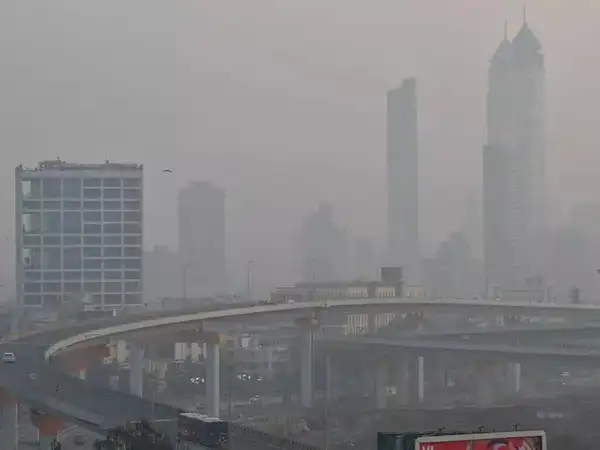
Mumbai’s air quality monitoring network registered its sharpest stress point this week in Worli, where the Air Quality Index (AQI) climbed to 278 categorised as ‘poor’ prompting civic authorities to initiate enforcement action against active construction sites in the area. The development highlights the fragile balance between infrastructure expansion and environmental compliance in India’s financial capital.
According to data from the Central Pollution Control Board, while the broader city averaged a ‘moderate’ AQI of 130, the spike in Worli stood out as a localised hotspot. Officials at the Brihanmumbai Municipal Corporation (BMC) confirmed that stop-work notices are being considered for 12 construction sites within the G-South ward, including public infrastructure projects. Among the sites under scrutiny are a sewage treatment facility upgrade and structural repairs at the National Environmental Engineering Research Institute campus, where the city’s continuous air quality monitoring station is located. Civic engineers indicated that construction dust and material handling activities in the immediate vicinity may have influenced the recorded spike. The episode underscores a broader governance challenge. Mumbai currently has more than 2,200 active construction sites, of which over half have previously faced compliance action for failing to implement dust mitigation and on-site air monitoring norms. Urban planners note that while redevelopment and transit-linked growth remain central to Mumbai’s housing and economic strategy, unchecked particulate emissions can erode public health gains and investor confidence.
Environmental analysts pointed out that ground-level ozone identified as the dominant pollutant in Worli is not emitted directly. It forms when nitrogen oxides and volatile organic compounds from vehicular exhaust and construction-related emissions react under sunlight and humidity. Such conditions are common during late winter in coastal cities, when temperature inversions and moisture trap pollutants closer to the ground. For real estate and infrastructure stakeholders, the situation signals tightening regulatory oversight rather than a temporary enforcement drive. The BMC has increased site inspections, deployed water tankers for dust suppression and mandated the use of mist cannons in dense construction clusters. Developers are being reminded that environmental compliance is now integral to project timelines and occupancy approvals. Public health experts caution that repeated exposure to elevated AQI levels can aggravate respiratory conditions, especially among outdoor workers and vulnerable communities living near construction corridors. The financial implications are equally significant: work stoppages, penalties and reputational risks can delay project delivery in a market already sensitive to cost escalations.
Mumbai’s development trajectory depends on synchronising growth with climate resilience. As infrastructure pipelines accelerate, the city’s ability to enforce environmental safeguards consistently rather than episodically will shape whether its expansion supports cleaner, more liveable neighbourhoods or compounds urban stress. The coming weeks will indicate whether the current enforcement translates into systemic compliance reforms across the metropolitan region.
Also Read: Colaba high rise faces height scrutiny
Mumbai construction curbs after AQI rise
