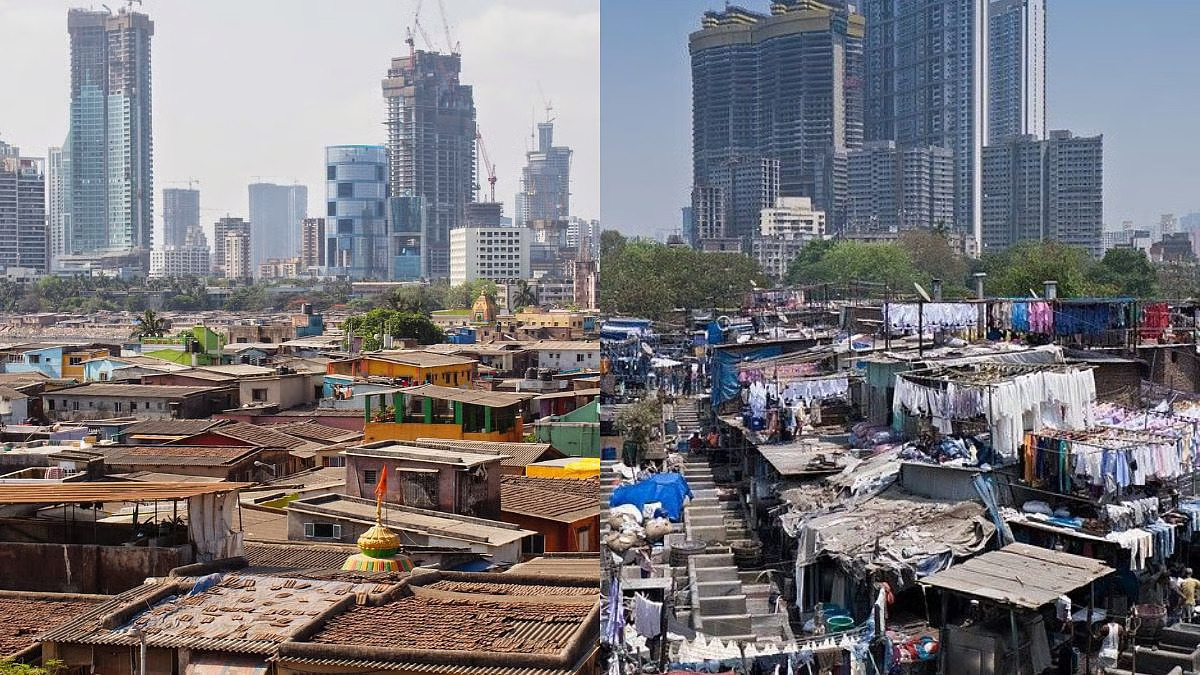
Mumbai has recorded the completion of 2,545 slum rehabilitation projects over nearly three decades, reflecting the city’s ongoing efforts to provide formal housing to its urban poor. Notably, nearly 500 of these projects, or roughly 18 percent, were completed in the five years following the COVID-19 pandemic, indicating a post-pandemic acceleration in urban redevelopment initiatives, according to the Maharashtra Economic Survey 2025–26.
Since the establishment of the Slum Rehabilitation Authority (SRA) in 1995, the city has rehabilitated close to 2.84 lakh slum-dwelling families into formal housing units. Thane, as part of the Mumbai Metropolitan Region, has completed all 51 of its SRA projects, accommodating approximately 7,815 families. Experts suggest that such programmes are critical for ensuring equitable urban growth while mitigating the environmental pressures associated with informal settlements in high-density metropolitan areas. Analysis of recent trends shows that over 1,000 SRA projects were undertaken in the last decade alone, compared to just over 1,500 projects completed between 1995 and 2015. Urban planners highlight that this accelerated pace reflects both policy focus and market interest in slum redevelopment, as well as the need to modernise ageing housing infrastructure to meet safety and environmental standards.
The SRA framework enables private developers to rehabilitate slum dwellers with free housing units while leveraging additional construction rights to recover costs through saleable apartments. While this model has facilitated large-scale formalisation of slum settlements, planners note that integrating these developments with local infrastructure, green spaces, and climate-resilient design remains a key challenge for sustainable urbanisation. Beyond SRA, other agencies including the Maharashtra Housing and Area Development Authority (MHADA) and the City and Industrial Development Corporation (CIDCO) have contributed substantially to affordable housing in the state. MHADA has delivered 5.27 lakh units since its inception in 1977, while CIDCO has constructed 2.30 lakh units through planned township projects, according to the survey.
The survey also highlights the impact of the Union government’s Pradhan Mantri Awas Yojana (PMAY) scheme in Maharashtra. Under PMAY-U, the state has sanctioned over 10.15 lakh dwelling units, of which 8.75 lakh have been completed. PMAY 2.0 has registered more than 3.21 lakh beneficiaries, with ₹246.93 crore disbursed for urban housing support. Experts emphasise that central and state programmes together create a multi-tiered approach to addressing housing deficits in high-density cities like Mumbai. While the figures signal progress in formalising slum settlements, stakeholders argue that long-term success depends on integrating these housing solutions with resilient infrastructure, inclusive public amenities, and climate-conscious urban planning. Ensuring equitable access to housing, coupled with sustainable urban design, remains a priority as Mumbai continues to balance growth pressures with social and environmental imperatives.
Mumbai Completes Over 2500 Slum Rehabilitation Projects