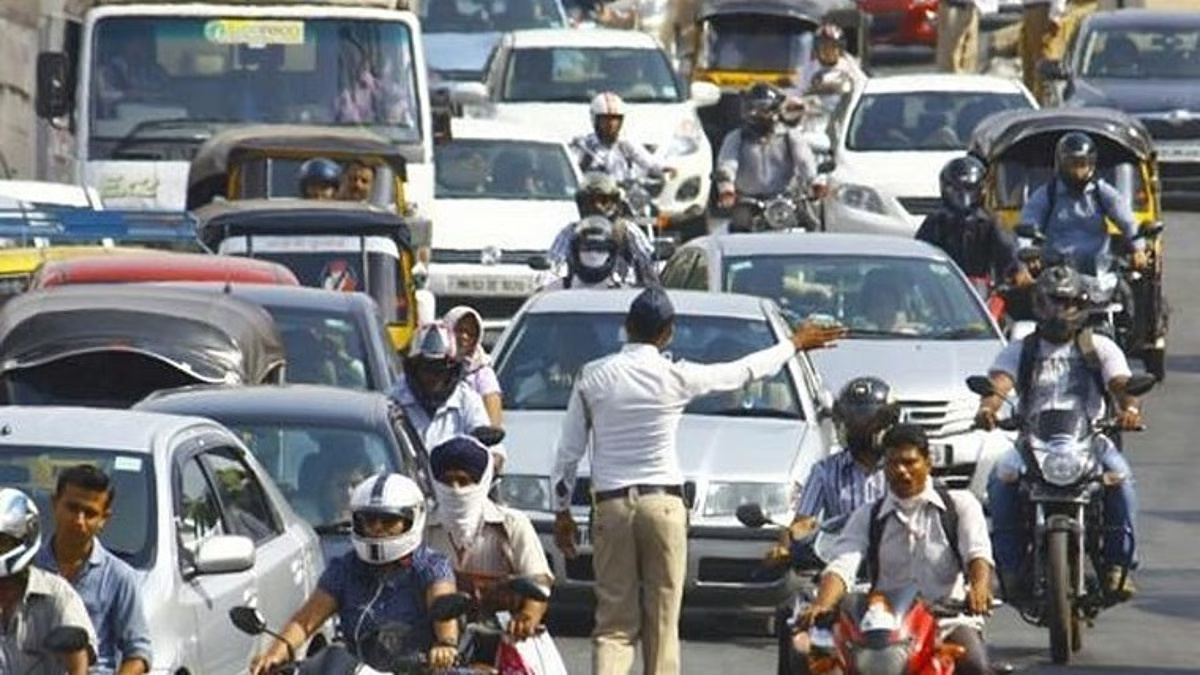
Mumbai’s reputation as a city in constant motion is increasingly at odds with the experience of its daily commuters. Fresh global traffic data shows that despite marginal improvements on select corridors, congestion continues to consume a significant share of residents’ time, with the average commuter spending the equivalent of several full days each year stuck on the road.
According to the latest global traffic assessment, motorists in Mumbai spend roughly 126 hours annually navigating peak-hour congestion. While the figure reflects a slight improvement over the previous year, urban mobility experts say the change is barely perceptible at street level. For a city where long workdays and extended commutes are already the norm, lost hours on the road translate directly into reduced productivity, personal stress, and declining quality of life. Key commercial districts remain among the worst affected. Areas such as Lower Parel, Bandra Kurla Complex, and parts of Andheri continue to experience persistent bottlenecks, particularly during evening peak hours. Average vehicle speeds in these zones fall well below what is considered efficient for a global financial and commercial centre, reflecting the mismatch between rapid job concentration and limited road capacity.
Transport planners note that recent investments, including new metro corridors and coastal road infrastructure, have provided some relief on specific routes. However, these gains are often offset by congestion on feeder roads, narrow internal streets, and junctions connecting business districts to arterial corridors. The steady rise in private vehicle ownership has further diluted the impact of infrastructure expansion. Data from the study highlights how congestion shapes daily routines. Covering a distance of just 10 kilometres during the evening rush often takes more than half an hour, a delay that compounds across weeks and months. On particularly severe days, congestion levels spike dramatically due to weather events, roadworks, or incidents, underscoring the system’s vulnerability to disruption.
In a global comparison, Mumbai sits among the more congested major cities but does not top the list. Other Indian metros fare worse, with some residents losing significantly more time each year to traffic delays. Still, urban economists caution against complacency, noting that Mumbai’s scale and economic role mean even moderate congestion carries outsized social and environmental costs. From a sustainability perspective, prolonged congestion contributes to higher fuel consumption and emissions, undermining the city’s climate goals. Mobility specialists argue that addressing this challenge requires more than road expansion. Greater emphasis on reliable public transport, last-mile connectivity, flexible work hours, and transit-oriented development could reduce pressure on roads while supporting inclusive growth.
As Mumbai continues to grow vertically and economically, the persistence of traffic congestion raises urgent questions about urban planning priorities. Incremental improvements may show progress in data sets, but for commuters, meaningful change will only be felt when daily travel becomes predictably faster, safer, and less exhausting.
Mumbai Commuters Lose Over 120 Hours Annually to Road Congestion