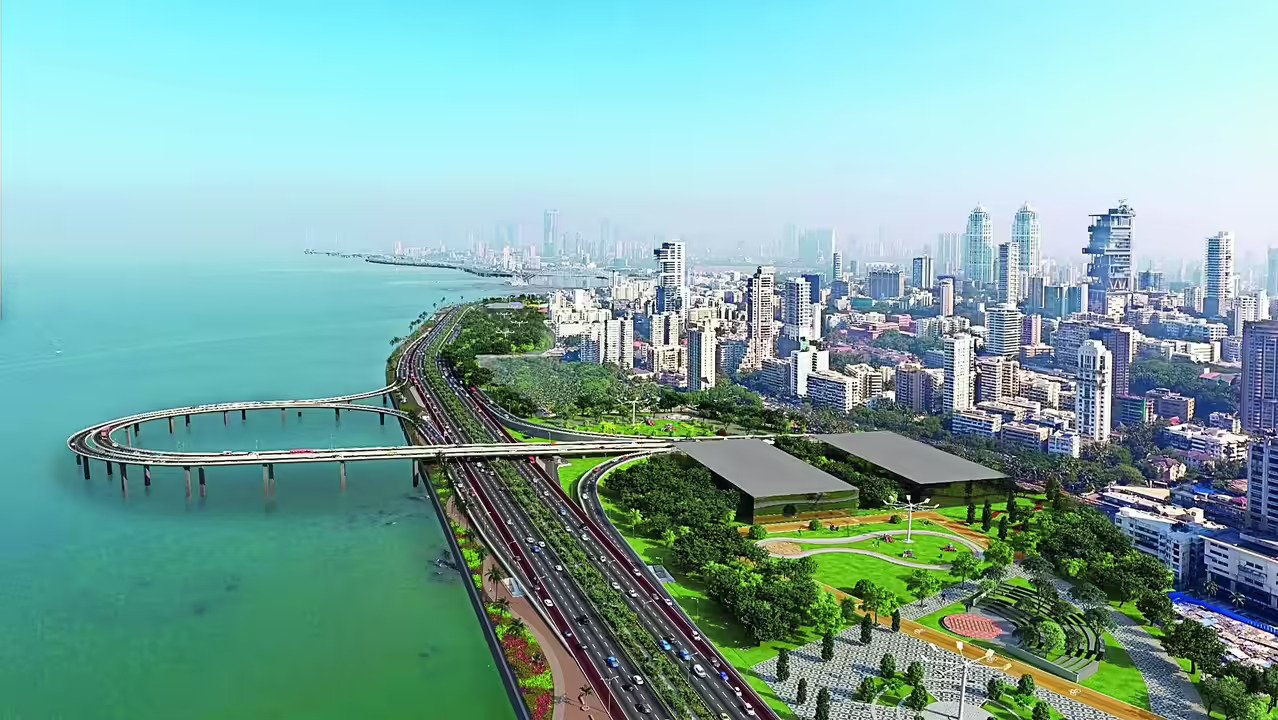
A proposed overhaul of some of Mumbai’s largest open spaces has triggered fresh debate on climate resilience, public finance and land governance, with a group of urban planners and architects urging authorities to reassess the long-term implications of large-scale construction beneath natural landscapes. The concerns relate to plans linked to the Mumbai Coastal Road Project and the redevelopment of the Mahalaxmi Racecourse, together forming nearly 300 acres of contiguous public land.
The proposals were recently outlined by the city administration as part of a broader strategy to expand accessible green spaces in land-scarce south Mumbai. The plan envisions landscaped parks, recreational amenities and structured public facilities along reclaimed coastal stretches, alongside the conversion of the racecourse into a large botanical garden supported by underground recreational and parking infrastructure. However, members of a city-based architects’ collective have formally flagged what they describe as technical and fiscal risks embedded in the approach. In a submission to the state government and the Municipal Corporation of Greater Mumbai, the group warned that extensive sub-surface construction beneath existing open grounds could weaken Mumbai’s ability to absorb monsoon rainfall and adapt to rising sea levels.
Urban climate specialists say the concern is rooted in basic hydrology. Large open maidans and coastal marsh-adjacent lands act as natural sponges, absorbing water and reducing runoff during heavy rainfall. Replacing these permeable layers with deep basements and concrete slabs, they argue, may increase surface flooding and place additional stress on drainage systems already operating close to capacity. Cost escalation is another issue raised. Analysts note that underground structures require continuous energy inputs for ventilation, lighting and safety systems, translating into higher lifecycle costs for civic bodies. “Natural open grounds are among the lowest-cost climate assets a city can maintain,” said an urban infrastructure economist. “Once you convert them into engineered structures, you lock the city into decades of operational expenditure.”
Mobility planning has also emerged as a fault line. Experts caution that large underground parking facilities beneath public grounds could reinforce car-centric access, rather than encouraging public transport, walking and cycling—an outcome at odds with Mumbai’s long-term sustainability and congestion management goals. The architects’ group has emphasised that its objections are not directed at improving public access or enhancing open spaces, but at the absence of an integrated landscape and climate strategy across the combined coastal road and racecourse sites. They argue that decisions are being advanced as individual projects, without a unified assessment of cumulative environmental impact, governance structure or public use framework.
City officials, meanwhile, maintain that the intent is to offset declining green cover and create world-class public spaces in a dense urban core. Industry observers say the coming weeks will be critical, as authorities weigh expert feedback against political and civic expectations. The debate highlights a broader challenge facing Mumbai: how to expand public amenities while preserving the ecological functions that allow a coastal megacity to remain liveable. The outcome may set a precedent for how future urban mega-projects balance design ambition with climate realism.
Mumbai Coastal Road Park Plan Faces Expert Pushback