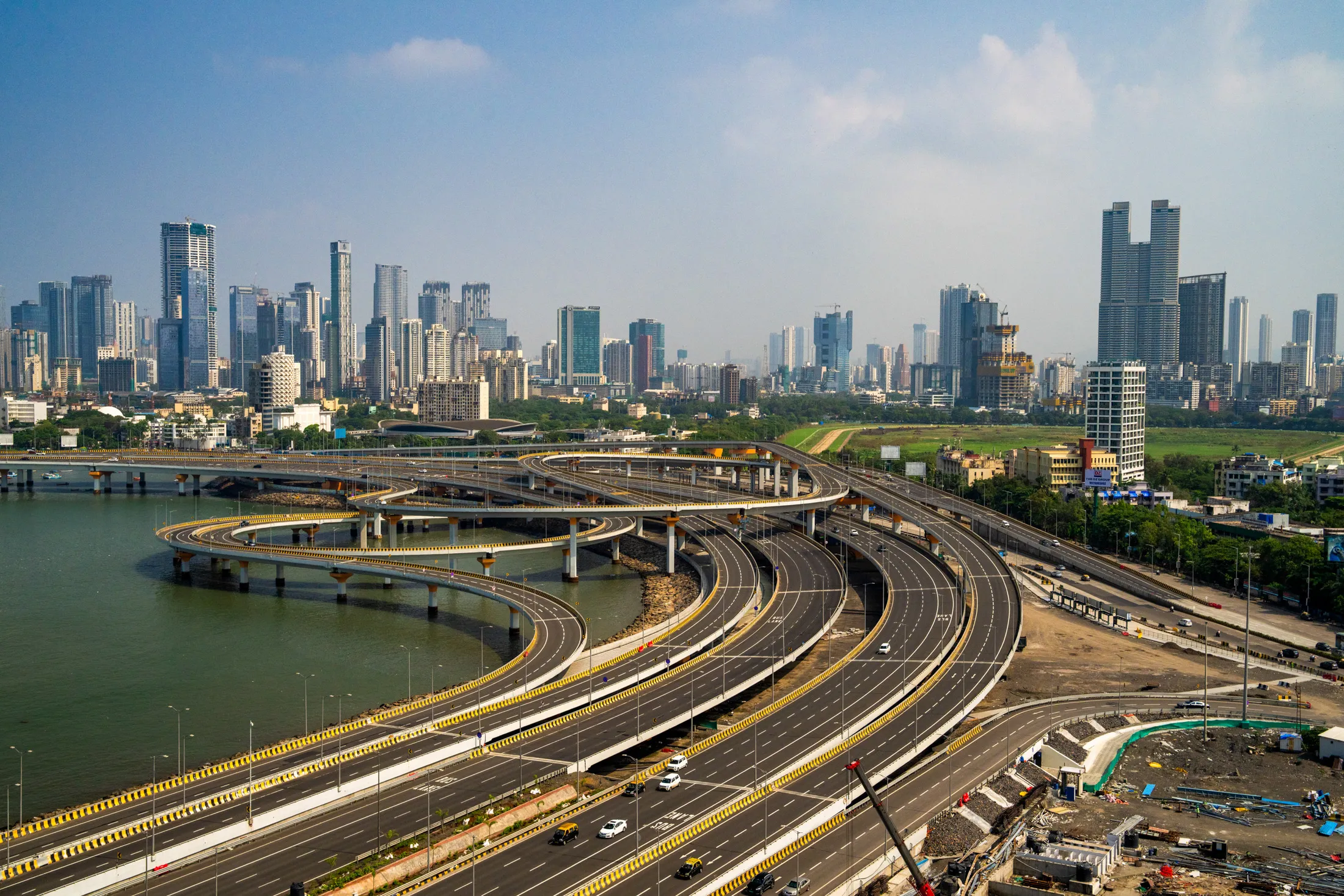
Mumbai’s largest reclaimed waterfront corridor is poised for a significant urban transformation, with civic authorities outlining plans to convert nearly 70 hectares of unused land along the Mumbai Coastal Road into a continuous network of public green spaces, nature trails, and recreational amenities. The proposal marks a crucial pivot from car-centric infrastructure toward people-first urban design in one of India’s most space-constrained cities.
The reclaimed land parcels form part of the 10.5-kilometre coastal corridor that became operational last year, built largely through sea reclamation. While the road infrastructure occupies a smaller share of the reclaimed footprint, the remaining open areas have so far remained inaccessible and undeveloped, drawing criticism amid rising concerns over air quality, heat stress, and declining tree cover across Mumbai. According to civic planning officials, the new landscape framework aims to repurpose these stretches into ecologically responsive open spaces rather than ornamental gardens. Proposed interventions include sea-facing walking trails designed to support urban birdlife, pockets of dense micro-forests using native species, and shaded recreational zones integrated with the coastal promenade. Urban ecologists note that such features, when designed correctly, can help restore fragmented coastal habitats while offering climate buffers against heat and flooding.
Different segments of the corridor will serve distinct civic functions. Areas near major interchanges are proposed to host amphitheatres, nature trails dominated by salt-tolerant vegetation, and community sports facilities such as pickleball courts. Planners say these uses have been selected to encourage everyday public engagement rather than destination-driven footfall, ensuring the space remains accessible across age groups and income levels. The project is being overseen by the Brihanmumbai Municipal Corporation, which has indicated that the open land will not be allocated for commercial exploitation. Officials involved in the planning process emphasise that the reclaimed spaces are intended to remain free and publicly accessible, aligning with legal commitments made during the project’s approval stage.
Beyond the coastal corridor itself, the green network is expected to connect with nearby public assets. Plans are also underway to reimagine large inland open tracts, including portions of the Mahalaxmi Race Course under civic control, as botanical gardens, city forests, and pedestrian-friendly cultural zones. Underground pedestrian links are proposed to connect metro stations, gardens, and convention facilities, creating uninterrupted car-free movement across key South Mumbai precincts. Urban economists view the initiative as a test case for how large infrastructure projects can deliver broader civic value beyond mobility. Well-designed public open spaces can enhance surrounding real estate resilience, improve public health outcomes, and support informal economic activity without privatising land.
The design framework is currently under technical review, with phased execution expected to span several years once approvals are secured. For Mumbai, where open space per capita remains among the lowest globally, the success of this initiative may shape how future infrastructure-led reclamation projects balance development with ecological and social responsibility.
Mumbai Coastal Road Open Land To Become Public Greens