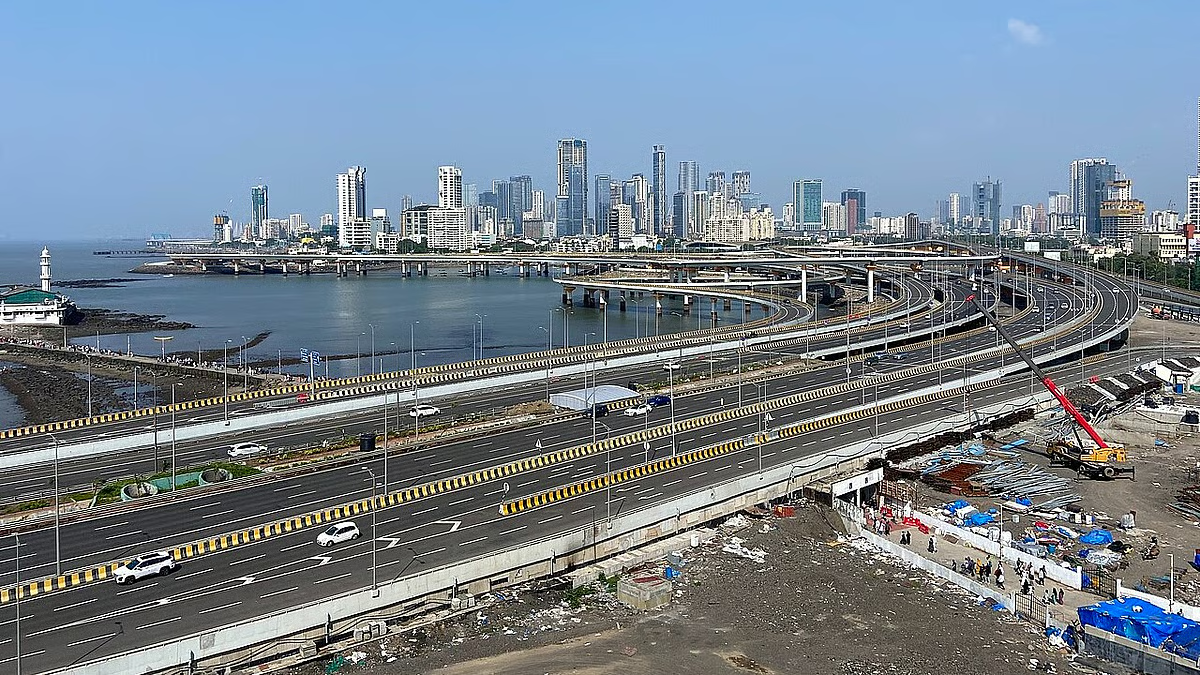
Mumbai Coastal Road Land To Remain Open To Citizens
Mumbai’s newly reclaimed land along the Coastal Road (South) corridor has been legally reaffirmed as a public asset, after India’s apex court ruled against any commercial or residential development on the stretch, a decision that could shape the city’s approach to waterfront urbanism, recreational space, and equitable access to coastal resources. The Supreme Court restated that this land, created through one of the city’s largest infrastructural interventions, must remain accessible to all residents — a judgement with implications for real‑estate pressures, urban equity, and climate‑aware coastal planning.
The bench, reaffirming its 2022 directive, underscored that while carefully regulated landscaping or maintenance may occur, use of the reclaimed area for private profit or built development is prohibited in perpetuity. This follows a public interest litigation that contested the civic body’s plans for inviting private agencies to manage and enhance parts of the coastal frontage. The ruling effectively sets clear boundaries on how reclaimed urban land can be governed and used. Urban planners see the judgment as a recalibration of the city’s development trajectory, especially where public space and coastlines intersect with commercial imperatives. Mumbai’s coastline has long been a contested zone where infrastructure ambitions, real estate speculation, and environmental interests collide. Retaining this stretch as a publicly accessible space preserves opportunities for community‑centred amenities such as promenades, green buffers, and low‑impact recreation, aligning with broader goals of inclusive urban design.
Real‑estate investors had eyed stretches of reclaimed land for high‑value residential and mixed‑use projects, buoyed by Mumbai’s premium waterfront land prices. The court’s directive, however, sharply limits these commercial prospects, signalling that civic custodianship and equitable access outweigh speculative redevelopment. Experts suggest this could temper future bids for private use on similar coastal expansions in other Indian cities, reinforcing an urban governance principle that shoreline reclamation should primarily serve public and environmental interests. From an environmental perspective, preserving large tracts of reclaimed land for public use opens possibilities for integrating ecosystem‑centric design into urban infrastructure. Citizen groups and sustainability advocates have previously proposed urban forests, wetlands, and carbon‑sequestering parks along the Coastal Road corridor as climate stabilisers and community assets. Although the current judgment stops short of mandating specific green enhancements, it removes a key legal obstacle to such initiatives by ensuring the land remains open and un‑commercialised.
Critics of the Coastal Road project have also argued that the very act of reclamation alters coastal hydrology and local ecology, stressing the need for long‑term climate resilience in planning such megaprojects. With this legal guidance now in place, Mumbai’s civic authorities face renewed pressure to align coastal infrastructure with sustainable, people‑first urbanism — balancing mobility, recreation, and environmental stewardship.
Going forward, the city must translate the court’s ruling into actionable civic design and participatory planning processes that enhance public access, bolster ecological resilience, and respect the shoreline as a shared urban commons.