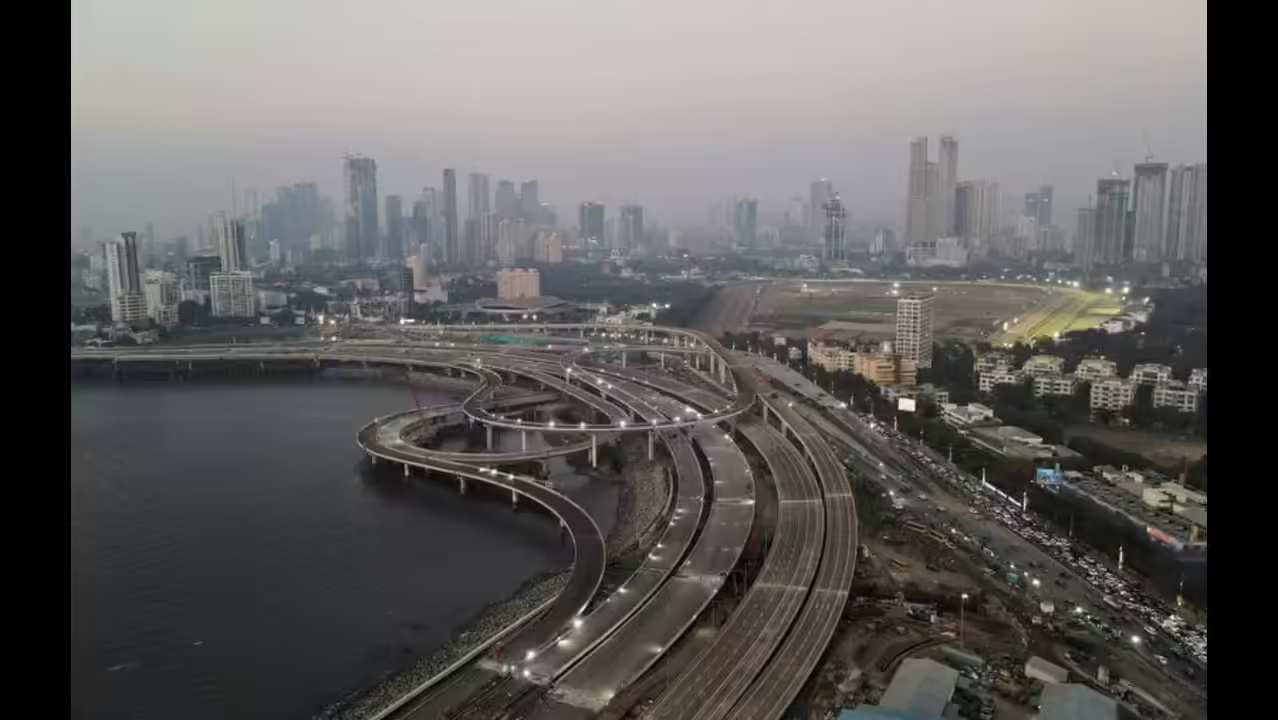
Environmental oversight around Mumbai’s proposed Versova–Dahisar coastal road has intensified after the Union environment ministry sought a formal response from state authorities on concerns related to large-scale mangrove loss. The intervention brings renewed attention to how transport infrastructure along India’s most vulnerable coastline is being assessed against long-term flood resilience and ecological protection.
Officials familiar with the development said the ministry has asked the Maharashtra State Wetland Authority to submit an action taken report following a citizen-led complaint flagging the removal of tens of thousands of mangroves along the project alignment. The matter has also been routed to the Centre’s coastal management division, signalling heightened scrutiny even as construction activity has already commenced in select stretches. The coastal road is part of Mumbai’s broader plan to ease north–south vehicular congestion. However, environmental specialists argue that the Versova–Dahisar belt is among the city’s most sensitive coastal zones, where mangrove forests act as natural buffers against tidal flooding, storm surges, and shoreline erosion. Any reduction in this green barrier, they warn, could expose low-lying neighbourhoods to higher climate risks.
Urban ecologists point out that mangroves serve multiple functions beyond flood protection. They stabilise soil, support fisheries, store significant amounts of carbon, and moderate coastal microclimates. While project proponents have proposed compensatory plantations elsewhere, experts note that relocated mangroves cannot replicate the site-specific protection offered by mature ecosystems already embedded within local hydrology. The Centre’s request for a detailed response places the spotlight on how wetland regulations are being interpreted at the state and municipal level. Under India’s coastal and wetland protection frameworks, infrastructure projects are required to demonstrate that ecological damage is avoided or minimised, particularly in cities already grappling with climate stress. Mumbai’s repeated flooding episodes over the past decade have sharpened this debate, linking environmental clearances directly to urban safety and economic disruption.
Civic groups and environmental planners say the issue also reflects a larger policy tension between road-led mobility solutions and people-first, low-carbon transport planning. With Mumbai investing heavily in metro rail and public transport expansion, critics question whether additional car-oriented coastal infrastructure aligns with the city’s stated climate and resilience goals. From a real estate and development perspective, the outcome of the review could influence future approvals along Mumbai’s western waterfront. Regulatory clarity on mangrove protection may shape land-use decisions, project timelines, and investment risk assessments in coastal precincts.
For now, the request for an action taken report does not halt construction, but it does introduce a new layer of accountability. How state authorities respond—and whether mitigation measures are strengthened—will be closely watched by planners, developers, and communities alike. The episode underscores a central challenge for Mumbai: expanding infrastructure capacity without eroding the natural systems that quietly protect the city from its greatest environmental threats.
Mumbai Coastal Road Faces Mangrove Impact Review