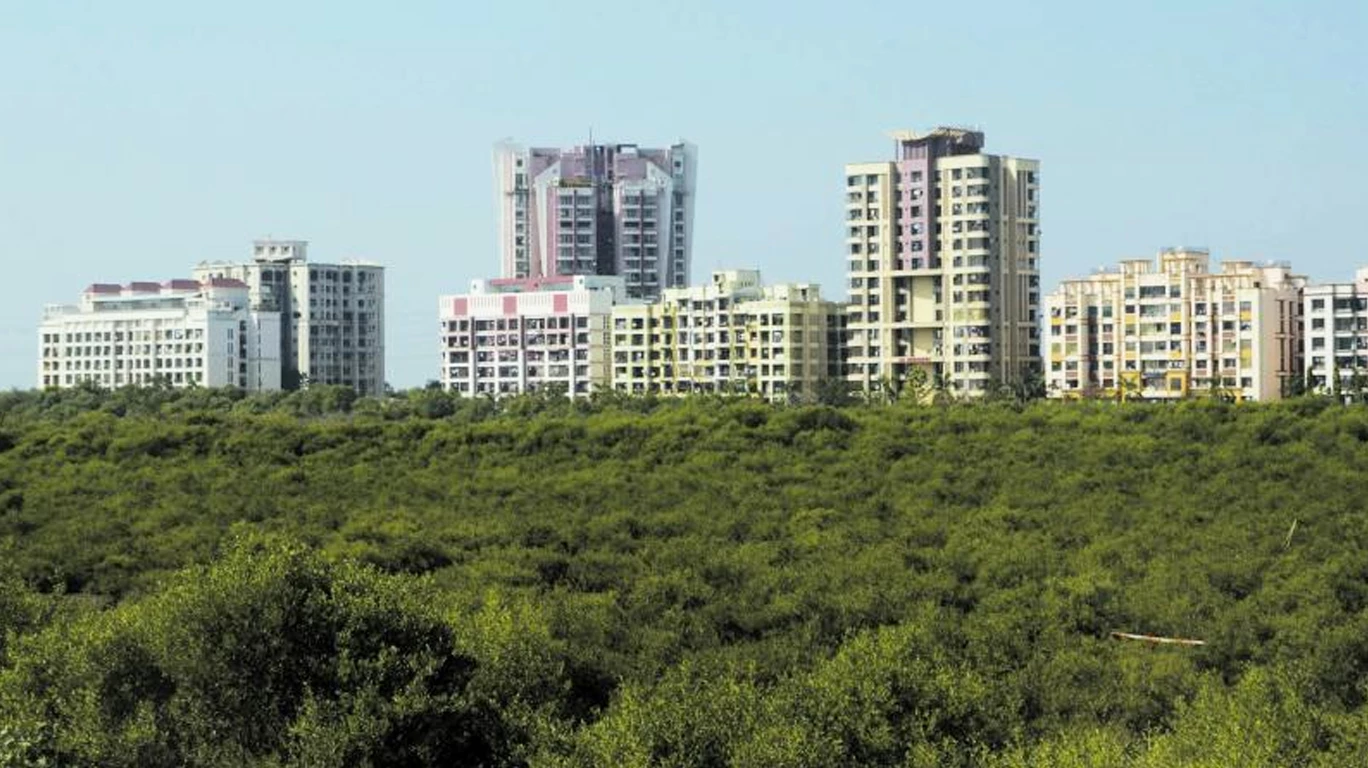
Mumbai’s long-planned Versova–Bhayandar coastal road has crossed a critical legal milestone after the Bombay High Court permitted limited mangrove removal under strict environmental safeguards. The decision, which allows the Brihanmumbai Municipal Corporation to proceed with construction while mandating long-term ecological monitoring, underscores the complex trade-offs facing coastal cities where mobility needs intersect with climate resilience and fragile natural systems.
The court’s approval covers the removal of over 45,000 mangroves along the proposed alignment, but it was accompanied by an unambiguous reiteration of the ecological role these ecosystems play in protecting Mumbai and neighbouring districts from storm surges, flooding and shoreline erosion. The ruling makes clear that such clearances are exceptional and must be justified by demonstrable public interest, not routine infrastructure expansion. Urban planners note that the Versova–Bhayandar corridor is positioned as a critical north–south connector along Mumbai’s western edge. Designed to ease pressure on arterial routes such as the Western Express Highway and key suburban roads, the coastal road is expected to significantly reduce travel distances and journey times for daily commuters and freight movement. In economic terms, improved connectivity along this stretch could unlock productivity gains across residential, commercial and industrial clusters in the Mumbai Metropolitan Region.
At the same time, the judgment reflects heightened judicial scrutiny of coastal infrastructure in an era of rising climate risks. The court has directed the civic authority to undertake compensatory mangrove plantation at a scale exceeding the vegetation being removed, with annual compliance and audit reporting over a decade. Failure to meet these conditions could invite legal consequences, signalling that environmental offsets are no longer treated as symbolic gestures. The Versova–Bhayandar coastal road project spans more than 30 kilometres when associated connectors and interchanges are included, with construction scheduled to extend into the latter part of the decade. Officials associated with the project have maintained that modern engineering methods and realignment will minimise long-term ecological disruption. Environmental experts, however, caution that mangrove regeneration success depends on sustained protection, hydrological suitability and community oversight, not just plantation numbers.
From a climate-policy perspective, the debate around the Versova–Bhayandar coastal road highlights a broader question confronting Indian cities: whether road-led solutions can align with low-carbon mobility goals. While the civic authority has projected reductions in fuel consumption and emissions due to smoother traffic flow, transport economists argue that induced demand remains a risk unless road investments are complemented by strong public transport and coastal conservation strategies. As Mumbai continues to invest in large-scale coastal infrastructure, the court’s conditions set a precedent for balancing urban growth with environmental accountability. The real test for the Versova–Bhayandar coastal road will not lie only in faster travel times, but in whether the project can coexist with the natural systems that make coastal urban life viable in the first place.
Mumbai Coastal Road Clears Court Ecological Threshold