


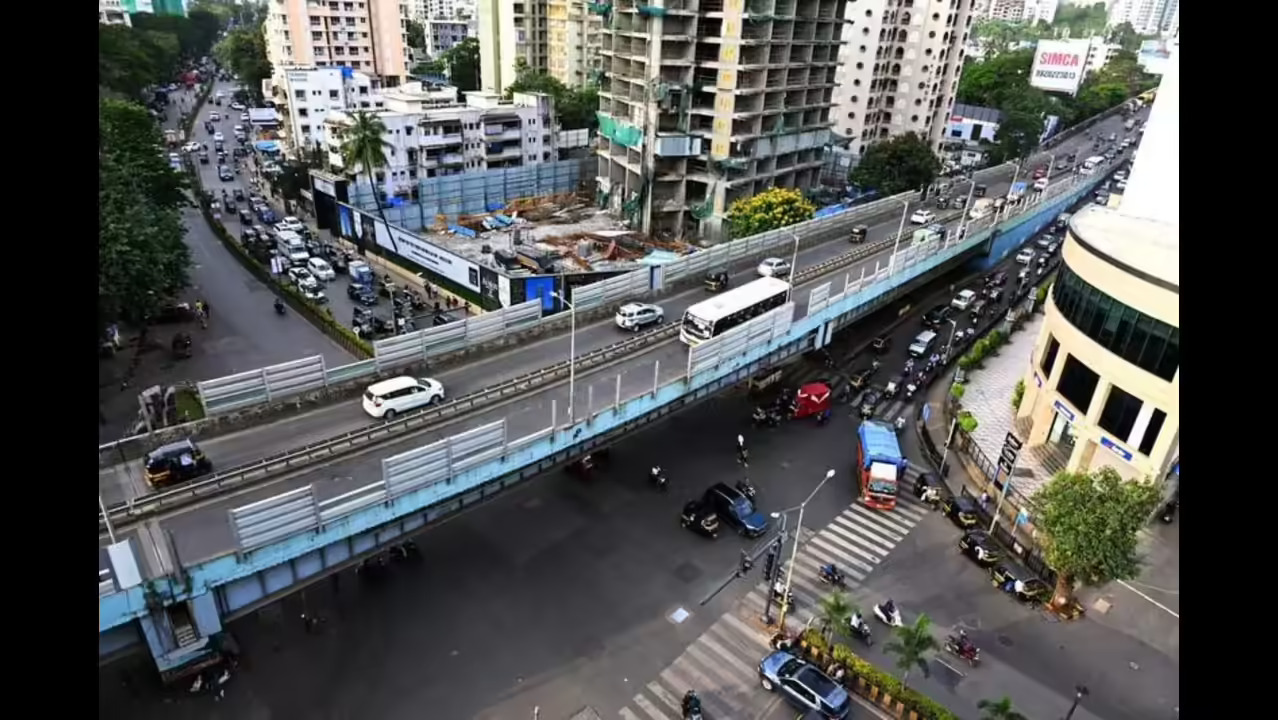
Mumbai’s civic administration is preparing to dismantle the Veer Savarkar flyover in Goregaon, just seven years after it was opened to traffic. The structure, constructed at a cost of ₹27 crore, is set to make way for a key elevated connector as part of the Versova-Dahisar stretch of Coastal Road Phase 2.
The Savarkar flyover, also known locally as the MTNL flyover, was inaugurated in August 2018 and serves as a crucial link for east-west traffic in the western suburbs. Stretching between Radisson Hotel and Rustomjee Ozone, the flyover significantly reduced traffic congestion in the region. Its demolition, proposed to facilitate the seamless integration of the new coastal corridor with the Goregaon-Mulund Link Road (GMLR), is being viewed by many as an example of overlapping project timelines and reactive planning. Civic officials have confirmed that a comprehensive study ruled out alternatives to demolition, stating that the existing flyover obstructs the alignment of the proposed elevated connector between Mindspace and Dindoshi court. In its place, a two-tiered flyover has been proposed—its upper deck to act as the coastal road connector, and the lower deck to function as the reconfigured Savarkar flyover.
A formal proposal is being prepared for approval from the municipal commissioner. The segment from Mindspace to Dindoshi is part of a larger infrastructure package designed to link western suburbs with the GMLR tunnels and beyond to the eastern suburbs. The flyover’s removal is seen as critical to ensuring uninterrupted connectivity across the city’s north-south and east-west corridors. Despite technical justifications, the announcement has triggered sharp criticism from urban stakeholders and transport planners. Experts have questioned the rationale behind building a major traffic facility just years before another megaproject that now necessitates its removal. Critics say the situation reflects poor coordination between long-term transport planning and capital investment strategies.
Locals and representatives have expressed concern over potential traffic disruptions. The current flyover had cut commute times drastically and its absence, even temporarily, could impact thousands of daily commuters travelling to Malad, Madh, and Marve. A section of residents also fears that the demolition process and upcoming construction may result in prolonged bottlenecks and dust pollution. The controversy follows a similar pattern witnessed during the dismantling of the Bandra (West) skywalk to make way for Metro Line 2B. Mumbai’s rapid infrastructure expansion—while addressing chronic connectivity gaps—continues to face the challenge of integrating legacy systems with future networks without financial or environmental waste.
As the city pushes forward with the 22-kilometre Coastal Road (North) comprising roads on stilts, elevated connectors, tunnels, and a cable-stayed bridge, planners must now reckon with striking a balance between efficiency, sustainability, and fiscal responsibility in a city already bracing under urban pressures.
Also Read : Mumbai Taj Lands End Expansion Cleared Under New CRZ Rules
