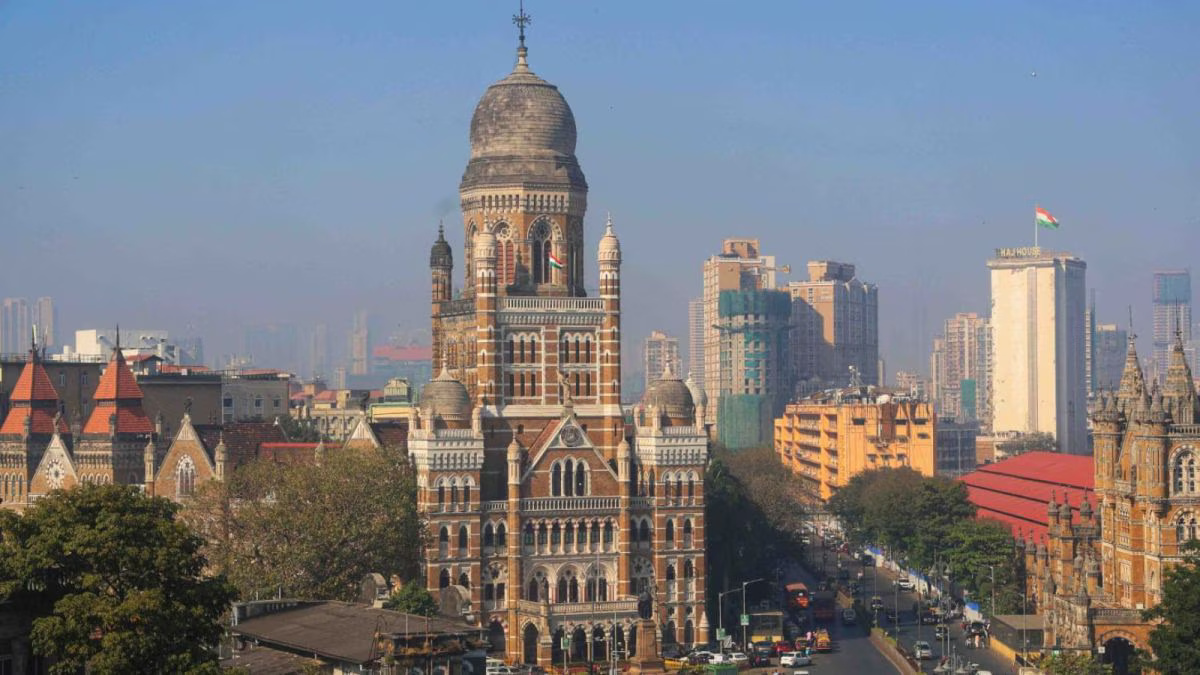
Mumbai’s civic administration is set to revisit a slate of long-delayed infrastructure and environmental initiatives following the return of an elected general body to the Brihanmumbai Municipal Corporation after a four-year gap. Projects ranging from transport-oriented commercial hubs to a citywide tree census are once again being placed on the municipal agenda, signalling a shift from caretaker governance to policy-led urban decision-making.
Several of these proposals were cleared during the previous term of elected representatives but saw limited movement under an administrator-led system. Urban planners say the renewed focus reflects growing pressure to align infrastructure delivery with mobility efficiency, environmental resilience, and accountable civic oversight in India’s largest municipal economy. Among the most capital-intensive projects are two proposed commercial and transit hubs planned on unused octroi land parcels in Dahisar and Mankhurd. Identified after the abolition of octroi, these strategically located sites were earmarked to function as integrated terminals for long-distance bus traffic, diverting intercity vehicles away from Mumbai’s already congested arterial roads. The hubs are expected to reorganise entry points for buses arriving from northern and southern corridors while offering passenger amenities and limited commercial development.
Civic planning documents indicate that the combined investment requirement exceeds ₹1,100 crore, positioning the project as both a transport intervention and a real estate-led revenue model. However, weak bidder interest stalled earlier tendering efforts, underscoring broader challenges around project viability, risk-sharing, and governance clarity. With key municipal committees now expected to be reconstituted, officials indicate that the proposal may be recalibrated before being reopened to the market. Equally significant is the revival of Mumbai’s long-pending tree census, an initiative closely tied to the city’s worsening air quality and shrinking green cover. A pilot survey conducted in parts of south Mumbai several years ago was intended to form the basis of a comprehensive, technology-enabled assessment of urban trees. That exercise, however, never scaled citywide.
Environmental data suggests that infrastructure expansion has continued to outpace compensatory greening, with thousands of trees removed over recent years for transport and construction projects. Urban ecologists point out that without an updated tree inventory, planning authorities lack the baseline data needed to design climate-resilient neighbourhoods, protect biodiversity corridors, or meaningfully offset carbon emissions. Municipal departments are now preparing a two-stage approach, beginning with geospatial mapping of trees, open spaces, and green assets, followed by a detailed enumeration exercise. The findings are expected to inform future development permissions, road projects, and climate adaptation strategies.
For Mumbai, the reactivation of these stalled civic initiatives is less about catching up on old promises and more about redefining how infrastructure, environment, and growth intersect. As the city balances economic density with liveability, the effectiveness of this renewed agenda will depend on transparent decision-making, realistic financing models, and measurable public outcomes.
Mumbai Civic Body Reopens Long Stalled Urban Projects