


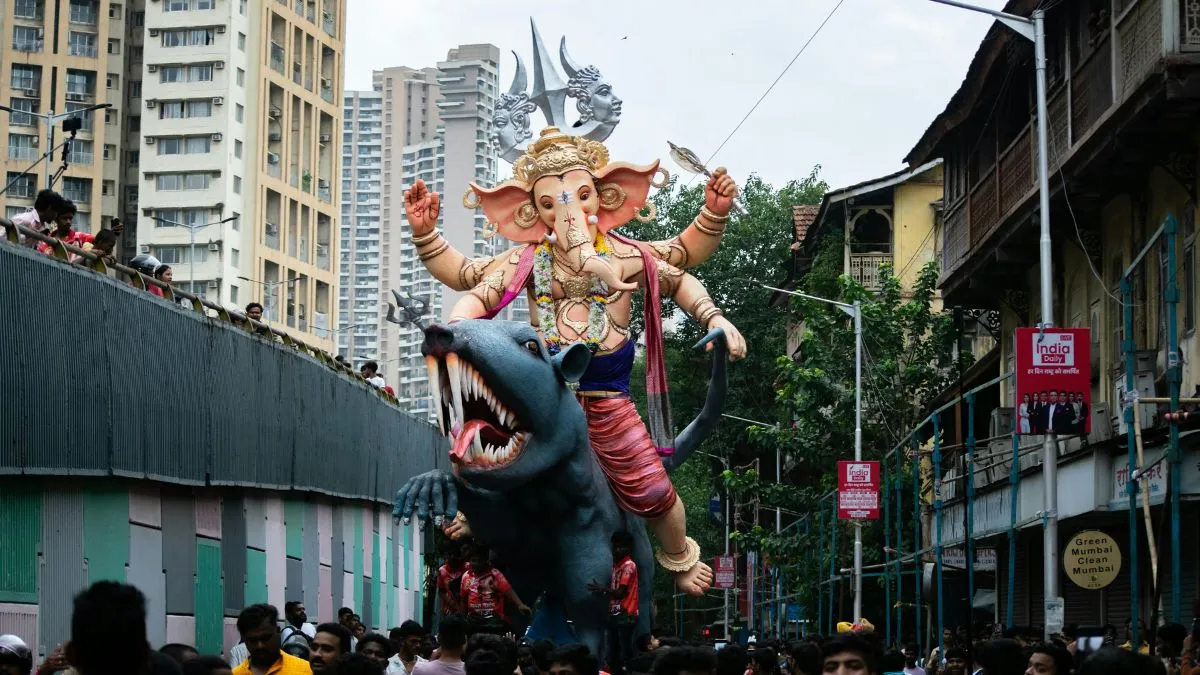
As Ganesh Chaturthi celebrations began in Mumbai, civic authorities placed 12 railway overbridges across South and Central Mumbai under special watch, cautioning citizens against overcrowding, heavy vehicles and music vibrations. The move reflects growing concerns over the safety of century-old structures that continue to carry festive loads and surging crowds each year.
Officials from the Brihanmumbai Municipal Corporation (BMC) confirmed that the bridges, located between Marine Lines and Dadar, are structurally stable but remain vulnerable under festival conditions. With thousands of devotees marching alongside large trucks carrying idols, the combined load during peak hours can exceed the maximum permissible 16 tonnes. Civic engineers have also warned that amplified sound systems with heavy bass create vibrations that may strain ageing structures. The bridges under advisory include those at Marine Lines, Charni Road, Grant Road, Mumbai Central, Mahalaxmi, and Dadar, among others. Several are currently undergoing repair work or earmarked for post-monsoon strengthening, yet authorities have avoided complete closures to prevent gridlock in the city’s busiest festive corridors.
South and Central Mumbai host the most prominent Ganesh mandals, drawing devotees from across the state. The Dadar, Lalbaug and Parel belt is especially significant, as many idol workshops are based there, making processions both cultural and logistical events. With narrow roads feeding into old bridges, the risks are amplified. Experts argue that the advisory highlights deeper urban planning challenges. Mumbai’s infrastructure, much of which was built in the early 20th century, is struggling to bear the dual burden of daily transport and extraordinary festival surges. While temporary restrictions safeguard immediate risks, long-term solutions require systemic investment in resilient and sustainable mobility infrastructure.
Civic officials emphasised that their appeal is preventive, not alarmist. “These bridges are not unsafe, but they must be used responsibly during the festival,” one senior official explained, underscoring the importance of discipline and coordination among mandals, transporters and devotees. Urban researchers suggest that such measures also point to a wider need for cultural festivals to adapt sustainably in megacities. With carbon emissions from idol transport, waste generation and energy-intensive celebrations on the rise, experts note that a shift towards eco-friendly, low-impact festivities is essential. Safer bridges, they argue, are only one piece of the sustainability puzzle.
The ten-day festival will culminate on Anant Chaturdashi, when immersion processions place the highest strain on the city’s transport and civic systems. For now, the advisory serves as a reminder of both the resilience and fragility of Mumbai’s infrastructure – and the delicate balance between tradition and safety in a city that never stops celebrating.
Also Read: Mumbai On Yellow Alert As Heavy Rains Disrupt Daily Life Till Weekend
