


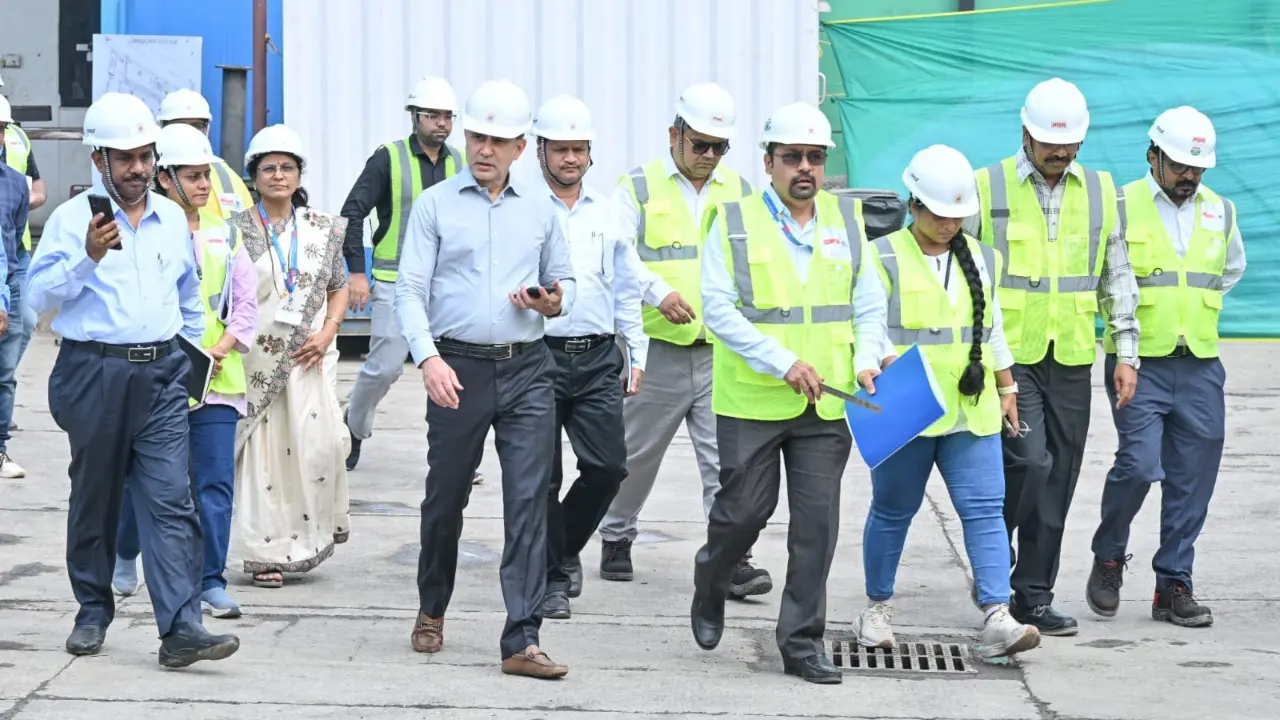
Mumbai’s municipal administration has stepped up oversight of a major underground sewage conveyance project in Bhandup, signalling a strategic shift towards large-scale reuse of treated wastewater as the city confronts growing water stress and climate risk. The review focused on progress at key sewage treatment and tunnel construction sites that are expected to play a central role in reducing dependence on freshwater sources for non-drinking purposes.
Officials overseeing urban water management said the Bhandup sewage tunnel project is designed to transport tertiary-treated wastewater from treatment facilities to high-demand zones within the eastern suburbs. Once operational, the infrastructure will allow treated water to be reused for industrial processes, construction activity, and other non-potable needs, easing pressure on lakes and reservoirs that supply drinking water to the metropolis. Urban planners point out that Mumbai generates vast quantities of sewage every day, much of which historically flowed into creeks and coastal waters after basic treatment. Expanding tertiary treatment—where water undergoes advanced filtration and disinfection—marks a structural upgrade in how the city manages wastewater. Senior civic officials noted that effective sewage treatment directly improves public health outcomes by reducing contamination risks while also supporting cleaner waterways and coastal ecosystems.
The current project involves the construction of more than 11 kilometres of underground tunnels using tunnel boring machines, linking sewage treatment plants in Bhandup and Ghatkopar with the Bhandup Complex. Engineering teams confirmed that tunnel alignment has been finalised for multiple stretches and that deep launching and retrieval shafts are under excavation. The phased approach, officials said, is intended to minimise surface disruption in densely populated neighbourhoods while ensuring long-term durability of the network. Beyond its immediate engineering significance, the project reflects a broader recalibration of Mumbai’s water strategy. With population growth, real estate expansion, and climate variability increasing demand uncertainty, treated sewage is being positioned as a dependable secondary water source. Civic estimates indicate that nearly half of the city’s sewage is planned to undergo tertiary treatment over the coming years, enabling large volumes of reclaimed water to be redistributed through dedicated underground corridors.
Experts in sustainable infrastructure say such systems are increasingly critical for megacities facing both monsoon volatility and prolonged dry spells. Reusing treated wastewater reduces energy-intensive water transfers, lowers operational costs for industry, and supports more resilient urban planning. It also aligns with emerging expectations around responsible real estate development, where builders and industrial users are encouraged to rely less on potable water. As construction advances, attention is expected to shift towards integration with distribution networks and end users. For Mumbai, the success of the Bhandup sewage tunnel project could set a template for future investments—where sanitation infrastructure is not just about disposal, but about closing the urban water loop in a rapidly growing coastal city.
Also Read : Western Railway Kavach Safety System Enhances Mumbai Route
