


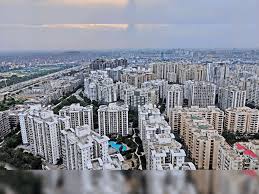
A new joint development in Mumbai’s eastern suburbs is signalling renewed institutional and developer confidence in compact, high-value urban regeneration. A city-based listed real estate firm has entered into a joint venture with a private development entity to build a premium mixed-use residential project in Chembur, with an estimated gross development value of around Rs 1,850 crore.
The proposed Chembur mixed use project will be developed on a land parcel of roughly 2.5 acres, translating to a saleable area of close to five lakh square feet. Planned as a high-density, amenity-led development, the project reflects a broader shift in Mumbai’s real estate strategy towards optimising scarce urban land through vertical growth rather than geographic sprawl. Chembur’s emergence as a redevelopment hotspot is closely tied to infrastructure upgrades over the past decade. Improved connectivity via the Eastern Freeway, Santacruz Chembur Link Road, and expanding metro corridors has repositioned the suburb from an industrial edge zone to a residential and commercial transition district. Urban planners note that this transformation has increased demand for organised housing formats, particularly among middle- and upper-income households seeking proximity to business districts in both central and eastern Mumbai. According to industry experts, the Chembur mixed use project fits into a growing pattern of joint development agreements that allow landowners and developers to share risk while unlocking capital-efficient growth. Such structures have become increasingly common in Mumbai, where high land costs and regulatory complexity make outright acquisitions less viable. By pooling development expertise and financial capacity, joint ventures are enabling projects of scale without excessive leverage.
From a civic perspective, mixed-use developments carry both opportunity and responsibility. When well-integrated, they can reduce commute distances by combining housing with everyday services, thereby lowering transport emissions and easing pressure on arterial roads. However, urban analysts caution that higher density must be accompanied by upgrades in local infrastructure, including water supply, sewage capacity, power reliability and last-mile public transport access. The developer involved in the Chembur project already has a substantial footprint across residential, commercial and mixed-use developments in Indian cities. Market observers say this track record will be closely scrutinised as buyers increasingly prioritise delivery timelines, construction quality and long-term maintenance over speculative price appreciation. Importantly, Chembur’s redevelopment wave also raises questions around social equity. As land values rise, ensuring that redevelopment remains inclusive through fair rehabilitation terms and transparent consent processes will be critical to maintaining community trust.
City officials have repeatedly highlighted the need for people-first redevelopment that balances market viability with liveability. As Mumbai continues to rebuild itself through parcel-by-parcel transformation, projects like this one underline how the city’s future growth will be shaped less by expansion and more by how intelligently it renews what already exists.
Also Read: Mumbai Infrastructure Push Accelerates Suburban Redevelopment
Mumbai Chembur Redevelopment Signals Premium Housing Push
