


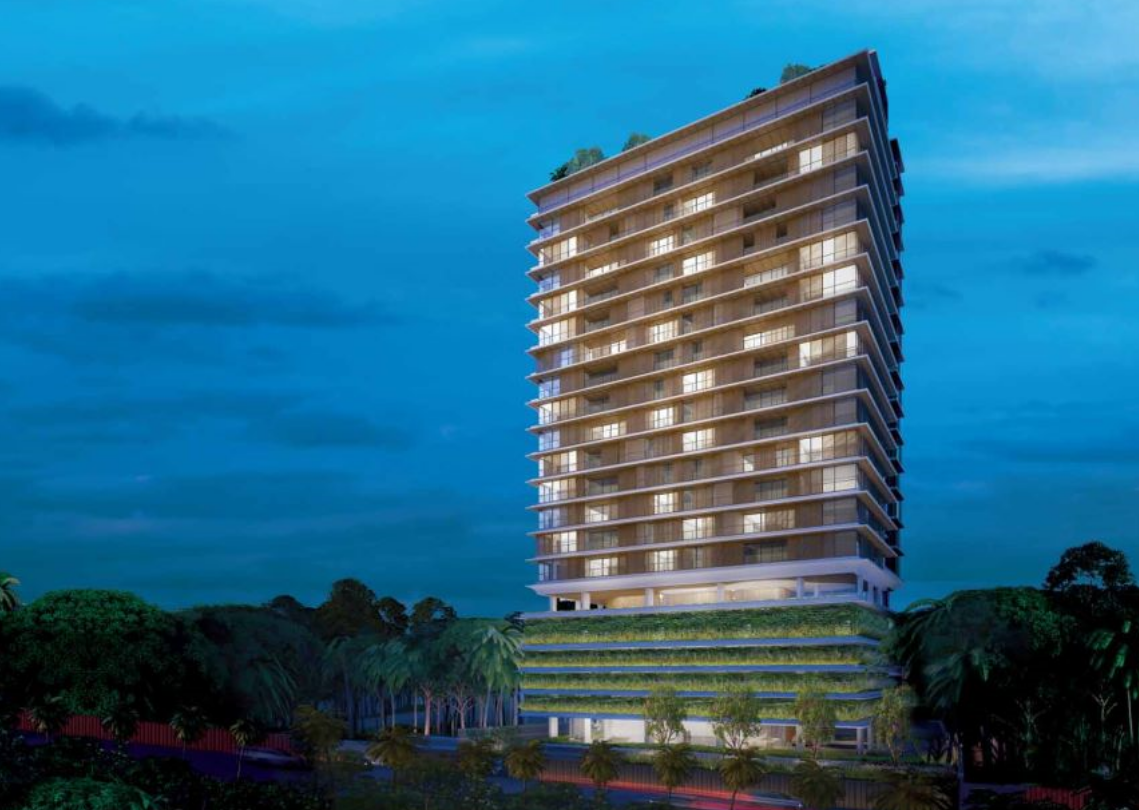
Mumbai’s ultra-prime residential market has recorded another high-value transaction, underlining the sustained demand for luxury housing in the city’s most tightly held neighbourhoods even as affordability pressures persist elsewhere. A senior financial sector leader and spouse have acquired a large apartment in a boutique residential development on Carmichael Road for over Rs 38 crore, according to publicly available property registration records.
The transaction, registered in late November 2025, involves a residence measuring just over 2,800 square feet in a recently completed project by a large industrial group-backed real estate developer. The implied per-square-foot value exceeds Rs 1.3 lakh, placing the deal among the costliest residential transactions in South Mumbai over the past year. Carmichael Road, located along the Malabar Hill ridge, occupies a unique position in Mumbai’s urban geography. With limited redevelopment potential, heritage-era plots, and strict development controls, supply in the area remains structurally constrained. Urban planners note that unlike emerging luxury clusters in the suburbs, prime South Mumbai neighbourhoods function as “legacy markets” where pricing is driven less by cyclical demand and more by long-term capital preservation. Industry experts say the transaction reflects a broader trend among senior corporate executives and high-net-worth households favouring established central locations over larger but less connected developments further north. Proximity to the city’s traditional financial districts, elite educational institutions, and medical infrastructure continues to anchor demand, even as remote work and hybrid models reshape office geography.
From an urban policy perspective, such transactions highlight the widening divergence between Mumbai’s luxury and affordable housing segments. While high-end deals continue to clear at record valuations, developers and housing bodies have repeatedly flagged viability challenges in middle-income and affordable projects due to rising land and construction costs. The contrast underscores the need for differentiated housing strategies within the same metropolitan region. Urban economists also point out that capital flowing into ultra-luxury real estate often reflects confidence in Mumbai’s long-term economic fundamentals rather than short-term market sentiment. Stable demand at the top end provides balance sheet strength to developers, but does not automatically translate into broader housing supply unless supported by planning reform and infrastructure-led densification. The development involved in the transaction is part of a growing but selective push by large conglomerates into Mumbai’s premium residential market. Analysts say such players are typically drawn to projects with lower volume, higher margins, and strong compliance visibility a trend that may gradually raise construction benchmarks in legacy neighbourhoods.
As Mumbai continues to grapple with land scarcity, climate risk, and infrastructure strain, urban experts argue that the challenge ahead lies in aligning premium capital flows with inclusive growth. The city’s housing future, they note, will depend not only on marquee transactions, but on how planning, transport investment, and redevelopment policy collectively shape liveability across income groups.
Also Read: MOFA Dilution Raises Red Flags on Homebuyer Protection
Mumbai Carmichael Road Luxury Housing Signals Market Resilience
