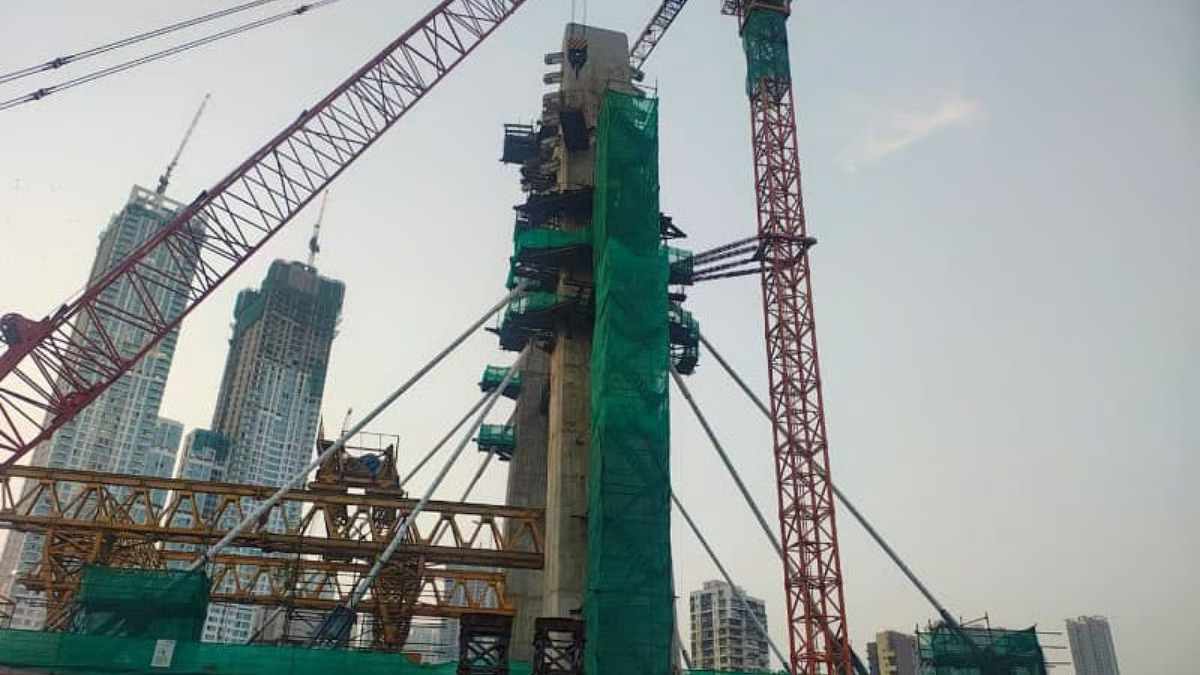
Mumbai’s long-delayed Byculla East-West Connector — a key urban mobility project designed to decongest central city roads — has reached 72 percent completion. The Maharashtra Rail Infrastructure Development Corporation (MRIDC) and the Brihanmumbai Municipal Corporation (BMC) are jointly executing the ₹287 crore redevelopment project, now rescheduled for completion by May 2026.
Initially slated for October 2023, the project’s completion timeline was first pushed to July 2024 and later to October 2025. Persistent challenges in relocating underground utilities, clearing encroachments, and maintaining commuter movement along the alignment have caused the latest delay. The reconstruction replaces the century-old ‘Y’-shaped Byculla bridge, built in 1922, which was declared structurally unsafe following a safety audit by IIT Bombay in 2018. The assessment came in the wake of the Gokhale Bridge collapse, prompting urgent scrutiny of Mumbai’s ageing bridge network.
The new bridge, which spans 916 metres including approach roads, will rise to a height of 9.7 metres and carry an eight-lane roadway — a major upgrade from the existing six-lane structure. Officials say the enhanced width and design will significantly ease east-west vehicular movement through Byculla, one of Mumbai’s most congested transit corridors. Construction began in December 2021, and the project is being implemented in phases to minimise traffic disruption. A temporary bridge structure was built parallel to the old one, allowing traffic diversion while new piers and spans are erected. Once the main cable-stayed structure is ready, the old spans will be dismantled and integrated into the new design to retain part of the original bridge’s alignment.
According to senior civic engineers, the cable-stayed design ensures both aesthetic appeal and structural efficiency, reducing the need for multiple piers and improving clearance for railway lines below. The bridge will also include a pedestrian pathway and an observation zone featuring a selfie point overlooking the cityscape — an urban design element aimed at improving public engagement with civic spaces. Officials acknowledged that the revised deadline of May 2026 accounts for the remaining 28 percent of work, which includes installing cables, completing the deck, finalising approaches, and testing structural stability.
Urban mobility experts have pointed out that while such delays are not uncommon in complex infrastructure projects, timely completion is crucial for improving traffic flow between South and Central Mumbai. They added that sustainable construction practices and durable materials will ensure longer service life and lower maintenance, aligning with the city’s broader goal of creating resilient and safe transport infrastructure. As the Byculla cable bridge nears its final phase, its completion will mark a significant milestone in Mumbai’s ongoing efforts to modernise ageing infrastructure while prioritising commuter safety and urban connectivity.
Also Read : Panvel Municipal Corporation Wins Majhi Vasundhara Abhiyan Green Success Story Award 2025 For Third Consecutive Year
Mumbai Byculla Cable Stayed Bridge Work 72 Percent Complete Extended To May 2026