


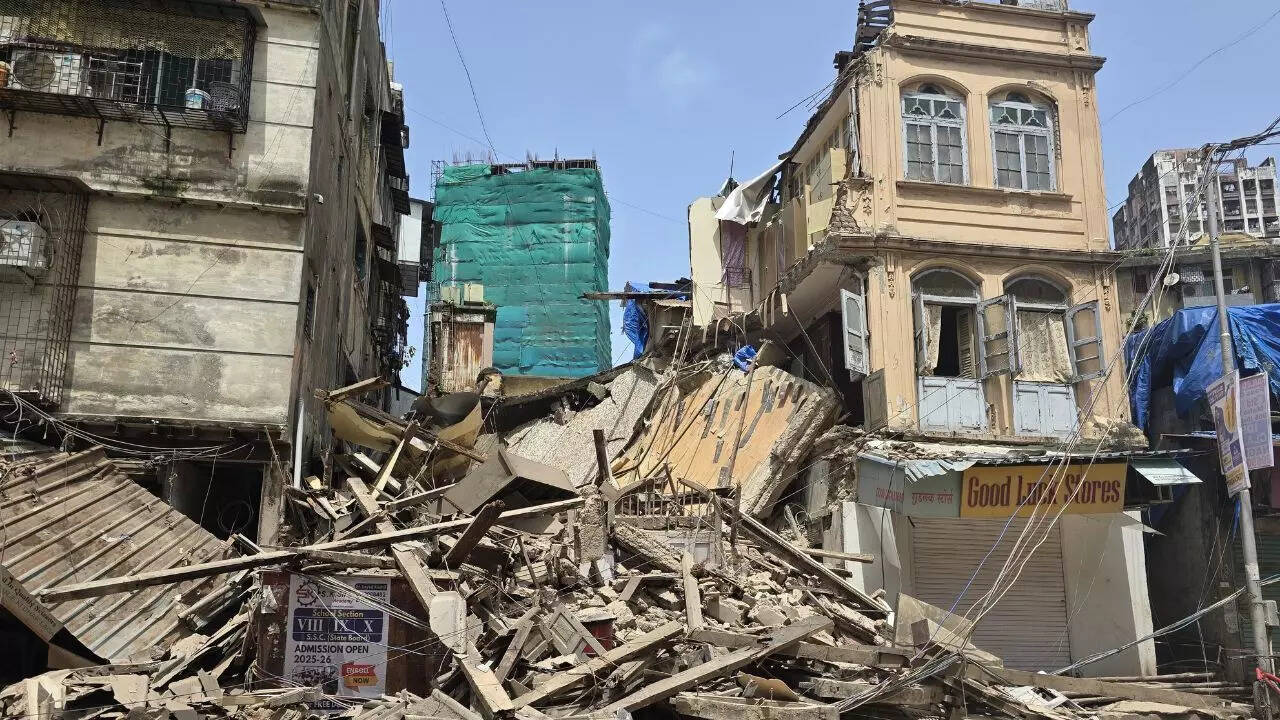
A dilapidated Maharashtra Housing and Area Development Authority (MHADA) building in Byculla West, classified under the most dangerous C1 category, collapsed entirely in the early hours of August 5. The building, situated behind the Madanpura Post Office, had already been vacated by MHADA personnel following structural alerts, averting what could have been a major human tragedy.
According to reports from the Mumbai Fire Brigade, the partial collapse of the rear sections of the first and third floors occurred around 2:02 AM on Sunday, August 4. Civic and fire officials were monitoring the building following this partial failure. However, by Monday morning, the entire G+3 structure had caved in completely. Fortunately, there were no occupants at the time of the collapse, and no casualties have been reported. The incident has once again thrown light on the growing concern over Mumbai’s ageing building stock, particularly those under the purview of MHADA. Thousands of tenements in the city continue to remain in precarious structural conditions, often delayed in redevelopment due to bureaucratic hurdles, legal disputes, or lack of coordinated execution between stakeholders. Experts in urban safety and infrastructure resilience have long warned that with every passing monsoon, the risks to both life and property from these unstable structures increase significantly.
Civic officials confirmed that the structure was categorised as C1, a classification reserved for buildings deemed unfit for habitation and recommended for immediate demolition. The timely evacuation prior to the total collapse, they say, was crucial in preventing any injury or loss of life. Emergency responders, including the fire brigade, remained on site to ensure surrounding structures were unaffected and to clear debris. City planners and housing policy analysts suggest that the collapse is not just a structural failure but a systemic one. Mumbai, despite its strides in infrastructure development, continues to struggle with legacy housing blocks built decades ago with minimal upgrades or maintenance. Many of these buildings, particularly those owned or managed by public housing bodies, remain entangled in slow-moving regulatory processes, hindering timely redevelopment.
A senior civic official noted that the Byculla collapse should serve as a renewed wake-up call to accelerate decision-making on critical demolition and reconstruction of old buildings. “While the timely evacuation worked in this case, we cannot depend on luck each time,” the official said. The state housing department and MHADA have been urged to publish real-time updates on the status of dangerous buildings city-wide and fast-track pending redevelopment proposals. Residents and housing rights groups have also demanded greater transparency in how buildings are categorised under structural audits and what timelines are in place for safe rehousing.
As Mumbai grapples with intensifying urban density and erratic weather, the need for proactive demolition, sustainable reconstruction, and community-focused redevelopment models remains more urgent than ever.
Also Read: India Faces 40-Year Delay In Rs 2000 Crore Punjab Rail Project
