


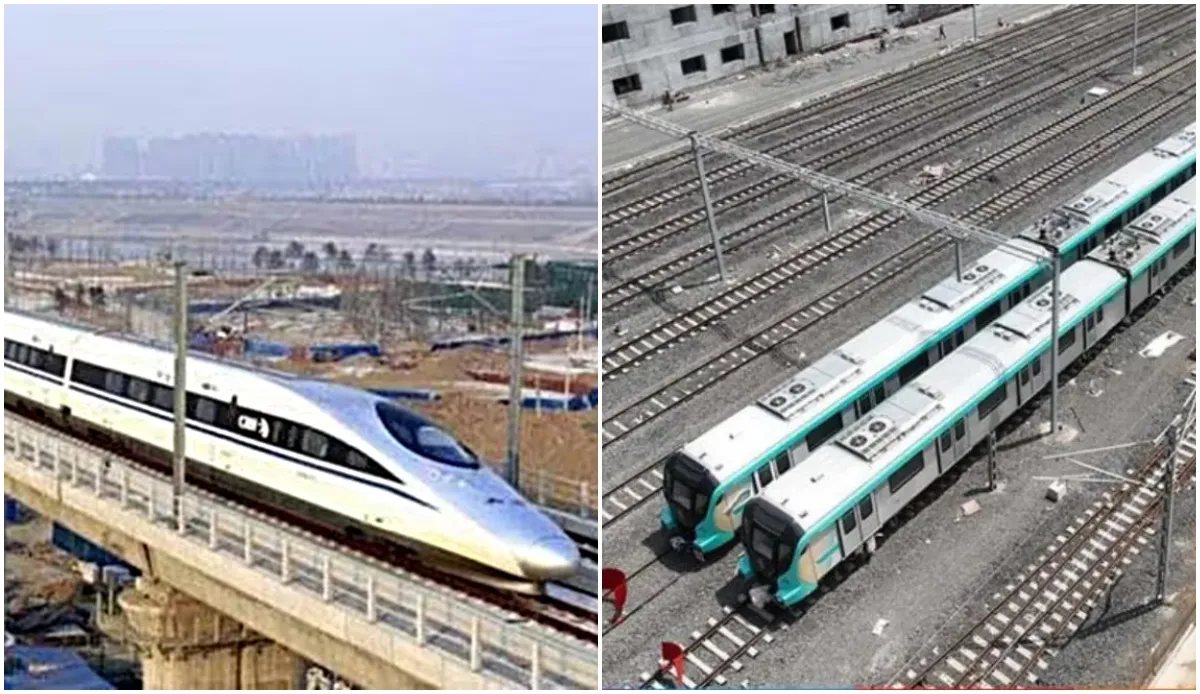
Mumbai-Ahmedabad Bullet Train with two crucial Mumbai Metro corridors: the Aqua Line (Metro 3) and Metro 2B. This strategic multi-modal integration, spearheaded by the National High-Speed Rail Corporation (NHSRCL) in collaboration with the Mumbai Metropolitan Region Development Authority (MMRDA) and Mumbai Metro Rail Corporation Ltd (MMRCL), signifies a monumental shift in how Mumbaikars will access long-distance high-speed rail, promising an eco-friendly and equitable enhancement to the city’s transport network.
The integration strategy centres around two key infrastructure elements at the Bandra-Kurla Complex (BKC) – a vital commercial and financial hub. Metro 3, or the Aqua Line, which currently connects Aarey in the north to Cuffe Parade in the south, will be linked to the high-speed rail terminal via an underground tunnel. This 1.1-kilometre subterranean passage, estimated to cost between ₹100-150 crore, is designed to mirror Mumbai’s existing modern subways at Churchgate and CSMT, complete with sophisticated facilities, retail outlets, and travelators for frictionless pedestrian flow. Such underground infrastructure minimises surface disruption, contributing to a more sustainable urban footprint and preserving green spaces.
Concurrently, Metro Line 2B, which operates from DN Nagar to Mandale, will achieve connectivity through a meticulously planned footover bridge (FOB) originating from the bullet train terminal’s road-level concourse and leading directly to Metro 2B’s IL&FS station. This elevated walkway is specifically engineered to address the critical “last-mile connectivity” challenge, ensuring that commuters can transition effortlessly between high-speed inter-city travel and the intra-city metro network. The provision of such direct and accessible links significantly reduces reliance on private vehicles for feeder services, thereby lowering carbon emissions and alleviating road congestion.
This comprehensive multi-modal approach is a cornerstone of Mumbai’s vision for a zero net carbon, eco-friendly future. By creating integrated transit hubs, the city promotes public transportation as the preferred mode of travel across all distances. High-speed rail, in conjunction with the metro, offers a significantly lower carbon footprint per passenger kilometre compared to air or road travel. The seamless interchange encourages a modal shift, contributing to reduced air pollution, decreased fossil fuel consumption, and an overall improvement in urban air quality, directly benefiting public health and environmental sustainability.
Moreover, the integration fosters a more equitable and gender-neutral urban environment. Enhanced connectivity at key business and residential nodes like BKC ensures that diverse segments of the population, including women, senior citizens, and persons with disabilities, have safer, more convenient, and direct access to both inter-city and intra-city travel. The thoughtful design of tunnels with modern facilities and footover bridges prioritises pedestrian comfort and safety, making public transport a truly inclusive experience and expanding access to economic and social opportunities across the region for everyone.
This collaborative undertaking by NHSRCL, MMRDA, and MMRCL exemplifies a forward-thinking approach to urban infrastructure development. By addressing regional integration at the design stage, Mumbai is setting a new benchmark for smart cities. The synergy between high-speed rail and metro networks will not only drastically cut travel times between India’s financial hubs but also cultivate a robust, resilient, and environmentally conscious transportation ecosystem, reinforcing Mumbai’s commitment to becoming a leading model for sustainable and liveable global cities.
Also Read: Mumbai Metro Lines 2B, 9 Undergo Safety Check Before Launch
