


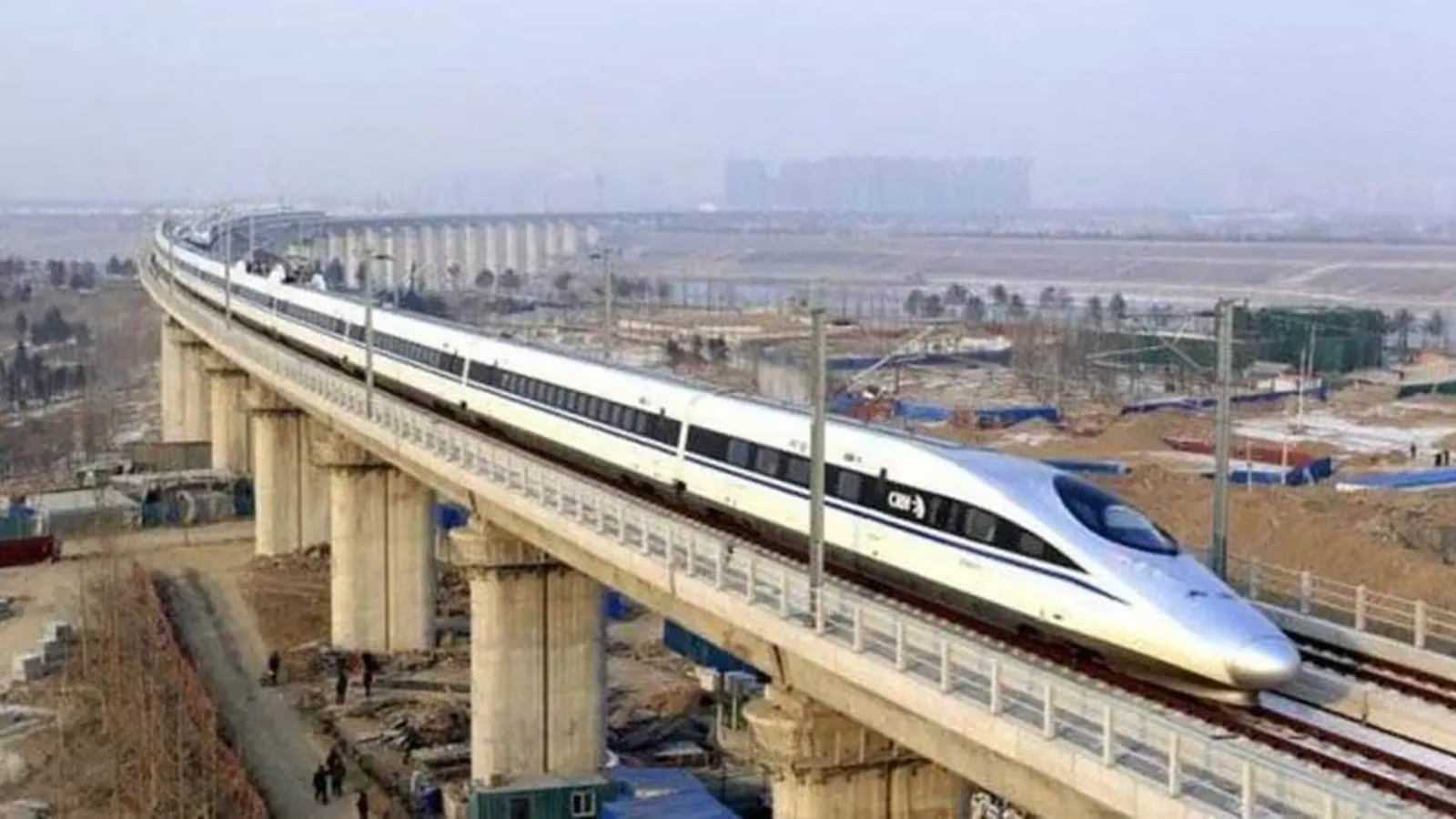
The Mumbai-Ahmedabad high speed rail project has crossed a critical engineering threshold with the completion of its first mountain tunnel in Maharashtra, marking tangible progress in one of India’s most complex transport infrastructure corridors. The tunnel, constructed in Palghar district between the Virar and Boisar sections, is a decisive step toward unlocking faster intercity mobility while navigating sensitive terrain along the western coastline.
Stretching approximately 1.5 kilometres, the newly completed tunnel forms part of a challenging segment where rail alignment passes through low hill ranges and densely settled zones. Urban planners tracking the project say this achievement reduces construction uncertainty along a stretch that has long been considered technically demanding due to geological conditions and environmental safeguards. The Mumbai Ahmedabad high speed rail corridor spans more than 500 kilometres across Maharashtra and Gujarat, connecting financial centres, industrial hubs and emerging urban regions. Designed for operational speeds exceeding 300 kmph, the corridor is expected to significantly compress travel time between the two metros, altering how businesses, labour markets and regional economies interact across western India. Infrastructure experts note that the Palghar tunnel breakthrough also brings clarity to the remaining construction challenges. With most of the surface and elevated alignment now progressing steadily, the focus is shifting toward underground and marine sections closer to Mumbai, where dense urban development and coastal conditions require precision engineering and extensive safety oversight.
Beyond speed, the Mumbai Ahmedabad high speed rail project is being positioned as a template for future low-emission transport corridors. High speed rail systems typically offer lower per-capita carbon emissions compared to road and short-haul aviation, especially when integrated with metro and suburban rail networks. In Maharashtra, planners see the corridor as a catalyst for transit-oriented development around stations, potentially easing long-term pressure on Mumbai’s housing and transport infrastructure. The project’s design includes multiple maintenance depots and advanced signalling systems intended to ensure operational resilience. Industry analysts observe that the addition of an extra depot along the route reflects lessons learned from regulatory and land acquisition delays, underscoring the need for adaptive planning in large-scale urban infrastructure. Phased commissioning of the corridor is expected, with northern segments entering service first before the full Mumbai Ahmedabad connection becomes operational. Once complete, the line is anticipated to support economic productivity, tourism flows and regional connectivity while offering an alternative to carbon-intensive travel modes.
For cities along the route, the tunnel milestone signals a transition from planning to tangible delivery. As construction advances, attention will increasingly turn to how surrounding urban areas integrate stations, last-mile connectivity and land-use planning factors that will ultimately determine whether the project delivers inclusive, people-first mobility alongside engineering success.
Also Read: Mumbai Residential Growth Driven By Credible Developers
Mumbai Bullet Rail Project Reaches Engineering Milestone
