


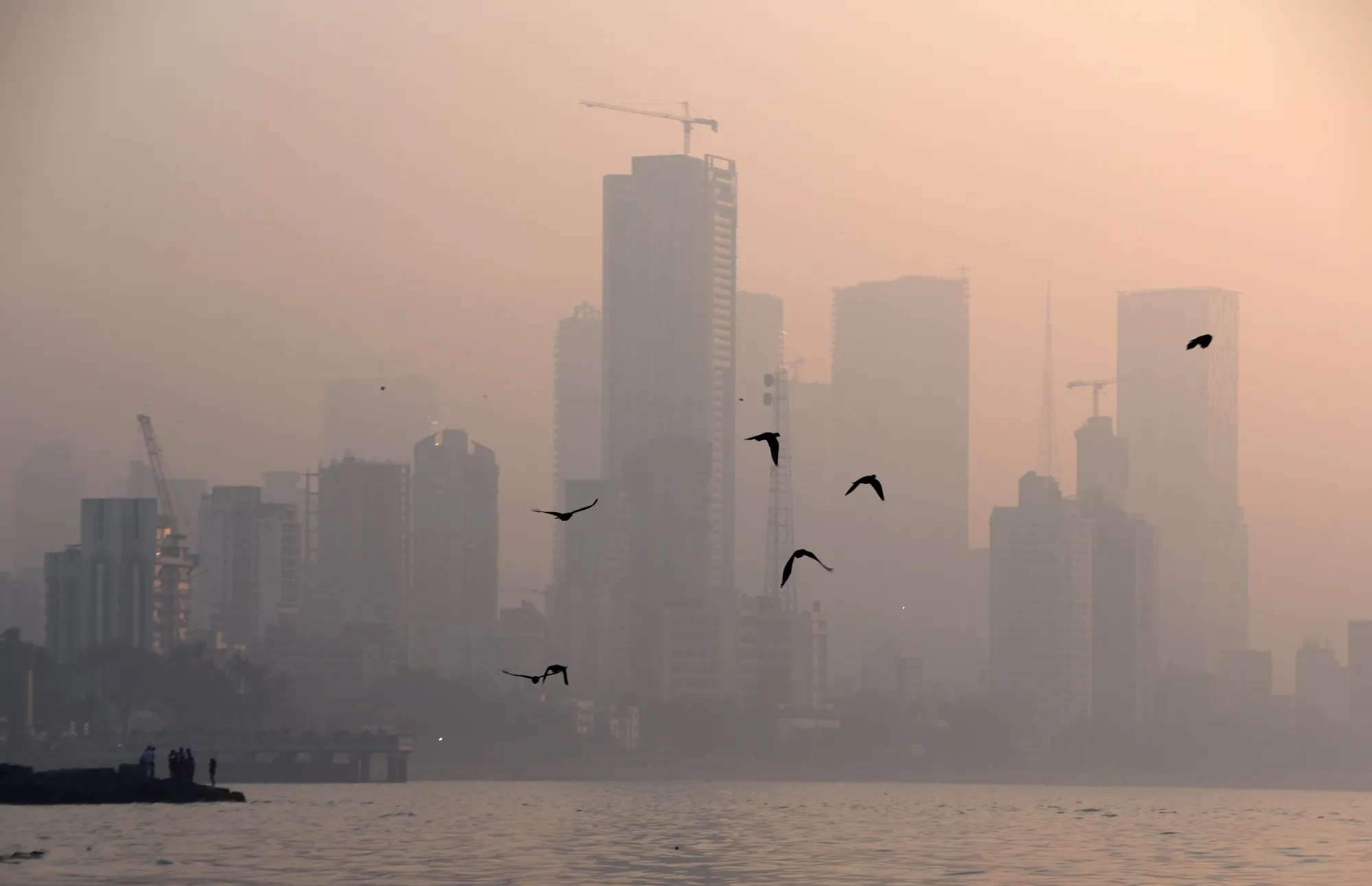
Mumbai began Friday with the kind of crisp, gentle morning the city rarely experiences in November, but the seasonal relief was overshadowed by a sharp deterioration in air quality that placed several neighbourhoods in the “severe” range. The contrast between comfortable temperatures and hazardous pollution renewed concerns about the city’s preparedness for winter smog episodes and their impact on public health and urban equity.
According to early-morning observations from monitoring stations, the citywide Air Quality Index (AQI) reached 263, firmly within the unhealthy bracket. Officials noted this represented a significant jump from earlier this month, when readings were closer to moderate levels. Weather scientists attributed the spike to stagnant winds and cooler nights, conditions that trap pollutants close to the surface and delay dispersion. Although much of Mumbai woke up to bright skies, the clarity was deceptive. A thin veil of grey lingered above the skyline, slightly obscuring high-rise clusters and waterfront vistas. “The light winds are pleasant for residents, but they are not strong enough to move the pollution load out of the basin,” a senior meteorological official said. Maximum temperatures are expected to rise to around 34°C later in the afternoon, with similar patterns likely over the next few days.
Air quality levels showed significant spatial disparity across the city. Industrial and high-traffic localities bore the brunt of the pollution, with multiple stations in the eastern and central business belts recording AQI values above 300. An environmental expert working with a non-profit organisation said the clustering of such readings was unsurprising. “Localised emissions from logistics hubs, busy arterial roads and construction sites build up quickly in still air. Winter inversions simply lock them in.” Neighbourhoods in the northern suburbs performed marginally better, although several still fell within unhealthy bands. The uneven distribution of pollution has renewed policy conversations about the need for hyperlocal mitigation—measures that prioritise vulnerable communities rather than rely on citywide averages.
Urban planners argue that the poorest residents, often living near industrial corridors or major transport nodes, face disproportionate exposure despite contributing the least to emissions. Business leaders also expressed concern about the potential impact on workforce productivity and long-term competitiveness. Rising pollution, they warned, could burden employers with higher healthcare costs and undermine Mumbai’s ambitions of positioning itself as a resilient, globally competitive megacity. As the city heads deeper into the winter months, specialists suggest that a combination of temporary controls—such as stricter dust management at construction sites—and longer-term shifts toward cleaner transport and decentralised green infrastructure may be necessary.
While Friday’s cool breeze offered a fleeting comfort, experts emphasised that sustainable urban planning and equitable environmental safeguards remain the only durable strategies for steering Mumbai towards cleaner, healthier air.
Also Read: Panvel Municipal Corporation Speeds Up Road Repairs Across Kamothe Kharghar Kalamboli New Panvel
