


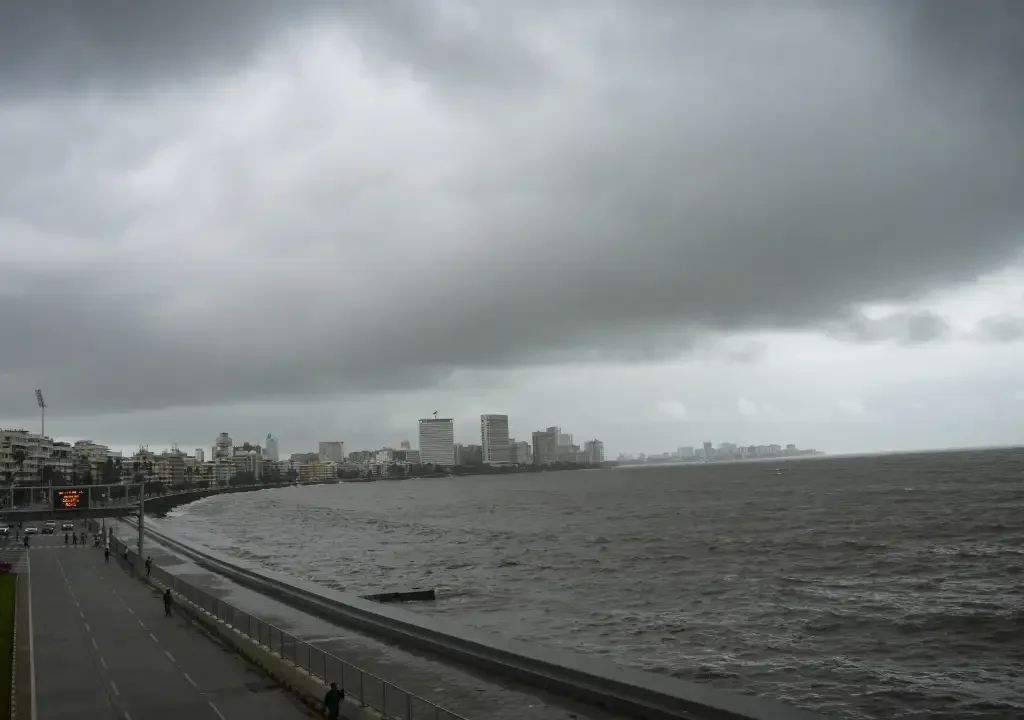
Mumbai’s temperature dropped sharply on Monday, offering residents brief respite from the recent humid spell, even as air quality continued to hover at moderate levels. Meteorologists said the change marks the city’s gradual shift into winter but also warned of potential air stagnation that could worsen pollution levels in the weeks ahead.
According to data from the India Meteorological Department (IMD), Mumbai recorded a maximum temperature of around 34°C and a minimum of 18°C. The clear skies followed a period of overcast conditions, with humidity dropping to nearly 40 per cent at Santacruz. While residents welcomed the cooler air, the city’s overall Air Quality Index (AQI) stood at 103—categorised as ‘moderate’ by the Central Pollution Control Board’s SAMEER app. Meteorologists attribute the temperature drop to retreating monsoon moisture and clearer atmospheric conditions, which allow for faster heat loss overnight.
“The dry air mass now dominating the region is typical for early November. However, it also means slower dispersion of pollutants,” said a senior IMD official.Neighbouring regions reflected similar trends. Pune reported a minimum temperature of 14°C, while Mahabaleshwar recorded a crisp 11°C, remaining the coolest point in the Konkan belt. Ratnagiri, Dahanu, and Satara too experienced cooler mornings and dry conditions. No significant rainfall was reported across Maharashtra’s western corridor. Despite the relief from heat, environmental experts caution that Mumbai’s air quality could deteriorate as winter deepens. Cooler air and reduced wind speeds trap particulate matter closer to the ground, especially in high-traffic zones and construction-heavy areas.
“This is a seasonal cycle Mumbai has faced for the past few years — better temperatures but worsening air,” said an environmental consultant working on urban air management. Health specialists have urged residents, particularly children and the elderly, to remain alert to respiratory discomfort even at ‘moderate’ AQI levels. Prolonged exposure to fine particulates, they warn, can trigger allergies and asthma-like symptoms. The recurring winter smog also underscores a deeper urban challenge — the city’s struggle to balance economic growth with clean air and climate resilience.
While initiatives such as cleaner fuels, waste segregation, and construction dust controls are slowly taking root, experts argue that long-term change will depend on urban planning that prioritises low-emission mobility, sustainable housing, and green infrastructure.
