


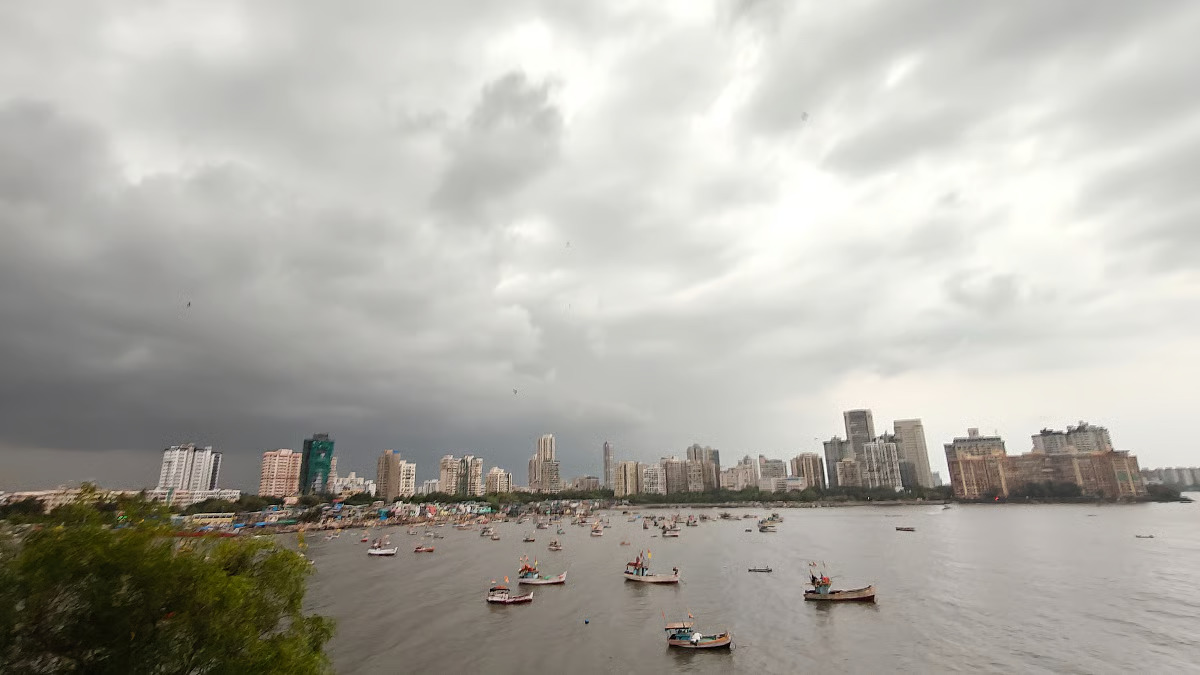
Mumbai woke up to clearer skies and moderate air quality on Saturday, following a week of heavy smog that had shrouded the city and pushed pollution levels into the “unhealthy” range. The improvement, while temporary, offers a brief respite in the city’s ongoing struggle with seasonal air pollution.
According to the India Meteorological Department (IMD), the city experienced a bright but hazy morning with stable temperatures — daytime highs hovering around 31°C and lows near 22°C. Visibility had reduced in the early hours due to a lingering haze, but meteorologists attributed the improvement in air quality to mild coastal winds that dispersed pollutants accumulated earlier in the week. Data from AQI.in placed Mumbai’s overall Air Quality Index (AQI) at 79 on Saturday, categorised as “moderate.” This marks a significant recovery from Friday, when readings had surged to 263 — an “unhealthy” level that obscured the skyline from Marine Drive to Bandra-Kurla Complex.
Among the city’s monitoring stations, Colaba registered the highest AQI at 98, followed by Bandra East (97) and Wadala Truck Terminal (95). Meanwhile, Parel-Bhoiwada and several western suburbs including Juhu, Malad, and Jogeshwari recorded levels between 67 and 72, suggesting a citywide easing of particulate matter concentrations. Environmental experts note that Mumbai’s recurring bouts of smog stem from a combination of vehicle emissions, construction dust, and post-monsoon weather patterns that trap pollutants closer to the ground. “The city’s coastal geography usually helps disperse pollutants, but stagnant air and high humidity can quickly reverse those gains,” said an environmental scientist based in Mumbai.
While the short-lived rains earlier in the week had briefly cleansed the air, the underlying issues of emission control and dust management remain unresolved. According to urban planners, the city’s lack of large-scale green buffers and its dependence on private vehicles continue to exacerbate its air quality challenges. A senior official from the civic environment department said the improvement highlights the importance of sustained mitigation rather than seasonal fixes. “We need to strengthen measures around construction site management, regulate vehicular emissions, and expand public transport adoption if we are to sustain moderate AQI levels year-round,” the official said.
Mumbai’s air, though clearer today, remains vulnerable to pollution rebound as winter approaches — a period when lower temperatures and calm winds typically worsen air stagnation. As cities across India face similar transitions, Mumbai’s experience underscores the growing need for integrated urban air management strategies that combine planning, policy, and citizen participation to ensure breathable cities for all.
Also Read: Mumbai Airports Terminal 1A To Be Demolished For Expansion
Mumbai breathes easier as AQI drops to 79
