


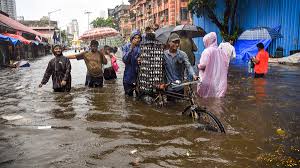
Mumbai is once again bracing for a period of intense monsoon activity, with the meteorological department issuing an orange alert for heavy to very heavy rainfall across the city. This forecast signals potential disruptions to daily life, including widespread waterlogging and traffic impediments, underscoring the critical need for robust urban resilience. While suburbs have already experienced significant downpours, authorities assure the public that the situation is not anticipated to mirror the severe deluge of July 2005, a testament to evolving preparedness.
The city’s infrastructure is set to undergo a rigorous test over the coming days, with forecasts indicating persistent heavy rain until July 26. An improvement in weather conditions, with only moderate showers, is expected from July 27 onwards. Compounding the rainfall challenge are anticipated high tides exceeding 4.5 metres during noon hours from July 24 to July 27. Such combined natural phenomena necessitate heightened vigilance and adaptive urban management strategies to ensure public safety and continuity of essential services, particularly for vulnerable communities.
Commuters are advised to plan their journeys meticulously, anticipating minor disruptions across both road and rail networks. Western and Central railway lines, particularly in low-lying areas such as Kurla, Sion, and Dadar, may experience brief halts if water levels rise near tracks. Similarly, road traffic is expected to slow down during peak hours on major arteries including the Eastern Express Highway, LBS Marg, and JVLR. The city’s public bus services are also under constant monitoring, with provisions for diversions should waterlogging necessitate them, ensuring gender-neutral access to transport.
Authorities are proactively deploying dewatering pumps and emergency crews at identified flood-prone junctions, reflecting a concerted effort towards mitigating the impact of the heavy rainfall. Recent data from the Santacruz observatory recorded 108 mm of rainfall between Monday and Tuesday morning, while south Mumbai’s Colaba logged 40 mm, indicating concentrated yet spread-out precipitation. This distribution has, fortunately, prevented flash flooding scenarios, allowing the city’s drainage systems to manage the volume without widespread devastation.
This recurring monsoon challenge highlights Mumbai’s ongoing journey towards becoming a truly sustainable and eco-friendly metropolis. The continuous investment in resilient infrastructure, coupled with proactive disaster management, is crucial for minimising the carbon footprint associated with prolonged traffic jams and ensuring equitable access to resources during adverse weather. By adapting urban planning to climate realities, Mumbai can continue its progress towards a future where its economic vitality is harmonised with environmental stewardship and social equity.
Also Read :Mulugu Drenched by 25.5 cm Overnight Deluge as Telangana Battles Torrential Rains
