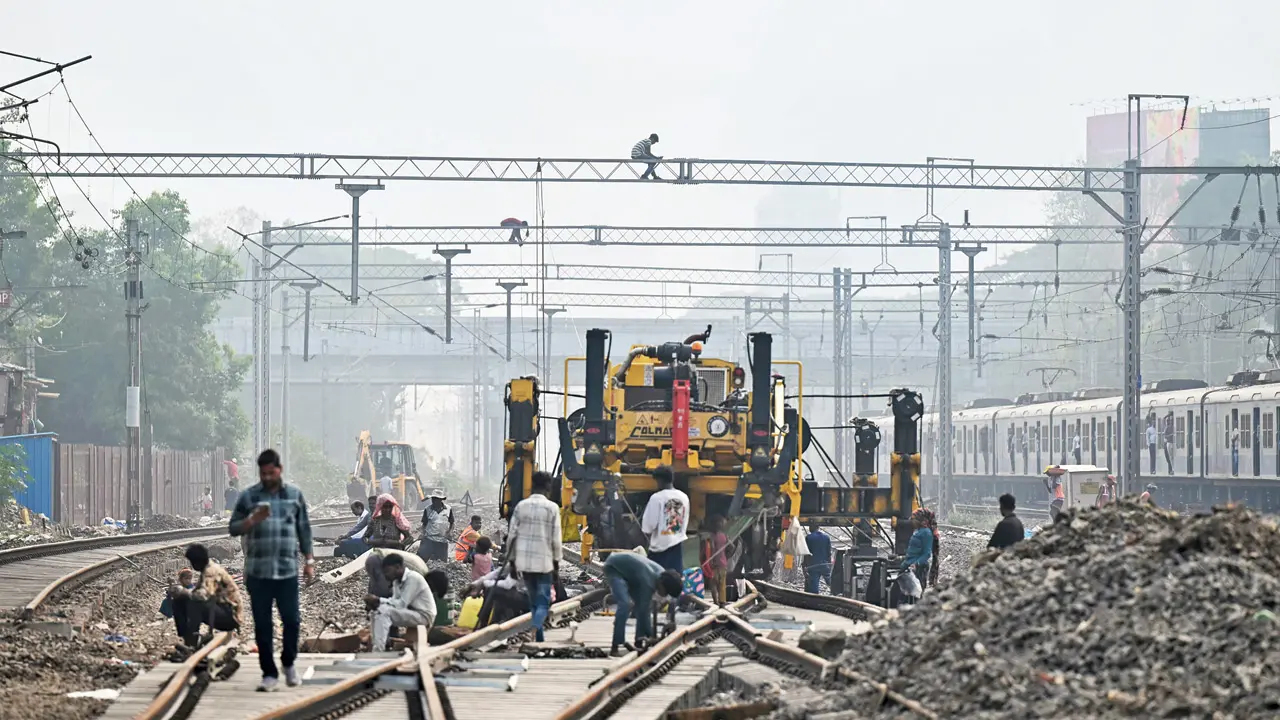
Mumbai’s suburban rail network has quietly crossed a significant operational milestone with the commissioning of a large-scale electronic signalling system at Borivali, one of the busiest nodes on the Western corridor. The upgrade marks a decisive move away from legacy relay-based infrastructure towards digital control systems designed to handle dense urban rail traffic with greater reliability, safety, and efficiency.
Borivali station now operates the most extensive electronic interlocking arrangement within the Mumbai suburban system, placing it among globally comparable high-capacity urban rail hubs in terms of operational complexity. The transition is particularly consequential for a city where suburban trains form the backbone of daily mobility for millions and where even minor disruptions can ripple across the metropolitan economy. Electronic interlocking systems digitally coordinate signals, track circuits, and points, replacing manual or electro-mechanical processes that are more prone to failure and slower response times. At Borivali, the new configuration manages hundreds of train movements across multiple running lines, enabling tighter scheduling and more predictable operations during peak hours. Railway officials involved in the upgrade indicate that the system has been designed to support future service expansion without proportionate increases in physical infrastructure.
The scale of the deployment reflects the strategic importance of Borivali as both a terminal and through-station on the Western Railway corridor. With control over hundreds of operational routes, dozens of signals, and a dense web of track circuits, the new setup allows operators to visualise and manage real-time train movements with greater clarity. Large-format digital displays consolidate this information, reducing dependency on fragmented control interfaces and manual oversight. From an urban planning perspective, such upgrades are critical as Mumbai pushes to modernise its transport backbone while reducing environmental impact. Improved signalling efficiency can translate into smoother train flows, lower idling times, and reduced energy consumption per trip. Transport experts note that operational gains from digital signalling often rival the benefits of adding new tracks, particularly in land-constrained cities.
The upgrade also has broader implications for commuter safety and resilience. Automated fail-safe mechanisms embedded within electronic interlocking systems are designed to prevent conflicting train movements, significantly lowering the risk of human error. In a network operating at near-saturation levels, this added layer of protection is increasingly viewed as essential rather than optional. Industry observers see Borivali’s upgrade as part of a gradual but necessary transformation across Mumbai’s suburban rail system, much of which still relies on decades-old signalling technology. Similar investments are expected to be replicated at other high-traffic stations as authorities align suburban rail operations with metro and regional rapid transit standards.
As Mumbai continues to expand eastward and northward, demand on its rail corridors is set to intensify. The Borivali signalling upgrade signals a shift in strategy, prioritising smarter operations over brute-force expansion. The success of this transition will likely shape how quickly the rest of the network adopts digital systems capable of supporting a more reliable, climate-conscious, and commuter-focused urban transport future.
Mumbai Borivali Station Upgrades To Advanced Signalling Hub