


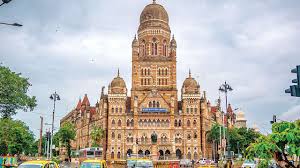
Mumbai’s ambitious slum redevelopment programme is facing renewed scrutiny as civic schools operating within residential towers continue to fall short of basic safety and infrastructure standards. Several Brihanmumbai Municipal Corporation-run schools housed inside Slum Rehabilitation Authority (SRA) buildings are functioning without adequate classrooms, playgrounds, sanitation or fire safety clearances, raising serious concerns about children’s welfare and long-term learning outcomes.
Under national and state education norms, schools are required to operate from independent buildings designed specifically for academic use, with sufficient ventilation, open space and sanitation. Yet across Mumbai, multiple municipal schools have been accommodated within residential complexes constructed by private developers, often as an afterthought rather than a planned civic facility. Education experts say this compromises both safety and pedagogy. Urban school planning guidelines typically require campuses ranging from 4,000 to 8,000 square metres, with classrooms of roughly 500 square feet and access to outdoor play areas. In contrast, several SRA-linked schools operate from converted flats, basements or parking levels, with no access to natural light or recreation spaces. “These are not technical lapses but systemic planning failures,” said an education policy expert, noting that such environments undermine cognitive development and emotional wellbeing. Parents have increasingly voiced fears about safety. In central Mumbai, families describe classrooms located next to washrooms with poor drainage and recurring water shortages. In eastern suburbs, children attend lessons in temporary or poorly maintained structures after fire authorities declined to certify newly built school blocks. “Sending young children into spaces not designed for them is deeply worrying,” said a parent representative from a civic school association. Teachers’ groups argue that the problem stems from weak enforcement during redevelopment approvals. “School plots are either reduced in size or absorbed into residential towers, despite being marked in development plans,” said a teachers’ union office-bearer.
Activists add that designated education plots across several wards remain encroached or unused, even as nearby schools struggle with overcrowding. Civic officials acknowledge the gaps and say corrective steps are under way. A senior municipal education officer confirmed that the corporation is coordinating with redevelopment authorities to secure compliant school premises and enforce timelines on developers. In some cases, interim arrangements are being explored, including access to nearby playgrounds and alternative accommodation until permanent facilities are completed. Urban planners say the issue highlights a broader challenge in Mumbai’s redevelopment-led growth model. “Housing density has increased rapidly, but social infrastructure has not kept pace,” said a city planning expert. As Mumbai positions itself as an inclusive and resilient metropolis, aligning redevelopment with child-friendly, low-carbon and equitable public infrastructure will be critical.
The civic body is now drafting updated guidelines for future SRA-linked schools, aiming to ensure that education spaces are planned upfront rather than retrofitted. Whether these reforms translate into safer classrooms will determine how well Mumbai balances redevelopment with its responsibility to its youngest citizens.
Also Read: Mumbai Supreme Infrastructure Partners Brookfield For Asias Largest Global Capability Centre Project
