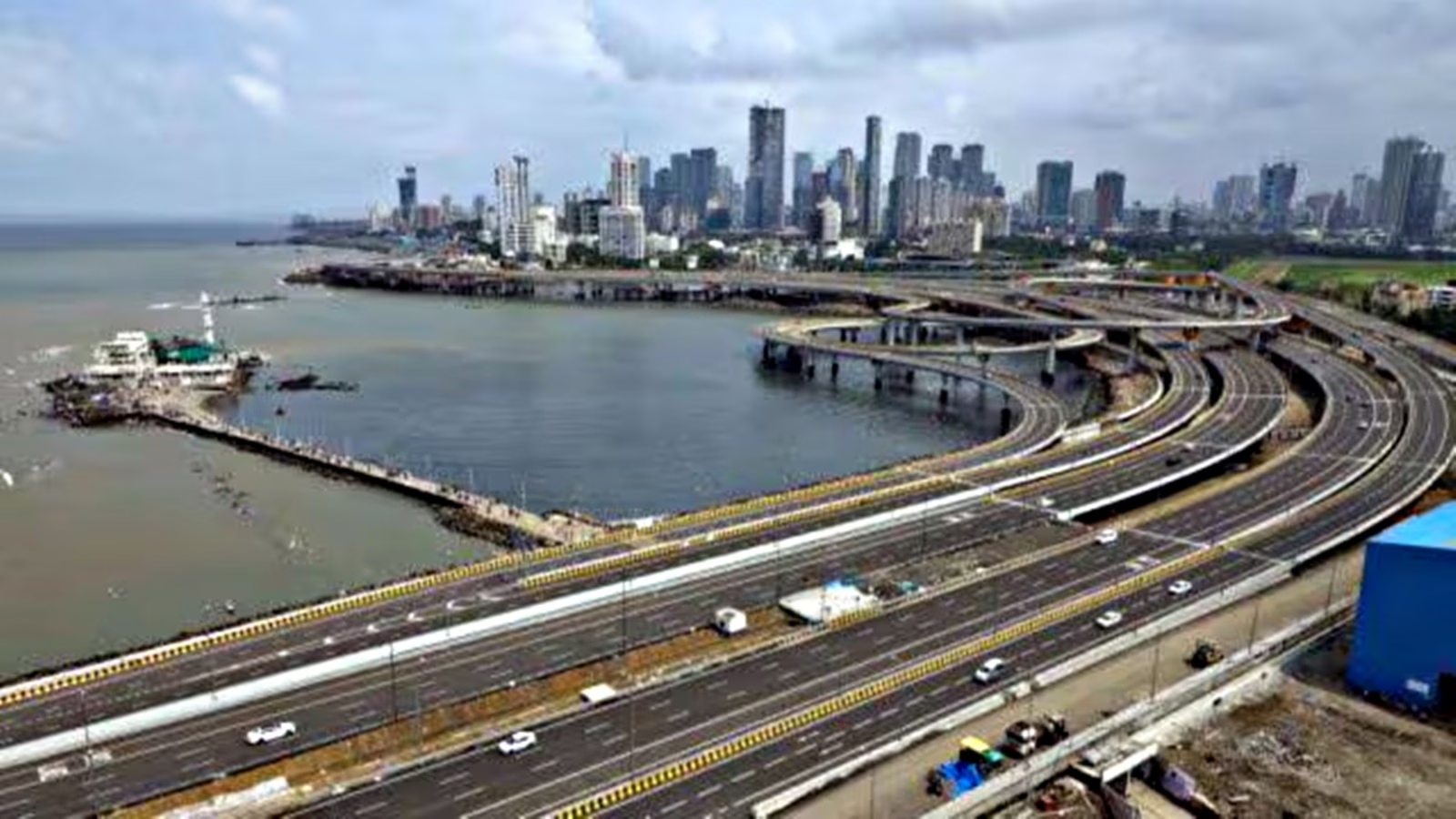
The Brihanmumbai Municipal Corporation’s (BMC) infrastructure spending has risen sharply this fiscal year, with capital expenditure hitting around ₹19,400 crore, according to data released ahead of next month’s civic budget presentation. Roads, bridges and transport corridors are emerging as dominant categories in the civic body’s outlay, signalling a focused effort to upgrade urban mobility and address longstanding connectivity challenges across the metropolis.
The emphasis on physical infrastructure reflects the BMC’s recognition that connectivity is a key driver of economic activity, resilience and quality of life in a city where daily commuting, freight movement and real estate pressures intersect. With major roadworks and bridge projects underway or nearing completion, the civic authority is attempting to deliver tangible mobility improvements alongside ongoing expansion of mass transit and flood-resilient drainage networks.According to civic records responding to a Right to Information (RTI) query, the roads and bridges segment accounts for a significant portion of the capital spend — a trend that has accelerated over the past two financial years as the Corporation shifts budgetary weight towards long-term assets. This reflects a broader strategy to decongest traffic corridors, reduce bottlenecks in freight logistics and support seamless movement across the sprawling metropolitan zone.
Urban planners note that investing in road and bridge infrastructure is critical in Mumbai, where rapid population growth and constrained urban space have historically strained connectivity. By expanding arterial capacity and modernising major junctions, the BMC aims to streamline intracity movement while also tying local networks into larger regional transport initiatives such as metro extensions and coastal road links.The capital outlay figure sits against a backdrop of sustained infrastructure investment. In the previous fiscal year, the civic body reported record capital expenditure nearing ₹37,000 crore, largely to fund projects including tunnel works, elevated roads, sewerage treatment systems and multimodal corridors. That represented a sharp uptick from earlier years and underscored the Corporation’s shift toward asset creation over routine operational spend.
Transport economists observe that roads and bridges not only ease congestion but also unlock urban economic potential, particularly in connecting commercial hubs, logistics zones and new growth areas. For businesses, reliable linkages reduce delivery times, cut transport costs and support workforce mobility. For residents, quality transport infrastructure expands access to jobs, education and services — especially in suburbs historically underserved by rapid transit.However, experts warn that infrastructure scale alone isn’t enough. Complementary investments — including pedestrian-friendly streets, cycle corridors and high-capacity public transport — are necessary to reduce reliance on personal vehicles and ensure zero-carbon mobility gains. Without these elements, added road capacity can be overwhelmed by rising demand, diminishing long-term environmental and livability benefits.
As the BMC finalises its 2026-27 budget, stakeholders will be watching how robust capital outlays on transport are balanced with sustainable mobility, ecological safeguards and inclusive access. Ensuring that infrastructure expansion translates into equitable improvements for all citizens — including women, older residents and those with mobility challenges — remains a critical test for Mumbai’s urban trajectory.