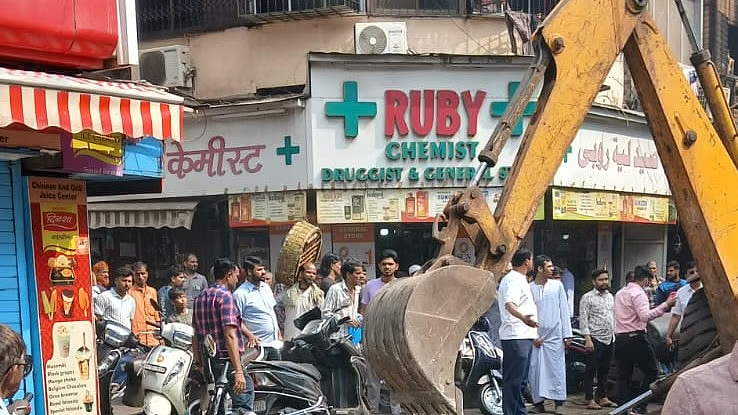
Mumbai BMC Clears Encroachments On Key South Routes
Mumbai’s civic administration intensified efforts to unclog pedestrian and traffic corridors as the Brihanmumbai Municipal Corporation (BMC) B Ward executed a targeted anti‑encroachment operation along two high‑traffic commercial routes: Mohammed Ali Road and Ibrahim Merchant Road on Monday. The coordinated action dismantled unauthorised shops and footpath expansions that had constrained pedestrian movement and contributed to congestion in the densely populated south Mumbai market precinct. This enforcement reflects a broader push to rationalise public space and strengthen urban mobility.
The operation removed seven illegal retail structures, dismantled 12 raised platforms and metal sheds, and seized 10 protruding bollards that impeded clear footpaths. Officers also acted against two abandoned vehicles that further narrowed circulation space for commuters. According to civic officials, the deployment included multiple encroachment removal vehicles, mechanical excavators and a contingent of around 40 municipal staff with police support to ensure orderly implementation.Mohammed Ali Road and Ibrahim Merchant Road are arterial links between commercial hubs such as Bhendi Bazaar, Masjid Bunder, Nagdevi and Mandvi, drawing heavy footfall from residents, traders and daily wage workers. Urban planners note that sustained encroachment erodes essential walking infrastructure, forcing pedestrians onto carriageways with motorised traffic — a dynamic that undermines both safety and efficiency.
Experts point out that while regular enforcement is necessary, a singular demolition focus must be paired with inclusive urban design strategies that accommodate both informal economic activity and public accessibility. Informal vendors contribute to the city’s vibrant street economy, yet when settlements spill onto footpaths, they can restrict movement for those with mobility challenges, including elderly citizens and people with disabilities. Balanced regulation and designated vending zones are considered pivotal in mitigating such conflicts.Local residents and commuters welcomed the removal of barriers, reporting visibly improved pedestrian walkways and more orderly traffic flow since the action. However, some small businesses that operated near the footpaths have sought clarity on future engagement, arguing that unplanned clearances without structured alternatives could affect their livelihoods. Urban economists stress that transparent, equitable frameworks for street vendors can reduce friction and align economic opportunity with infrastructure goals.
The BMC indicates that similar actions will continue across other congested wards as part of a citywide commitment to reclaim public space and enhance walkability. For sustained impact, urban planners advise integrating these drives with broader mobility and land‑use planning, including micro‑zoning of hawker clusters, improved sidewalk design and community consultation. Such measures are central to fostering resilient, inclusive urban environments in India’s financial capital.