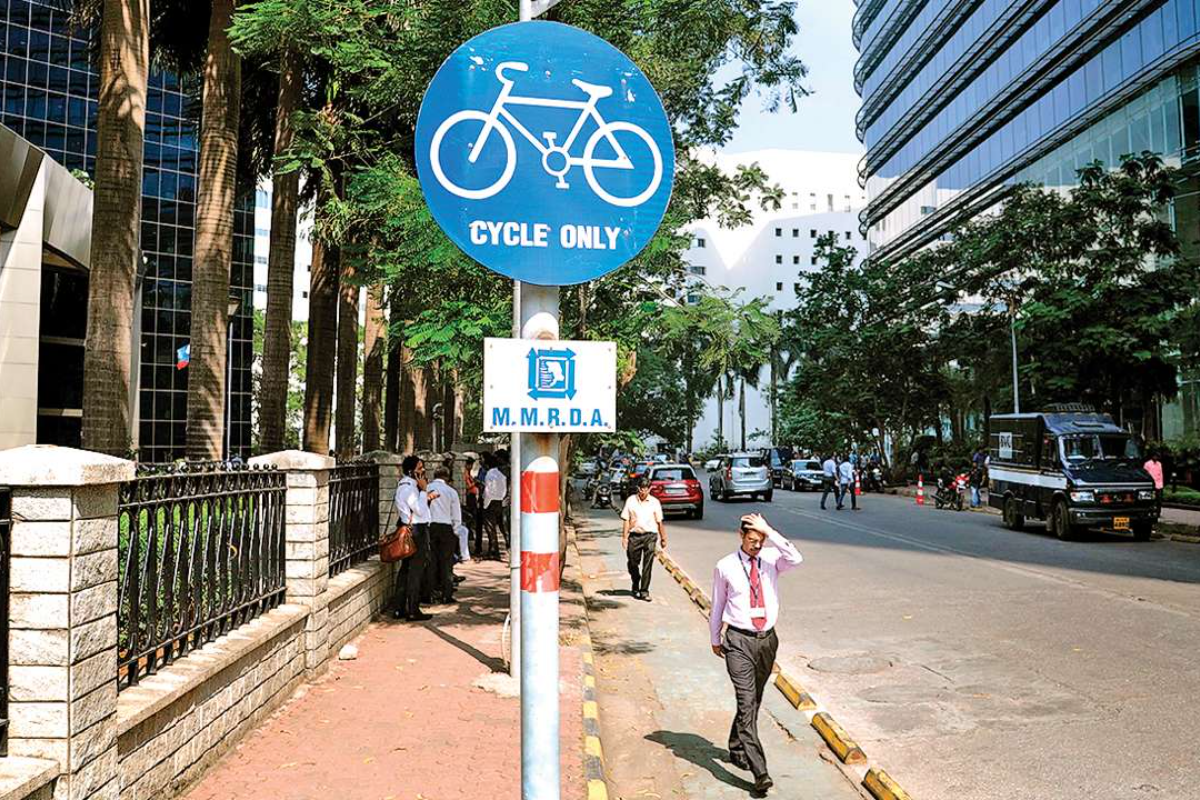
Mumbai BKC Cycle Tracks Removed To Add Extra Road Lanes
The Mumbai Metropolitan Region Development Authority (MMRDA) has initiated the dismantling of cycle tracks in the Bandra-Kurla Complex (BKC) to make way for wider roads, aiming to ease chronic congestion in one of the city’s busiest business hubs. The decision comes as vehicle volumes have surged far beyond projections, particularly after the closure of the Sion bridge, creating persistent traffic bottlenecks.
The ₹25-crore project involves removing the underused cycle tracks and shifting underground utilities, expanding the current 2+2 lane setup into a 3+3 configuration. According to senior officials, this reconfiguration is expected to reduce peak-hour travel time from 25 to 15 minutes and cut signal waiting times from 10 to about 7 minutes. These changes, they say, could reduce vehicular idling and lower carbon emissions in the area by as much as 30 per cent.Initially sanctioned in 2011 as part of a 13-kilometre cycling network in BKC’s G-block, the infrastructure was envisioned to promote non-motorised transport and sustainable mobility. By 2021, about 9 kilometres had been completed at a cost of nearly ₹60 crore. However, the tracks reportedly remained underutilised for years, even as the number of cars entering the business district climbed sharply.
BKC currently sees daily traffic of around six lakh commuters, including two lakh employees of various firms and approximately four lakh visitors. With the increasing pressure on existing road infrastructure, MMRDA decided in July to remove the tracks entirely within a month, prioritising vehicle movement over the seldom-used cycling corridors.
Officials say this move is part of a broader traffic management strategy for BKC, which also includes optimising signal timings and introducing a one-way circulation system in collaboration with the Mumbai Traffic Police. A comprehensive study of peak-hour traffic flows is underway to ensure the revised road network operates efficiently.While urban transport experts often advocate for retaining cycling infrastructure to encourage greener mobility, MMRDA maintains that the removal was unavoidable in the present context. “For years, the cycle tracks remained largely empty while traffic piled up. With the additional lane, we expect smoother vehicular movement and less gridlock during rush hours,” an official explained.The decision reflects a pragmatic approach to addressing immediate mobility challenges in BKC. Yet, the long-term implications on Mumbai’s sustainable transport goals remain to be seen, especially as the city continues to grapple with the balance between road expansion and non-motorised transport promotion.