


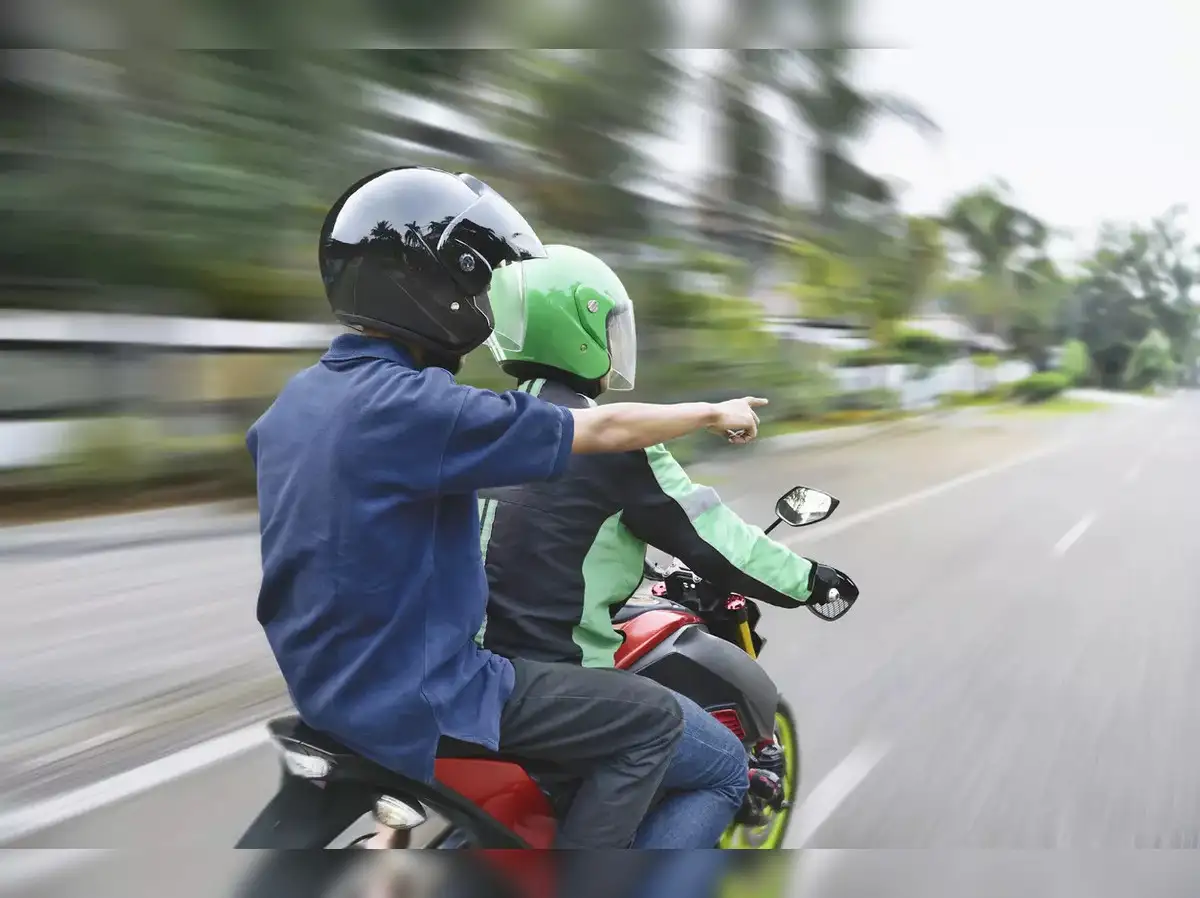
Mumbai’s long-debated bike taxi service has formally entered a pilot phase, with state transport authorities approving fare structures and granting provisional licences to major ride-hailing aggregators. The move is being viewed as a significant step towards expanding affordable, accessible, and sustainable mobility options across the Mumbai Metropolitan Region (MMR).
As per the official notification, the minimum fare for bike taxis has been fixed at ₹15 for the first 1.5 km, followed by ₹10.27 for each additional kilometre. This fare structure was determined using the Khatua Committee formula, the same framework previously applied to auto-rickshaw and taxi fares in the region. Authorities noted that the decision balances affordability for commuters with a viable earnings model for drivers. The pilot approval covers leading app-based platforms, including Ola, Uber, and Rapido, all of which have received provisional licences. Officials confirmed that the aggregators will have a month to secure permanent licences by fully complying with the conditions outlined in the state’s guidelines for bike taxi operations.
The decision follows a series of enforcement drives carried out by regional transport offices in Mumbai, Thane, Vashi, and Panvel. Twenty special squads had been deployed to check illegal operations, leading to action against more than 120 vehicles, including nearly 80 unauthorised bike taxis. Officials emphasised that such operations cannot continue outside the regulatory framework, as the system must ensure road safety, accountability, and fair revenue collection for the state. According to the gazette notification, only drivers aged between 20 and 50 years with valid commercial licences and a public service vehicle badge will be eligible to operate bike taxis. They must also undergo police verification and demonstrate adequate knowledge of local routes. These measures, transport experts argue, are critical to ensuring passenger safety, particularly in a densely populated city where road discipline is a pressing concern.
Officials highlighted that strict compliance requirements were designed not only to prevent illegal operators from re-entering the system but also to instil public confidence in the new service. They added that aggregators are now obliged to set up functioning call centres or operate through authorised web portals to improve grievance redressal, an area where gaps were found in existing ride-hailing services. Experts suggest that the launch of bike taxis, even on a pilot basis, could have a transformative effect on urban transport in Mumbai. The two-wheeler service is expected to offer faster and more cost-effective connectivity for last-mile travel, reducing commuter dependence on private vehicles while cutting congestion and emissions. If successful, the model could become a permanent fixture in the city’s transport mix, complementing suburban trains, metro corridors, and buses.
For now, the pilot will serve as a test case, determining whether regulated bike taxis can deliver on the promise of affordable and eco-friendly urban mobility while maintaining the highest standards of safety and accountability.
Also Read : Mumbai Monorail Services Suspended After Repeated Technical Failures, Safety Review Ordered
