


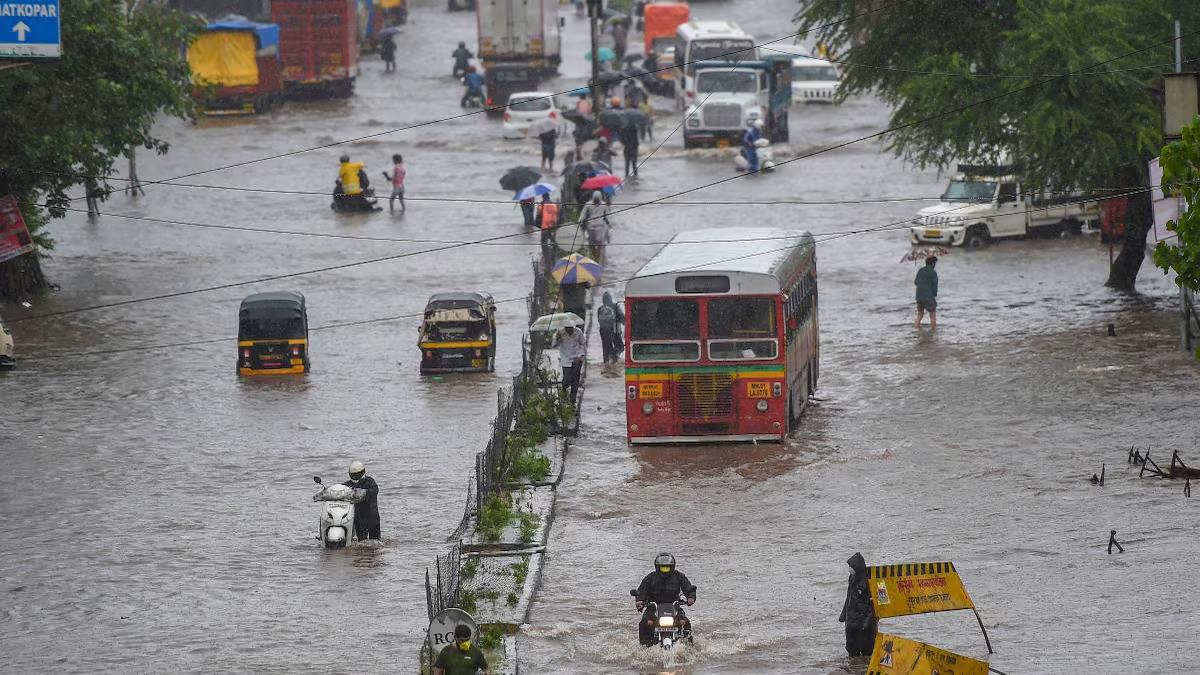
Mumbai woke to scenes of waterlogged streets, traffic snarls, and weather warnings as relentless pre-monsoon showers battered the city.
The Indian Meteorological Department (IMD) raised a red alert for multiple areas in the city and surrounding districts, warning residents and authorities of more intense rainfall in the coming days. The current spell, attributed to a low-pressure zone over south Madhya Maharashtra, has made May 2025 the wettest May in over three decades. This early onslaught of the southwest monsoon — the earliest since 1990 — is not only an anomaly in terms of meteorological patterns but a vivid reminder of the changing climate that increasingly disrupts seasonal norms. As Mumbai struggles to cope with the deluge, the conversation around sustainable and climate-resilient urban planning has never been more urgent.
The IMD reported that eight of Mumbai’s key weather stations — including Borivali, Santacruz, Powai, Mulund, Chembur, Worli, Colaba, and Alibag — are under a red alert. This indicates a severe weather situation requiring immediate action. Neighbouring Navi Mumbai, Thane, and Kalyan have been placed under an orange alert. Officials confirmed that the rainfall intensity is expected to remain high for the next 72 hours, with moderate to heavy showers accompanied by thunder, gusty winds, and the potential for squalls. Thane, Palghar, and Raigad districts are also facing significant weather-related disruptions. Raigad, in particular, is under a red alert, with IMD forecasting thunderstorms and maximum wind speeds likely to impact normal life and transport services.
The civic response in Mumbai has been under intense scrutiny as roads, already weakened by previous rains, have become dangerous with potholes and washouts. A critical situation unfolded on the Bhiwandi-Wada road in Thane district, where traffic was backed up for over 7 km due to damaged road surfaces and ongoing repair work. Experts in urban mobility and disaster resilience warn that inadequate pre-monsoon maintenance and unchecked construction activity are aggravating the effects of extreme weather. Despite infrastructural challenges, the IMD’s Nowcast system — which provides real-time weather updates — continues to guide emergency response teams. On early Monday morning, the system issued an advisory forecasting light to moderate rainfall over Mumbai for at least the next four hours. The day’s temperature is expected to range between 24 and 31 degrees Celsius, with overcast skies dominating the week ahead.
According to officials from the IMD, the root cause of the abnormal downpour is a well-marked low-pressure area over south Madhya Maharashtra and adjoining parts of Marathwada and North Interior Karnataka. This system, although expected to move eastward and weaken within 24 hours, has already caused substantial damage and disruption. Meteorologists expect widespread light to moderate rainfall to persist across the Konkan region, Goa, and Madhya Maharashtra through May 27. In a historic development, the monsoon’s arrival in Mumbai and Kerala has occurred weeks ahead of schedule. Traditionally, the monsoon reaches Kerala by June 1 and Mumbai around June 11. However, this year’s onset by May 24 and 25 respectively marks a shift in climate behaviour, raising concerns among climatologists about the accelerating impact of global warming.
The IMD noted that Maharashtra received an area average of 79.6 mm of rainfall from May 1 to 23, a staggering 844 per cent above the norm of 7.9 mm. This makes May 2025 the wettest since 1990. The all-time May rainfall record for Maharashtra remains 113.6 mm in 1918. Officials say the data underscores a clear departure from past rainfall trends, which should prompt urgent adaptation measures in urban design and disaster management systems. Urban planners and environmental experts are calling for structural reforms in the city’s stormwater management and land-use practices. Mumbai’s increasing vulnerability to flooding is compounded by encroachments on natural water channels, outdated drainage systems, and rapid unregulated development. The city, already burdened by infrastructural deficits, needs to pivot decisively towards green urbanism — adopting climate-resilient infrastructure, expanding urban green cover, and enforcing zoning regulations that consider hydrological impacts.
While emergency response systems have been partially effective, the scale and intensity of these pre-monsoon showers present a stark warning. If climate adaptation continues to lag, such extreme weather events may no longer be anomalies but the new urban normal.
Also Read : Delhi rainstorm floods roads overnight
