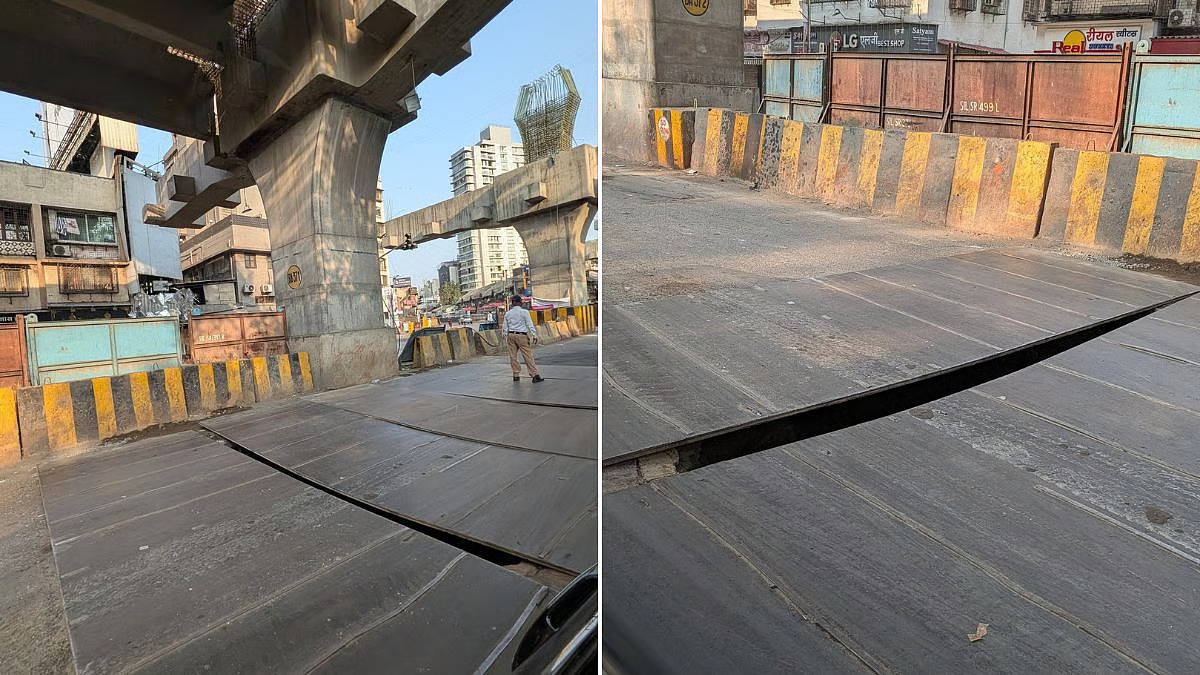
A partial road collapse along a key arterial stretch in Bandra has disrupted traffic movement in Mumbai’s western suburbs, exposing the fragility of surface infrastructure during ongoing underground utility works. The incident has triggered congestion along SV Road, a vital north-south corridor, with authorities moving to secure the affected zone and initiate repairs.
The collapse occurred near a busy commercial junction, where a section of the carriageway gave way during ongoing pipeline replacement works beneath the road surface. The stretch had been temporarily covered with metal plates—commonly used during excavation—but structural instability led to a failure, prompting immediate intervention by civic and traffic authorities. To mitigate safety risks, officials cordoned off a significant portion of the affected roadway, reducing available lanes and slowing vehicular movement across the corridor. Commuters reported extended travel times, with the disruption spilling over into adjoining roads and junctions during peak hours.
Urban infrastructure experts note that such incidents are often linked to the complexities of ageing underground utility networks combined with high traffic loads above. Mumbai’s water pipeline upgrades, while essential for long-term resilience, frequently involve excavation in densely built areas, where maintaining road integrity becomes a challenge. The SV Road incident highlights a broader issue in urban infrastructure management—coordination between underground works and surface mobility. In high-density cities, even temporary disruptions can have cascading effects on traffic efficiency, economic activity, and commuter experience. Ensuring robust temporary reinstatement methods, such as reinforced plating and real-time monitoring, is increasingly critical.
Officials indicated that repair work will be prioritised over the weekend to restore the carriageway and minimise prolonged disruption. The process is expected to include stabilising the affected section, completing pipeline-related work, and relaying the road surface to ensure durability. From a planning perspective, the incident also raises questions about the resilience of interim construction practices, especially in corridors that handle heavy traffic volumes throughout the day. Transport planners suggest that adopting advanced materials and phased construction methods could reduce the likelihood of such failures.
At the same time, the need for infrastructure upgrades remains urgent. Replacing ageing water lines is essential for reducing leakages, improving supply efficiency, and building climate-resilient urban systems. However, these upgrades must be balanced with effective traffic management strategies to limit disruption. As Mumbai continues to modernise its underground infrastructure, incidents like this underline the importance of integrated project execution—where engineering, safety, and mobility considerations are aligned from the outset.
For now, commuters navigating the Bandra stretch are likely to face short-term inconvenience, but the speed and quality of repairs will determine how quickly normalcy returns to one of the city’s busiest road corridors.
Mumbai Bandra Stretch Slows After Sudden Road Damage