


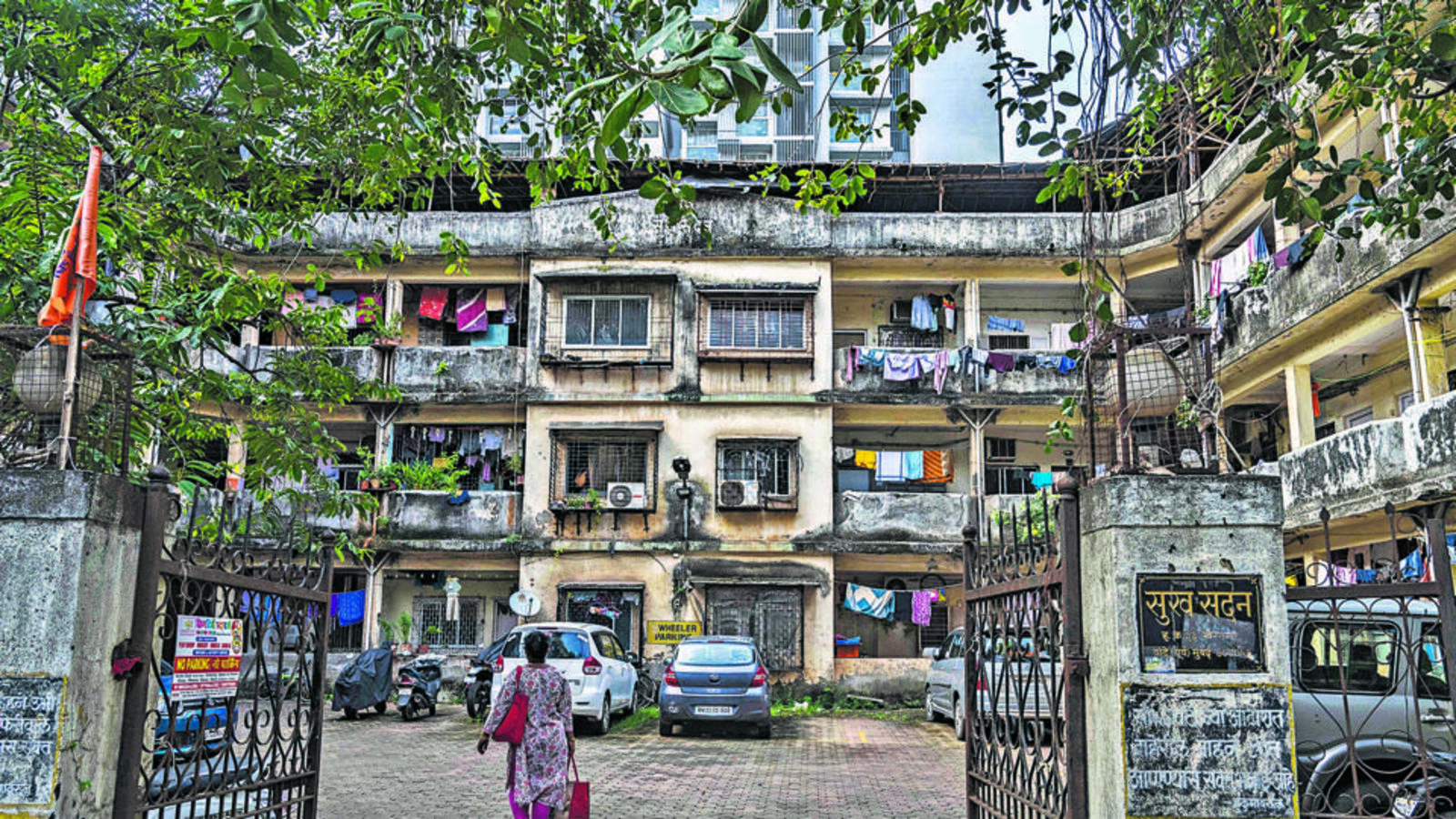
Mumbai’s redevelopment-driven housing market continues to attract new categories of capital, with a film industry linked private firm stepping into the transformation of an ageing residential society in Bandra, one of the city’s most land-constrained and high-value neighbourhoods. The project involves the reconstruction of a low-rise cooperative building that has crossed six decades of structural life, underscoring the accelerating pace of redevelopment across older urban pockets.
The redevelopment will be undertaken by a closely held real estate entity promoted by a Bollywood actor-producer, according to publicly available property registration records. The firm has been appointed by the cooperative housing society through a formal selection process, reflecting a growing trend of non-traditional developers entering Mumbai’s fragmented redevelopment ecosystem. The three-storey society comprises a small group of residents, with ownership records indicating that a single family and its associated production company collectively hold a significant share of the existing apartments. Urban housing analysts note that such ownership concentration often simplifies consensus-building, a key hurdle in Mumbai’s redevelopment landscape where stalled negotiations remain common. Across Maharashtra, redevelopment has emerged as a primary mechanism for renewing the city’s residential stock, particularly for buildings constructed between the 1950s and 1980s. These structures frequently face rising maintenance costs, safety risks, and infrastructure limitations, pushing societies towards reconstruction rather than incremental repair. In return, residents typically receive larger homes without direct capital outlay, while developers monetise additional saleable area.
In this Bandra project, members are set to receive expanded apartments compared to their current carpet areas, alongside temporary financial support during the construction phase. Such compensation structures have become standard as rental inflation and prolonged construction timelines increase the financial burden on displaced residents. Beyond individual benefits, redevelopment projects like this have wider urban implications. Bandra’s transformation reflects the city’s push towards vertical growth in established neighbourhoods, raising questions around infrastructure capacity, mobility, and environmental resilience. Urban planners caution that without parallel upgrades to drainage, power, and transport networks, incremental densification can strain already saturated systems. From a sustainability lens, redevelopment also offers opportunities. New buildings can integrate energy-efficient materials, improved waste management, and better water systems, contributing to lower long-term carbon footprints compared to continued use of obsolete structures. However, experts stress that such outcomes depend on regulatory enforcement rather than market intent alone.
As Mumbai increasingly relies on redevelopment to meet housing demand, projects backed by unconventional capital sources highlight the city’s evolving real estate dynamics. The Bandra redevelopment illustrates how private ownership patterns, regulatory frameworks, and economic incentives intersect to reshape neighbourhoods one ageing building at a time.
Also Read:
Mumbai Bandra Redevelopment Draws Film Industry Capital
