


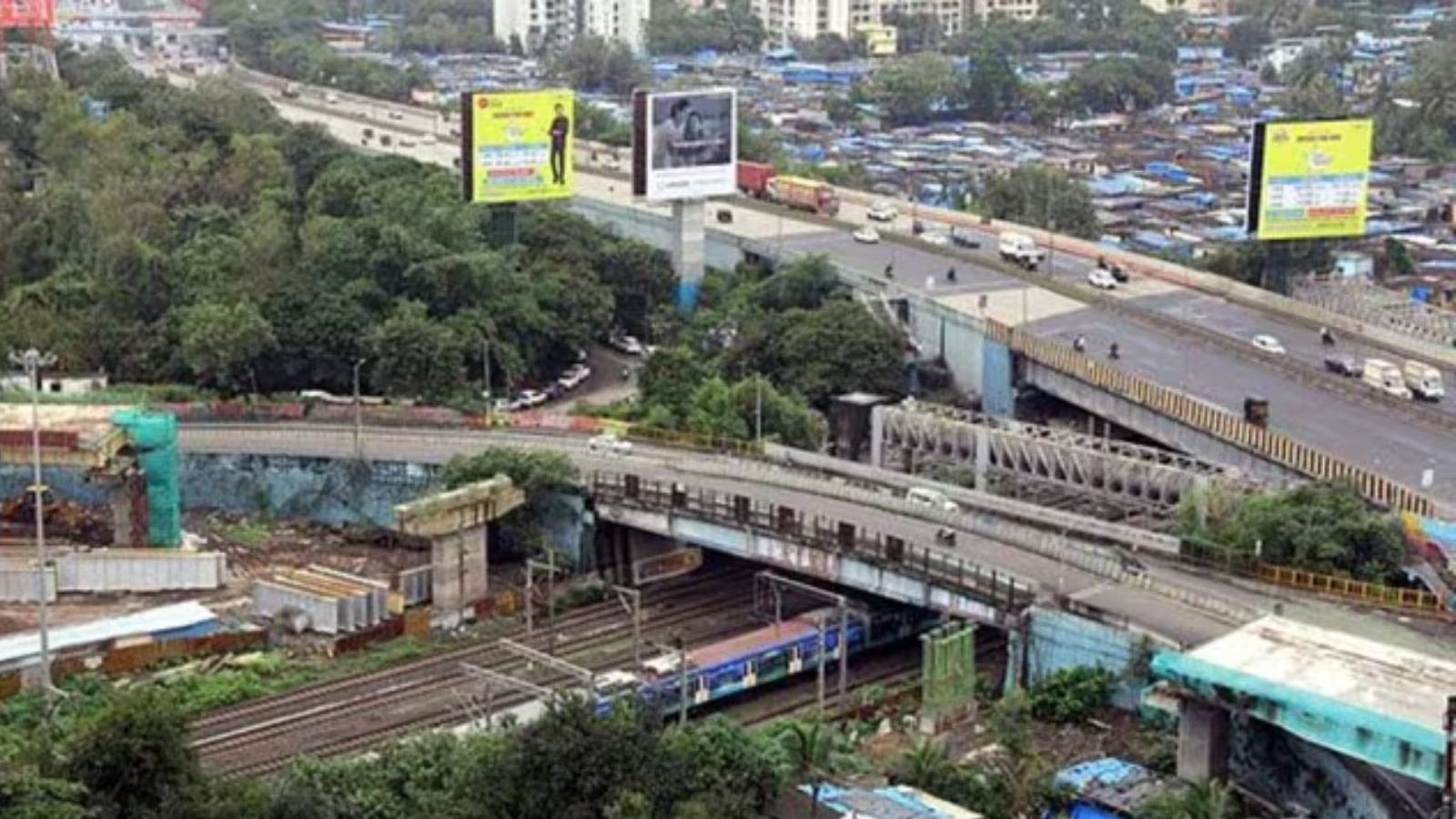
A prime 11-acre railway-owned land parcel in Bandra East has entered a decisive phase of monetisation, with two of Mumbai’s most established real estate developers emerging as leading contenders in a high-value bidding process. The site, strategically positioned between active suburban rail lines and the Western Express Highway, is among the largest contiguous redevelopment opportunities remaining near the Bandra Kurla Complex.
The Bandra railway land bid is being conducted by the Rail Land Development Authority, which is pursuing long-term value creation through a 99-year lease model rather than outright sale. With a base valuation exceeding Rs 5,300 crore and a mandated revenue-sharing component, the transaction reflects a growing shift by public land-owning agencies towards structured partnerships that combine upfront capital with recurring income streams. Urban planners note that the site’s proximity to BKC Mumbai’s primary financial and corporate district significantly enhances its development potential. The parcel carries a relatively high floor space index, allowing close to two million square feet of buildable area. Preliminary planning expectations indicate a mixed-use configuration, combining office space, housing and limited retail to support a walk-to-work ecosystem. The Bandra railway land bid is also closely watched for what it signals about market confidence. Despite elevated land costs and tighter financing conditions, developers appear willing to commit substantial capital to well-located urban land where infrastructure access, transit connectivity and long-term demand are already established. Analysts suggest that such assets offer greater resilience compared to peripheral greenfield developments.
From a civic standpoint, the redevelopment of railway land presents both opportunity and responsibility. Integrating large projects into dense urban fabrics requires careful attention to traffic dispersal, last-mile connectivity, pedestrian movement and public amenities. Transport planners emphasise that developments adjoining active rail corridors must prioritise safety buffers, noise mitigation and seamless interchange with public transport networks. The project also sits within a broader national push to unlock underutilised railway land for urban regeneration. Authorities see land monetisation as a way to fund rail modernisation while catalysing economic activity in city cores. However, urban economists caution that revenue maximisation should be balanced with inclusive planning outcomes, including open spaces, affordable commercial formats and employment generation beyond premium office uses. Environmental considerations are also likely to shape the final development strategy. Given Mumbai’s increasing climate vulnerability, large projects near transport corridors are being assessed for flood resilience, energy efficiency and construction practices that reduce embodied carbon. Experts argue that such sites can become benchmarks for transit-oriented, lower-emission urban growth if planned responsibly.
As the Bandra railway land bid moves towards conclusion, attention will shift to how the winning developer translates scale into liveability. The project’s long-term impact will depend not only on financial returns but on how effectively it stitches together infrastructure, neighbourhoods and economic opportunity in one of Mumbai’s most strategic urban zones.
Also Read: Mumbai Santacruz Office Acquisition Signals Market Consolidation
Mumbai Bandra Rail Land Draws High Stakes Bids
