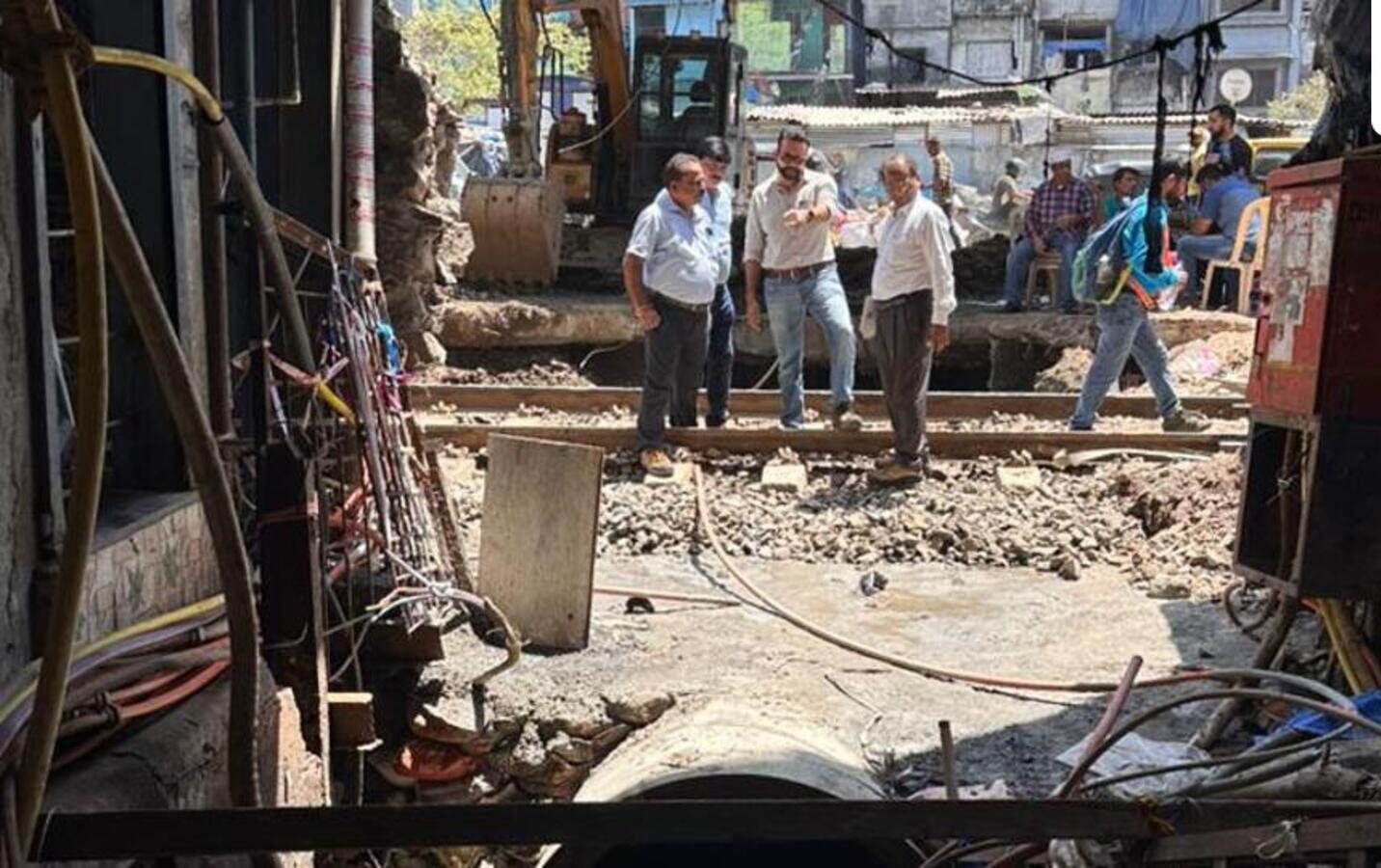
A long-standing rail infrastructure constraint in Mumbai’s Bandra corridor has been addressed with the completion of a critical drainage upgrade, offering relief to millions of suburban commuters who face repeated monsoon disruptions each year. The intervention is expected to significantly reduce flooding along a key stretch of the Western Railway, one of the city’s busiest transit lifelines.
The project focuses on improving stormwater outflow near the Mahim–Bandra section, a known vulnerability during heavy rainfall due to its proximity to the Mithi River and surrounding low-lying settlements. Railway authorities have replaced an ageing narrow pipeline with a substantially larger conduit, enabling faster evacuation of rainwater that previously accumulated on tracks and disrupted services. For decades, the area had been prone to waterlogging during intense monsoon spells, causing cascading delays across the suburban network. With Mumbai’s local trains carrying close to three million passengers daily on this corridor alone, even short-term disruptions often translate into overcrowding, extended travel times, and economic losses for commuters.
Urban infrastructure experts note that drainage capacity is a critical but often overlooked aspect of rail resilience in coastal cities. “Upgrading legacy systems is essential as rainfall patterns become more erratic due to climate change. Without such interventions, even modern transport networks remain vulnerable,” said a senior planner familiar with urban flood management. The bottleneck stemmed from an outdated drainage system installed in the early 1990s, which had become increasingly ineffective due to clogging, encroachments, and limited maintenance access. While civic authorities had undertaken improvements in adjoining areas, the section beneath the railway tracks continued to restrict water flow, creating a persistent choke point.
Addressing this required complex engineering in a highly constrained urban environment. The work zone cuts through dense informal settlements, runs adjacent to a road overbridge, and lies beneath active rail lines, leaving minimal space for conventional construction techniques. Engineers adopted a phased approach, temporarily removing a track section to enable manual excavation and installation of the upgraded pipeline. The scale of the intervention—spanning hundreds of metres and involving the removal of significant debris—highlights the challenges of retrofitting infrastructure in built-up urban corridors. However, officials indicate that the upgraded system will allow a multiple-fold increase in drainage capacity, helping prevent track inundation during peak rainfall.
The Bandra upgrade also reflects a broader shift towards climate-resilient infrastructure planning in Mumbai. With extreme rainfall events becoming more frequent, transport agencies are under pressure to integrate flood mitigation measures into core mobility systems. As the city prepares for another monsoon season, the effectiveness of this intervention will be closely watched. If successful, similar upgrades could be prioritised across other vulnerable sections of the suburban rail network, reinforcing the need for sustained investment in resilience alongside expansion.
Mumbai Bandra Rail Bottleneck Resolved After Decades