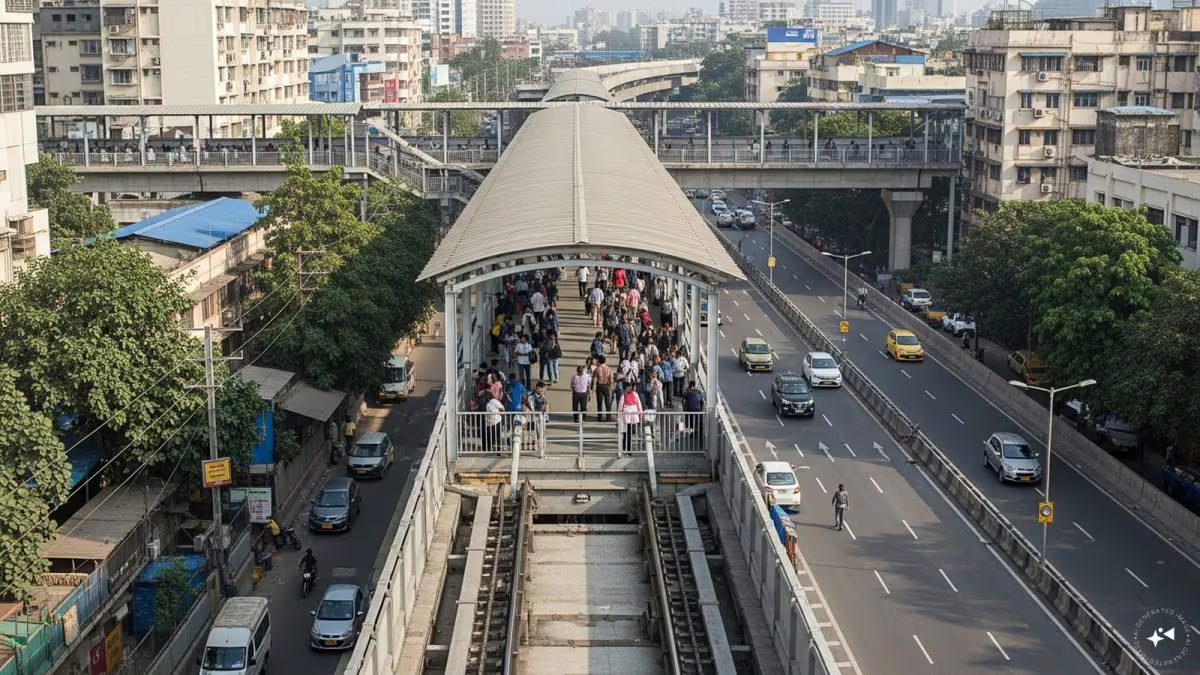
Mumbai Bandra East Skywalk Opens Boosting Pedestrian Access
Mumbai’s urban mobility infrastructure received a visible upgrade this Republic Day with the public opening of a 680‑metre pedestrian skywalk in Bandra East, designed to streamline foot movement across one of the city’s most congested mixed‑use districts. Developed by the Brihanmumbai Municipal Corporation (BMC), the structure aims to improve pedestrian safety, reduce conflict with vehicular traffic and knit key commercial and civic landmarks into a more accessible urban fabric.
The new skywalk connects Bandra (East) railway station directly with the Bandra‑Kurla Complex (BKC), Bandra Court, the MHADA office and the Western Express Highway (WEH), marking a significant step towards people‑first infrastructure in the Mumbai Metropolitan Region (MMR). With four stair access points, two automated escalators and 14 CCTV cameras covering its length, the elevated walkway addresses a persistent challenge: safe and efficient pedestrian movement in a high‑density, mixed‑traffic environment. Urban planners say the project reflects a growing recognition that pedestrian networks cannot be an afterthought in megacity design. “Structured walkways that prioritise safety and connectivity are central to inclusive urban mobility,” noted a senior transport planner. Such interventions — especially in areas with heavy commuter footfall — can help shift mobility patterns away from private vehicles and towards active modes of transport, contributing to lower emissions and reduced road congestion. Pedestrian‑oriented design also supports equitable access to jobs, courts, commercial hubs and transit nodes.
Critically, the skywalk enhances access to the Suburban Rail network — Mumbai’s ridership backbone — by offering a grade‑separated route that minimises street‑level conflict with cars, buses and two‑wheelers. In doing so, it tackles what has long been a pain point: daily pedestrian journeys that are slow, unsafe or segmented by traffic bottlenecks. By easing the walk between Bandra station and nearby civic and business destinations, the skywalk could help activate a more walkable urban corridor, which planners say is essential for dense, transit‑oriented cities.The timing of the project’s opening also underscores the importance of infrastructure delivery in line with user expectations. Although the skywalk’s construction spanned several years — and involved complex coordination given traffic conditions on the WEH and site constraints — officials celebrated record‑time completion and a clearances regime that included safety certification and railway approvals. These procedural milestones are key in a landscape where large‑scale civic projects often grapple with delays and coordination challenges.
However, experts caution that such infrastructure must be complemented by broader urban design measures — including better street‑level crossings, wayfinding signage, and last‑mile connectivity — to fully realise its potential. Pedestrian comfort and perceived safety are shaped by the broader street environment, and without integrated planning, standalone facilities risk under‑utilisation.
As Mumbai deepens its focus on sustainable and inclusive urban mobility, the Bandra East skywalk stands as both a practical asset and a reminder of the value of pedestrian connectivity. The next phase of mobility planning will require aligning elevated walkways with ground‑level public spaces, transit hubs and commercial corridors to truly transform how people move through the city.